
2026/01/08
Rubber X-Ring vs O-Ring: Key Differences for Dynamic Sealing Performance


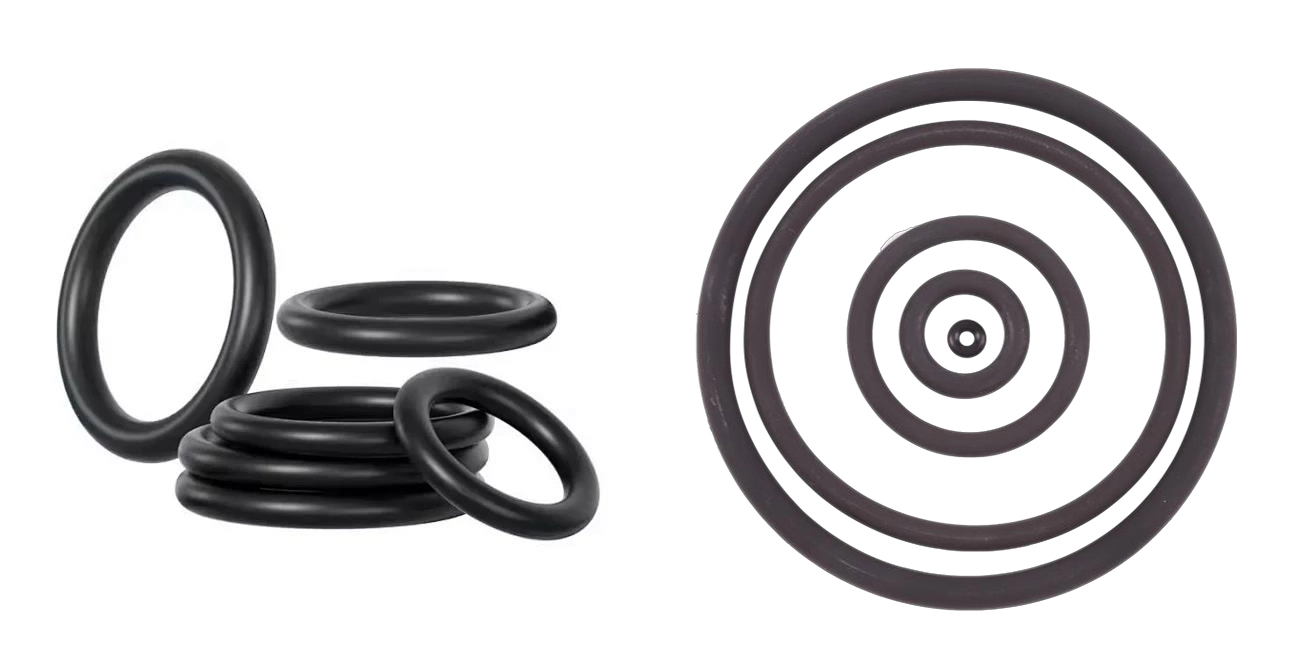
When sourcing from an O-Ring manufacturer in China, pressure and temperature are two of the first specifications engineers should confirm before selecting a seal. An O-ring may have the correct size and appear suitable for the application, but excessive pressure, high temperature, low temperature, or rapid temperature changes can cause extrusion, compression set, hardening, cracking, or leakage. Selecting the right rubber O-rings therefore requires more than checking a catalog dimension. The material, hardness, groove design, clearance, sealing medium, and operating conditions must all work together.
HaO Seal Technology Co.,Ltd provides standard and customized O-rings for static and dynamic sealing applications, with material options including NBR, EPDM, FKM, Silicone, FFKM and other elastomers for different industrial requirements.
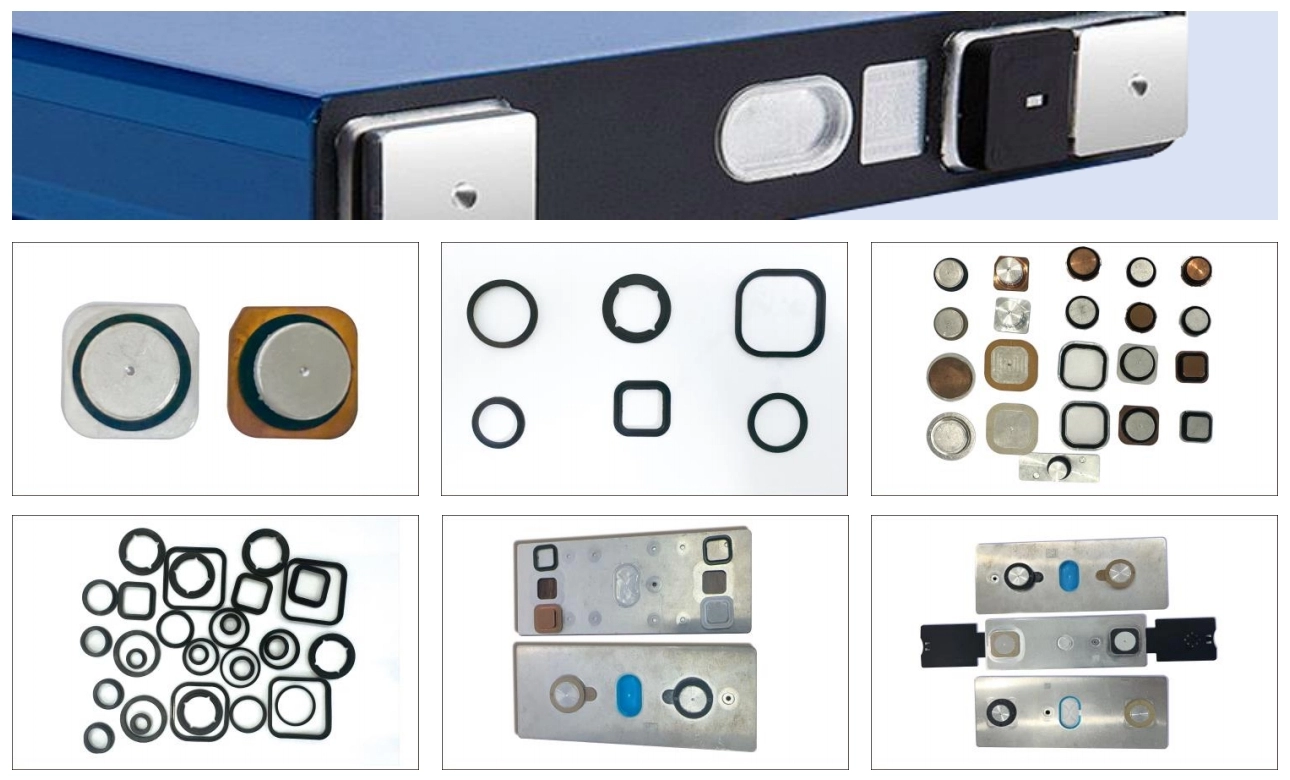
An O-ring seals by being compressed between two mating surfaces. This initial compression creates contact pressure that helps prevent fluid or gas from passing through the sealing interface. When system pressure increases, the O-ring must maintain sufficient contact with the sealing surfaces without being forced into the clearance gap.
Temperature affects the elastomer in a different way. As temperature rises, some rubber compounds can soften, lose mechanical strength, or experience accelerated aging. At low temperatures, certain elastomers become harder and less flexible, making it more difficult for the seal to maintain contact.
The important point is that pressure and temperature should never be evaluated separately. A seal operating at moderate pressure but extreme temperature may encounter problems that would not occur at room temperature. Likewise, a material that performs well at high temperature may require careful consideration when exposed to pressure spikes or dynamic movement.
The most common pressure-related O-ring problem is extrusion. Under high pressure, the elastomer can be pushed into the small clearance between mating components. Once a portion of the O-ring enters this gap, repeated pressure cycles can damage the seal and eventually create a leakage path.
Extrusion risk depends on more than nominal system pressure. Clearance, material hardness, temperature, groove dimensions, pressure direction, and pressure cycling all influence the result.
For example, increasing temperature can soften some elastomers and make them more vulnerable to extrusion. A seal that performs adequately under the same pressure at room temperature may behave differently at elevated temperature.
For higher-pressure applications, engineers should therefore review the complete sealing design. Depending on the application, a harder compound, reduced clearance, optimized groove geometry, or backup ring may be required.
Hardness is an important factor in pressure sealing. Softer O-rings can conform well to surface imperfections and may provide effective sealing under suitable conditions. However, under high pressure and larger clearances, softer compounds may be more susceptible to extrusion.
Harder materials generally offer better resistance to extrusion, but hardness alone does not guarantee better sealing. An excessively hard O-ring may require higher installation force and may not accommodate certain surface irregularities as effectively.
HaO Seal Technology offers O-ring hardness options ranging from approximately 20–90 Shore A, depending on the material and specification. This allows customers to select an appropriate combination of elastomer and hardness according to the actual application rather than relying on a single standard hardness.
When requesting a customized O-ring, it is useful to provide the operating pressure, clearance, groove dimensions, temperature, and movement type so the manufacturer can evaluate the complete sealing condition.
High temperature can accelerate aging and change the physical properties of an elastomer. Depending on the material, prolonged exposure to elevated temperatures may result in hardening, softening, compression set, loss of elasticity, or chemical degradation.
NBR is widely used for oils, fuels, hydraulic fluids, and general industrial sealing, but applications with higher temperature requirements may call for FKM or another specialized elastomer. FKM offers strong resistance to heat, oils, fuels, and many chemicals and is frequently selected for demanding automotive, chemical, and industrial applications.
Silicone can provide good flexibility across a broad temperature range, while FFKM is designed for particularly demanding chemical and high-temperature environments.
The correct temperature range should always be evaluated against the actual compound and operating environment. A material's maximum temperature capability does not necessarily mean it should operate continuously at that temperature.
Low temperature presents a different challenge. As some elastomers become harder, they may lose flexibility and fail to maintain sufficient sealing contact. This is particularly important for equipment exposed to outdoor environments, cold storage, refrigeration, transportation, or rapid temperature changes.
Silicone and certain specialized elastomers can be considered where low-temperature flexibility is important. However, the correct choice depends on the fluid, pressure, mechanical movement, and required temperature range.
For applications that cycle between low and high temperatures, the seal should be evaluated across the entire temperature profile rather than against only the highest or lowest operating point.
Yes. The fluid or gas being sealed can significantly affect O-ring performance.
A material may have excellent mechanical properties but still fail because the sealing medium causes swelling, shrinkage, softening, or chemical degradation. NBR is commonly selected for many mineral oils, hydraulic fluids, and fuels. EPDM is generally more suitable for water, hot water, steam, weathering, and ozone exposure, while it is generally unsuitable for many petroleum-based oils and fuels.
FKM is widely used where resistance to oils, fuels, heat, and many chemicals is important. FFKM may be considered for highly aggressive chemical environments and demanding temperature conditions.
For this reason, an O-ring manufacturer should know the actual medium before recommending a compound. If the application involves a chemical mixture, additives, cleaning agents, or process fluids, providing the complete information can prevent material compatibility problems.
Pressure and temperature requirements are also affected by whether the O-ring remains stationary or moves during operation.
In a static application, such as a flange, valve cover, housing, or pipe connection, the primary concern is maintaining compression and contact pressure over time. Compression set and long-term material stability can become important.
In a dynamic application, such as a hydraulic cylinder, piston, valve stem, or moving shaft, friction and wear must also be considered. Pressure fluctuations combined with movement can increase the risk of extrusion, abrasion, twisting, and heat generation.
This means an O-ring selected for a static high-temperature application should not automatically be transferred to a dynamic system without checking the operating conditions.
The following practical comparison can help narrow down the material selection:
Material | Typical Strengths | Typical Applications |
NBR | Oils, fuels, hydraulic fluids, good mechanical properties | Hydraulic equipment, machinery, automotive systems |
EPDM | Water, hot water, steam, ozone, weathering | HVAC, water systems, outdoor equipment |
FKM/FPM | Heat, oils, fuels, many chemicals | Automotive, chemical and industrial equipment |
Silicone/VMQ | Flexibility, broad temperature capability | General industrial and specialized temperature applications |
FFKM | Extreme chemical and high-temperature resistance | Highly demanding chemical and process environments |
HNBR | Improved mechanical and thermal performance over standard NBR in suitable applications | Automotive, oil and gas, industrial sealing |
This comparison is a starting point rather than a universal rating chart. The final selection should be based on the actual fluid, temperature, pressure, movement, clearance, and groove design.
Yes. The groove is one of the most important parts of an O-ring sealing system. Even a high-quality O-ring can fail if the groove is too deep, too shallow, too wide, or poorly finished.
For high-pressure applications, engineers need to consider the extrusion gap between mating surfaces. A larger clearance can increase the risk of extrusion, especially when the O-ring becomes softer at elevated temperatures.
Groove dimensions should also provide the correct compression without excessively squeezing the seal. Excessive compression can increase friction and installation stress, while insufficient compression may result in leakage.
For standard and customized O-rings, HaO Seal Technology supports specifications based on AS568, ISO 3601, and JIS B 2401, as well as customized dimensions. Providing a drawing or groove specification allows the supplier to evaluate the O-ring more accurately.
When contacting an O-ring factory or supplier, simply stating "high pressure" or "high temperature" is not enough. A useful technical specification should include:
· Minimum and maximum operating temperature
· Continuous operating temperature
· Pressure range and possible pressure spikes
· Static or dynamic sealing
· Sealing medium
· O-ring inside diameter and cross-section
· Groove dimensions and clearance
· Required hardness
· Movement speed for dynamic applications
· Applicable dimensional standard
· Expected service environment
For custom sealing requirements, this information can significantly reduce the risk of selecting an unsuitable compound or dimension.
A qualified O-ring supplier should be able to look beyond the part number and understand how the seal will actually be used. This is particularly important when standard O-rings are being replaced because of repeated leakage or premature failure.
HaO Seal Technology Co.,Ltd offers a broad material range covering NBR/Buna-N, EPDM/EPR, FKM/FPM, FVMQ, HNBR, ACM, CR, PU, Silicone/VMQ, SBR, PTFE and FFKM. This material flexibility allows customers to consider different sealing compounds according to pressure, temperature, chemical exposure, and mechanical requirements.
The company provides both standard and customized O-Ring sealing solutions designed for industrial and commercial applications. Its products support static and dynamic sealing and are focused on dimensional accuracy, material compatibility, leakage prevention, and long-term equipment reliability.
For hydraulic equipment requiring other sealing configurations, customers can also review hydraulic sealing solutions as part of a broader sealing system.
There is no single O-ring material that is automatically suitable for every high-pressure or high-temperature application. The correct choice comes from matching the elastomer to the sealing medium and temperature, then checking hardness, clearance, groove geometry, compression, and movement against the operating pressure.
For general oil and hydraulic applications, NBR can be a practical starting point. For water, steam, and outdoor environments, EPDM may be more appropriate. For applications involving higher temperatures, oils, fuels, and many chemicals, FKM is often considered. When chemical and temperature requirements become particularly severe, specialized materials such as FFKM may need to be evaluated.
By providing complete operating information to an experienced O-ring manufacturer, buyers can move from simply purchasing a rubber ring to selecting a sealing component engineered for the actual application. That approach helps reduce leakage, unplanned maintenance, and premature seal replacement while improving long-term equipment reliability.