
2026/06/30
How Do Acid-Resistant Seals Prevent Leakage in Chemical Pipelines?


Construction and agricultural machinery operate in some of the harshest working environments. Heavy loads, constant vibration, mud, dust, rain, hydraulic pressure spikes, and wide temperature fluctuations are part of daily operation. In these demanding conditions, sealing rings are not just supporting components—they are critical to system reliability, safety, and productivity.
From hydraulic cylinders in excavators to fuel systems in tractors, properly designed sealing rings ensure that fluids stay contained, contaminants stay out, and equipment performs consistently over long service cycles. This article explores how sealing rings are applied in construction and agricultural machinery, the challenges they face, and how custom sealing solutions improve durability in real-world conditions.
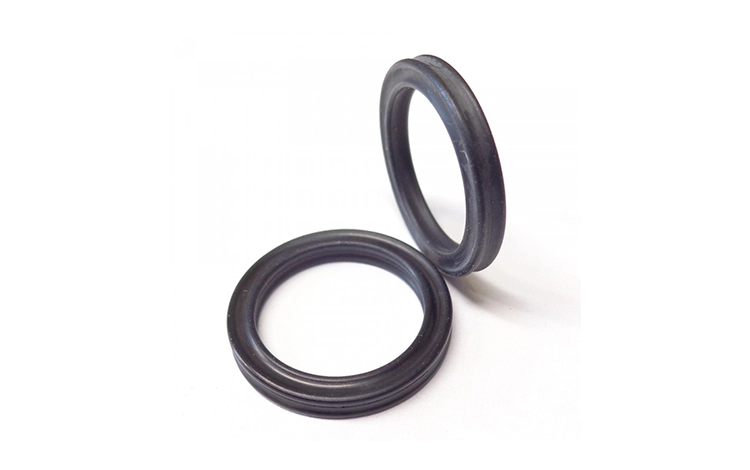
Construction and farming equipment rely heavily on hydraulic and pneumatic systems. These systems control lifting arms, steering, braking, suspension, and transmission components. A single seal failure can lead to:
Hydraulic oil leakage
Loss of pressure
Reduced lifting capacity
Environmental contamination
Unexpected downtime
Unlike indoor industrial systems, construction and agricultural machinery operate outdoors, often in remote areas where maintenance access is limited. This makes seal reliability even more important.
At R&D, we approach sealing solutions with a practical mindset. Understanding field conditions is the starting point for designing seals that can survive dirt, vibration, and mechanical stress.
Hydraulic cylinders are central to heavy machinery such as excavators, bulldozers, cranes, and loaders. Sealing rings are used in multiple positions:
Piston seals
Rod seals
Static housing seals
Wiper seals
High operating pressure
Pressure spikes during load impact
Continuous reciprocating motion
Contamination from dust and mud
Rod seals must prevent hydraulic oil leakage while withstanding friction and side loads. Piston seals must maintain internal pressure separation under heavy lifting conditions.
Material selection is critical. NBR is commonly used for oil resistance, while FKM may be required for higher temperature environments. In extreme conditions, customized compounds improve extrusion resistance and wear life.
Proper groove design and clearance control also reduce the risk of seal extrusion under high pressure.
Agricultural machinery such as tractors, harvesters, sprayers, and balers operates in highly variable environments—hot summers, cold winters, wet fields, and dusty storage areas.
Sealing rings are widely used in:
Fuel systems
Engine components
Transmission systems
Hydraulic steering
Brake systems
In these applications, seals must resist:
Fuel and oil exposure
Fertilizer and chemical contact
Moisture and mud
Temperature cycling
EPDM is often selected for water resistance, while FKM provides improved chemical and heat resistance. Silicone may be used where flexibility at low temperatures is critical.
Reliability in agricultural machinery is especially important during peak seasons. Equipment failure during planting or harvest can result in significant operational disruption. This is why durable sealing design is not optional—it is essential.
Among all sealing components, O-rings remain one of the most versatile and widely used solutions in construction and agricultural machinery.
They are commonly installed in:
Hydraulic fittings
Pump housings
Valve assemblies
Fuel connectors
Gearbox covers
Detailed product specifications and material options are available here:
https://www.haosealtech.com/O-Ring/
O-rings are favored for their simplicity, cost efficiency, and reliable sealing when properly installed. However, heavy equipment often requires more than standard catalog parts.
Critical considerations include:
Correct compression ratio
Surface finish compatibility
Resistance to vibration
Long-term compression set resistance
At R&D, we supply both standard and customized rubber O-rings designed for demanding field conditions.
Construction and agricultural machines generate constant vibration. Engines, uneven terrain, and heavy loads introduce dynamic stresses that affect sealing performance.
Common problems include:
Seal displacement
Loss of compression
Fatigue cracking
Leakage at joint interfaces
To address these challenges, sealing rings must offer strong elastic recovery and stable dimensional properties. In some cases, higher hardness compounds or reinforced designs are required.
Our custom sealing design process evaluates vibration exposure and mechanical load to select compounds that maintain sealing force over extended operation cycles.
Outdoor machinery is exposed to extreme climate variations. In certain regions, equipment must operate in freezing winters and high-heat summers.
Low temperatures can reduce elasticity and cause hardening. High temperatures accelerate aging and compression set. Additionally, UV exposure and ozone can degrade certain elastomers.
Material selection and compound engineering directly influence seal lifespan under these conditions.
Our in-house compound development allows us to adjust formulations to withstand:
Very low temperatures
Continuous heat exposure
Chemical contact
Electrical conductivity or insulation requirements
By starting with the rubber compound as the foundation, we create sealing solutions tailored to real-world environmental stress.
Construction and agricultural equipment manufacturers often require unique seal dimensions or special cross-sections to fit proprietary designs.
Standard molds may not meet these specifications. Custom mold development enables:
Precise dimensional control
Special lip geometries
Integrated reinforcement
Improved sealing under high load
At R&D, our engineering team carefully maps out each application before production begins. With 16 years of experience in rubber engineering, we understand how subtle geometry changes affect sealing performance.
Custom molds combined with optimized compounds result in seals capable of meeting the highest durability standards.
Mud, sand, dust, and crop residue are constant threats to heavy equipment seals. Contamination can accelerate wear and compromise hydraulic systems.
Effective sealing strategies include:
Combining primary seals with wipers
Selecting abrasion-resistant compounds
Ensuring proper installation and maintenance
Preventing contamination extends both seal life and overall equipment reliability.
Sealing solutions for heavy machinery should not be selected based on size alone. Engineering collaboration between equipment manufacturers and seal specialists improves long-term outcomes.
At R&D, we provide:
Application-based material selection
Custom compound development
Precision mold manufacturing
Performance-focused sealing solutions
Whether the requirement involves extreme temperature resistance, high-pressure stability, or chemical durability, our team develops practical solutions designed for real operating conditions.
Sealing rings play a critical role in construction and agricultural machinery. They ensure hydraulic pressure integrity, prevent leakage, block contaminants, and maintain system efficiency under harsh environmental conditions.
From excavators and loaders to tractors and harvesters, heavy equipment demands sealing solutions capable of handling vibration, pressure spikes, dirt exposure, and temperature extremes.
Through custom sealing design, in-house compound engineering, and precision manufacturing, R&D delivers rubber sealing solutions that meet the real challenges of field operation. When reliability and durability matter most, properly engineered sealing rings make a measurable difference in performance and service life.