
2026/03/06
Sealing Ring Design Considerations for Industrial Equipment


In industrial equipment, sealing performance directly affects system safety, efficiency, and service life. Whether in hydraulic cylinders, pumps, valves, or gear assemblies, selecting the correct sealing ring type is not a minor technical detail—it is a design decision that influences long-term reliability.
One of the most common questions engineers face is: should you use a static seal or a dynamic seal? And more importantly, which ring type performs best in each case?
Understanding the functional differences between static and dynamic sealing helps prevent leakage, premature wear, and costly downtime. In this article, we examine how each sealing category works, compare ring types, and explain how customized sealing solutions ensure optimal performance in demanding applications.
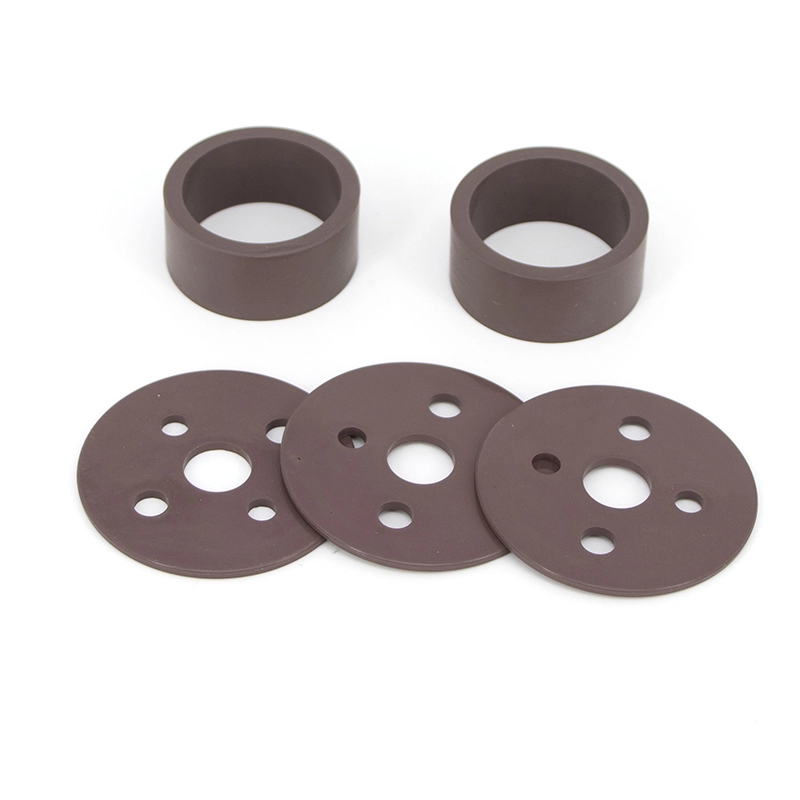
Static sealing refers to sealing between two surfaces that do not move relative to each other. Once installed and compressed, the seal remains stationary throughout operation.
Flange joints
End caps and covers
Pump housings
Valve bodies
Pipe connections
In static environments, the primary sealing mechanism is compression. The elastomer deforms to fill gaps between mating surfaces and prevents fluid or gas leakage.
Proper compression rate
Resistance to compression set
Chemical compatibility
Temperature stability
Since there is no relative motion, friction and wear are not major concerns. However, long-term dimensional stability is critical.
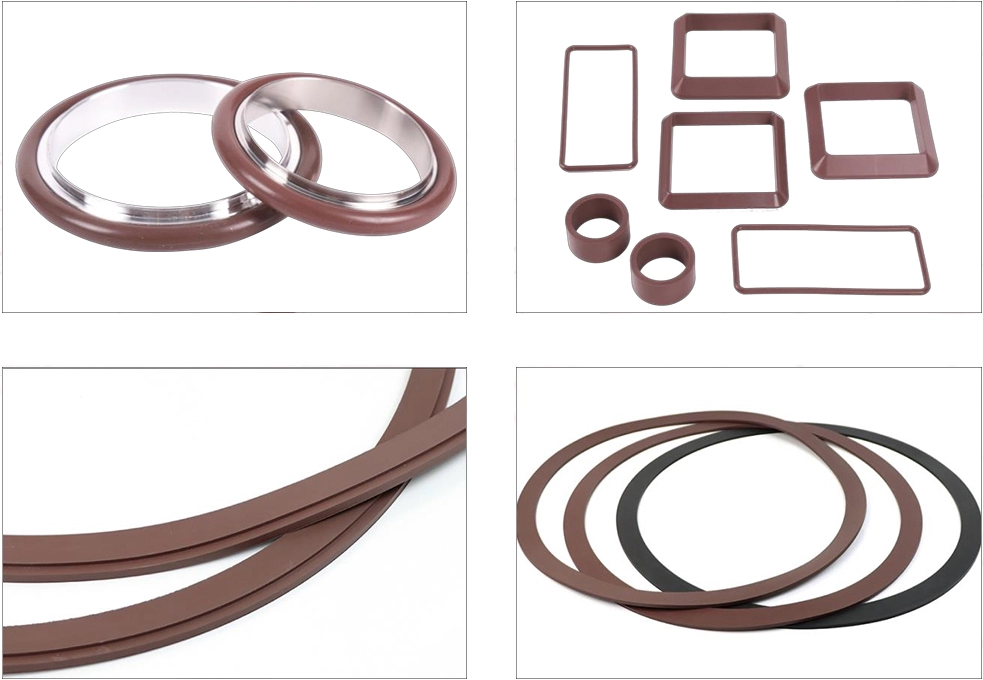
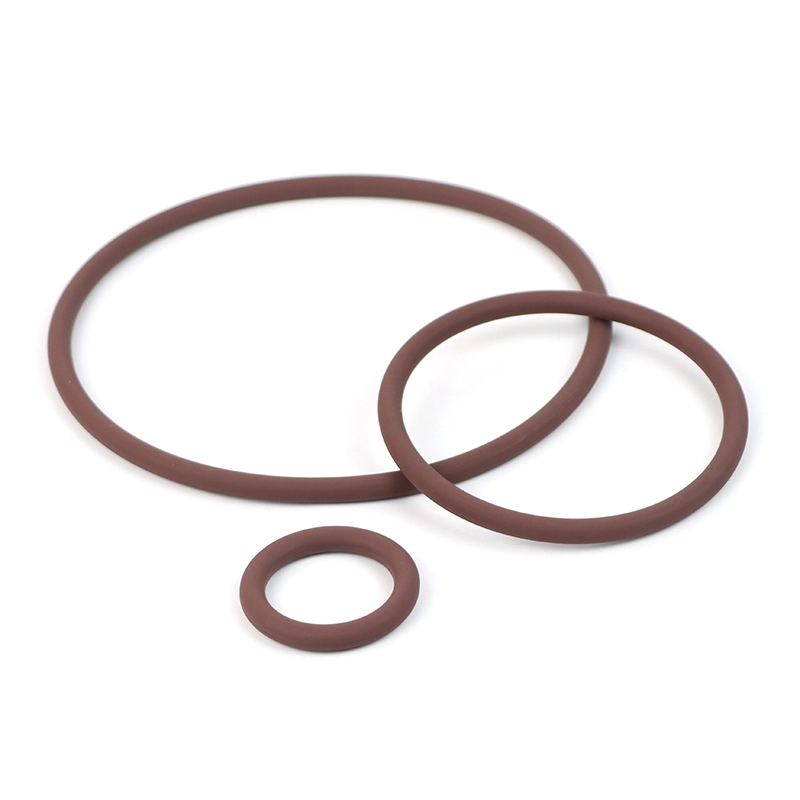
O-rings are the most widely used solution for static sealing because of their simple geometry and reliable compression behavior. When properly designed and installed, they provide consistent sealing in a wide range of industrial applications.
Dynamic sealing occurs when there is relative movement between components. This movement can be:
Reciprocating (back-and-forth motion)
Rotary (shaft rotation)
Dynamic environments are far more demanding than static ones.
Hydraulic cylinders
Pneumatic actuators
Rotating shafts
Pistons and rods
Gear systems
In dynamic sealing, the seal must maintain contact pressure while sliding or rotating. Friction, heat generation, lubrication, and wear resistance become critical performance factors.
Although O-rings are sometimes used in light dynamic applications, they are not always the best choice for continuous motion.
Challenges include:
Twisting or rolling in the groove
Excessive friction
Heat buildup
Premature wear
Dynamic systems often require specially designed ring profiles such as U-rings, Y-rings, or V-rings to maintain sealing integrity under motion.
For reference on dynamic ring profiles, you can explore:
https://www.haosealtech.com/UVY-Ring/
These ring types are engineered specifically to handle movement, pressure, and lubrication requirements in hydraulic and pneumatic systems.
Best suited for:
Static applications
Low-speed dynamic environments
Advantages:
Simple design
Easy installation
Cost-effective
Available in various materials
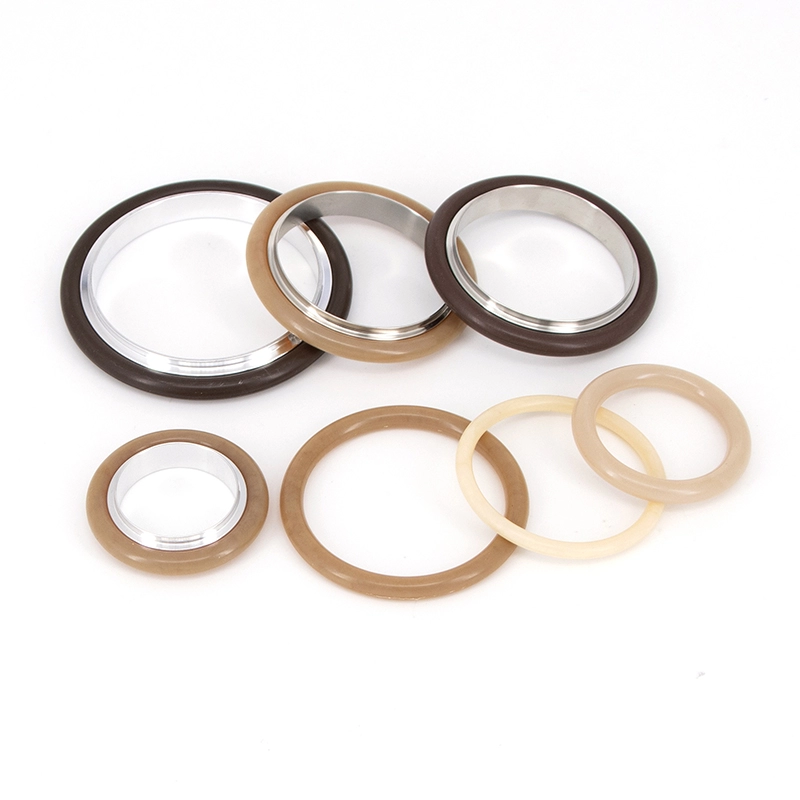
Material options include NBR, EPDM, Silicone, FKM, and FFKM, allowing adaptation to oil, water, chemical, and high-temperature environments.
However, in high-speed or high-pressure dynamic systems, O-rings may experience increased friction and reduced service life.
Best suited for:
Hydraulic piston sealing
Rod sealing
High-pressure reciprocating systems
Advantages:
Pressure-energized sealing lips
Lower friction than O-rings in dynamic use
Strong sealing performance under load
U-rings perform particularly well in construction machinery and heavy hydraulic equipment where pressure cycles are frequent and intense.
Best suited for:
Medium-pressure dynamic applications
Compact installation spaces
Advantages:
Stable lip structure
Reduced risk of twisting
Reliable reciprocating performance
Y-rings offer a balance between sealing stability and installation simplicity.
Best suited for:
Rotary shaft sealing
Contamination protection
Advantages:
Axial sealing capability
Protection against dust and debris
Suitable for harsh environments
V-rings are often used as secondary seals to protect primary dynamic seals from contamination.
Whether static or dynamic, seal material must match the operating environment.
Important considerations include:
Temperature range
Pressure level
Chemical exposure
Lubrication conditions
Electrical conductivity or insulation requirements
For example:
NBR offers strong oil resistance.
EPDM performs well in water-based systems.
FKM handles high heat and aggressive chemicals.
Silicone provides flexibility at extreme temperatures.
At R&D, we begin each project by mapping operating conditions in detail. Rather than simply selecting from standard materials, we develop in-house rubber compounds tailored to specific applications.
This approach improves:
Wear resistance
Compression set stability
Chemical durability
Long-term reliability
Static and dynamic seals require different groove designs.
Uniform compression
Minimal stretch
Tight tolerance control
Controlled interference fit
Lubrication allowance
Clearance management to prevent extrusion
Improper groove dimensions can lead to leakage, excessive friction, or premature failure—even with high-quality materials.
Customized mold development ensures that ring geometry and material characteristics work together as a complete system.
Standard sealing rings meet many industrial needs, but certain applications require custom solutions.
Examples include:
Extreme high or low temperatures
High-pressure combined with high-speed motion
Chemical-intensive environments
Electrically conductive or insulating requirements
Unique equipment geometries
At R&D, our rubber engineering specialists bring over 16 years of practical experience to complex sealing challenges. When no ready-made answer exists, we start with compound development and build the solution from the foundation upward.
Our custom-made rubber seal products are engineered to meet high-performance requirements under extreme operating conditions. By combining in-house compound formulation with precision mold manufacturing, we deliver sealing solutions that maintain reliability even in demanding sectors.
If your application involves:
No movement → O-ring is typically sufficient.
Reciprocating motion with pressure → U-ring or Y-ring is recommended.
Rotating shaft exposure → V-ring provides effective protection.
Mixed or extreme conditions → Custom design may be required.
The best sealing solution is rarely determined by shape alone. Performance depends on geometry, material, operating environment, and system design working together.
Static and dynamic sealing serve different mechanical purposes, and selecting the wrong ring type can significantly reduce equipment lifespan. Static seals prioritize compression stability and chemical compatibility, while dynamic seals must balance pressure resistance, friction control, and wear durability.
Understanding these differences allows engineers to choose the right sealing ring type for each application. When standard solutions fall short, custom sealing design ensures optimal performance in complex environments.
At R&D, we combine compound engineering, precision molding, and application-based analysis to deliver sealing solutions that perform reliably in both static and dynamic systems. The right ring type, properly designed and manufactured, makes all the difference in long-term industrial performance.