
2026/05/20
What Are Automotive Seals and Why Are They Critical for Vehicle Performance?


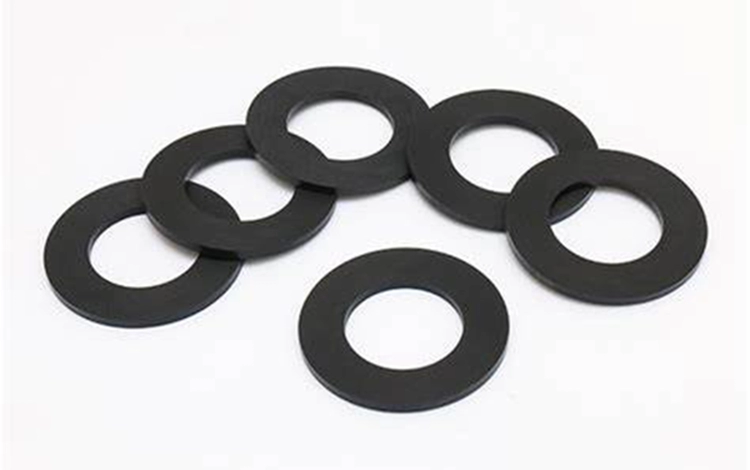
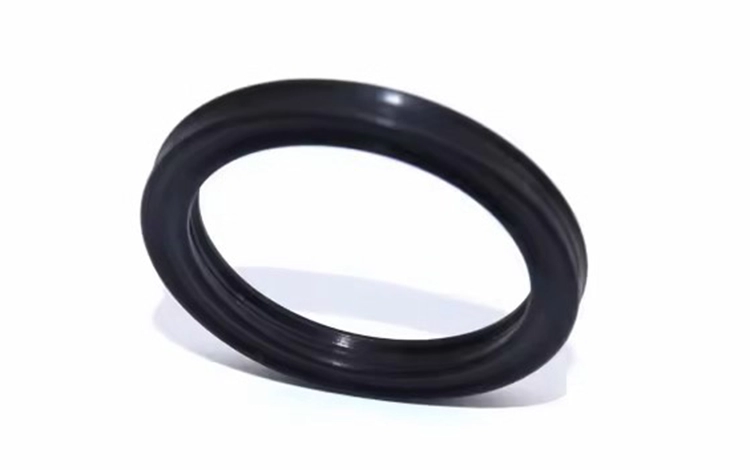
In industrial equipment, sealing rings are small components with a large responsibility. They prevent fluid leakage, block contaminants, maintain pressure, and protect internal systems from environmental damage. Whether in hydraulic presses, pumps, compressors, gearboxes, or processing equipment, a poorly designed sealing ring can lead to unplanned shutdowns, safety risks, and expensive repairs.
Effective sealing ring design is not simply about choosing a standard size. It requires a clear understanding of operating conditions, material science, mechanical tolerances, and long-term performance expectations. In this article, we explore the critical design considerations engineers must evaluate when specifying sealing rings for industrial equipment.
The first step in sealing ring design is mapping the operating environment. Every industrial application presents its own challenges.
Key questions include:
What is the operating pressure range?
Is the seal static or dynamic?
What temperatures will it experience?
Which fluids or gases will it contact?
Are there vibration or shock loads?
For example, a sealing ring used in a low-speed water pump requires different properties than one installed in a high-pressure hydraulic cylinder or chemical processing system.
At R&D, our custom sealing design process begins with a detailed technical assessment. Before selecting any geometry or compound, we carefully evaluate working conditions to prevent mismatch between material capabilities and field demands.
Sealing rings are typically categorized as either static or dynamic.
Static seals operate between two components that do not move relative to each other. Common examples include flange joints and housing covers. In these cases, compression set resistance and long-term dimensional stability are primary concerns.
Dynamic seals operate in systems involving movement—reciprocating or rotary. Here, friction, wear resistance, lubrication retention, and heat buildup become critical factors.
An incorrectly selected static seal used in a dynamic environment may experience premature wear, twisting, or extrusion.
When evaluating dynamic systems, attention must be given to:
Surface finish of mating parts
Sliding speed
Lubrication method
Heat dissipation
Proper design ensures consistent sealing without excessive friction.
Material choice directly affects chemical resistance, elasticity, durability, and temperature tolerance.
Common elastomers include:
NBR for oil and fuel resistance
EPDM for water and steam exposure
Silicone for wide temperature flexibility
FKM for high-temperature and chemical environments
FFKM for aggressive chemical applications
For general-purpose applications, O-rings remain one of the most widely used sealing components. Detailed specifications and material options can be found here:
https://www.haosealtech.com/O-Ring/
However, even when using standard geometries, material customization is often necessary. In some cases, equipment requires:
Electrically conductive compounds
Electrically insulating materials
Low-temperature flexibility
High-pressure extrusion resistance
At R&D, we develop unique rubber formulations in-house. Instead of relying solely on standard compounds, we tailor hardness, tensile strength, and chemical compatibility to match specific operating conditions.
Industrial equipment frequently operates under elevated pressures. As pressure increases, so does the risk of extrusion—where the seal material is forced into clearance gaps between components.
Key design considerations include:
Radial clearance
Seal hardness (Shore A value)
Backup ring requirements
Groove geometry
In high-pressure systems, higher hardness compounds or reinforced sealing designs may be necessary to prevent deformation. Ignoring extrusion resistance can result in rapid seal failure and leakage.
Temperature affects both mechanical and chemical properties of rubber seals.
Low temperatures can cause:
Reduced elasticity
Cracking
Loss of sealing force
High temperatures can lead to:
Hardening
Compression set
Accelerated aging
Thermal cycling—repeated heating and cooling—adds additional stress. A well-designed sealing ring must maintain flexibility and sealing force across the entire temperature range.
Custom compound formulation becomes especially important in applications involving extreme or fluctuating temperatures.
Even the best material cannot perform properly without correct groove design. Groove dimensions control compression rate, contact pressure, and sealing efficiency.
Improper compression can result in:
Under-compression: leakage
Over-compression: excessive friction and early wear
Engineers must consider:
Cross-sectional diameter
Stretch percentage
Installation method
Tolerance stack-up
Precision in groove design improves sealing consistency and extends service life.
Industrial seals often contact oils, solvents, fuels, acids, or gases. Chemical incompatibility leads to swelling, shrinkage, softening, or hardening.
Before finalizing material selection, it is essential to evaluate:
Fluid composition
Concentration levels
Exposure duration
Combined thermal effects
At R&D, chemical resistance testing and compound adjustment ensure the seal remains dimensionally stable and mechanically reliable throughout its service life.
Many industrial systems generate continuous vibration or shock loads. In such environments, standard rubber seals may experience displacement or structural instability.
Metal bonded rubber seals offer a practical solution in these scenarios.
These composite components combine the rigidity of metal with the elasticity of rubber. The rubber element is vulcanized or chemically bonded to a metal insert, creating a strong, stable structure capable of withstanding:
High pressure
Vibration
Temperature fluctuations
Mechanical load
Metal reinforcement ensures dimensional accuracy and prevents deformation in demanding environments.
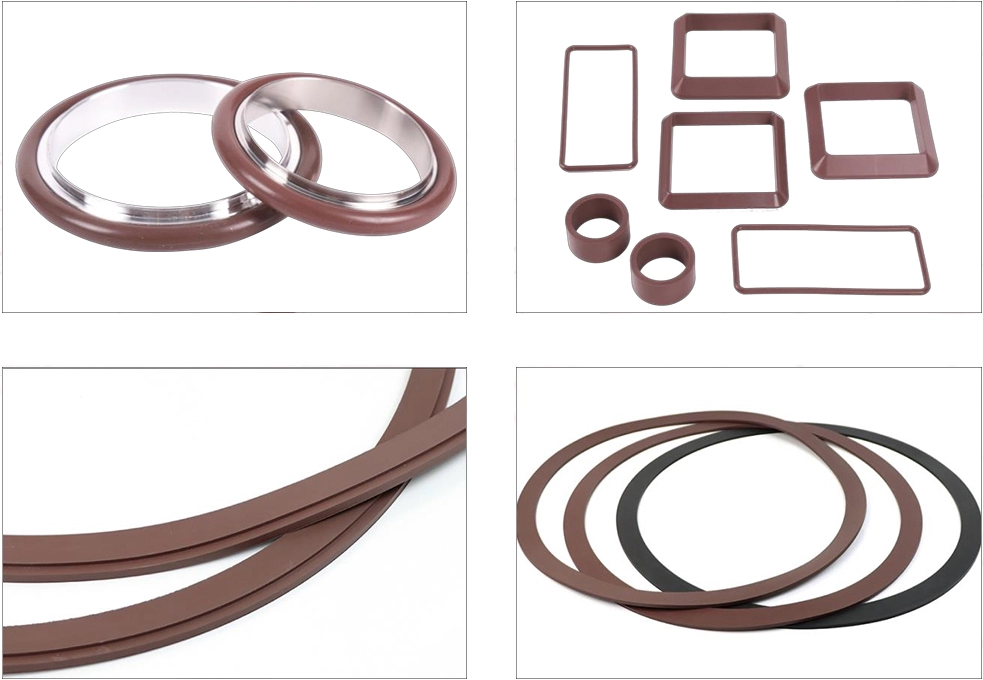
Standard catalog seals may not always fit specialized industrial equipment. Custom molds allow precise control over:
Unique cross-sections
Modified lip angles
Reinforced structures
Integrated metal inserts
Our rubber engineering specialists bring 16 years of hands-on experience to complex sealing challenges. When there is no ready-made solution, we design from the compound level upward.
The process includes:
Technical requirement analysis
Compound development
Prototype testing
Mold manufacturing
Controlled production
This systematic approach ensures reliable sealing performance under real operating conditions.
Sealing ring design should not focus solely on initial performance. Maintenance cycles and service life expectations must also be considered.
A well-designed seal:
Minimizes downtime
Reduces maintenance frequency
Prevents contamination
Enhances equipment safety
In industrial production environments, reliability often outweighs all other factors. Selecting the right sealing partner early in the design phase reduces operational risk over the long term.
Sealing ring design for industrial equipment is a multidisciplinary task that combines material science, mechanical engineering, and practical field experience. Factors such as pressure, temperature, chemical exposure, dynamic motion, and vibration must all be carefully evaluated.
Standard sealing rings can meet many applications, but extreme environments often demand customized solutions. Through in-house compound development, precision mold manufacturing, and application-focused engineering support, R&D delivers sealing solutions that perform reliably in demanding industrial sectors.
When sealing performance directly impacts productivity and safety, thoughtful design and expert collaboration make the difference between repeated failure and long-term stability.