
2026/07/20
How to Choose the Right UN Hydraulic Seals for Low Pressure Cylinders


In hydraulic systems, sealing performance directly affects efficiency, service life, and operational safety. Among the many sealing solutions available today, U-ring seals have become a preferred choice for hydraulic cylinders due to their reliable sealing behavior under both static and dynamic conditions. Designed to handle high pressure, reciprocating motion, and demanding environments, U-rings offer a balance of durability, adaptability, and cost efficiency that traditional sealing profiles often struggle to achieve.
This article explains how U-ring seals work, why they are widely used in hydraulic cylinders, and how material selection and manufacturing standards influence sealing performance in real-world applications.
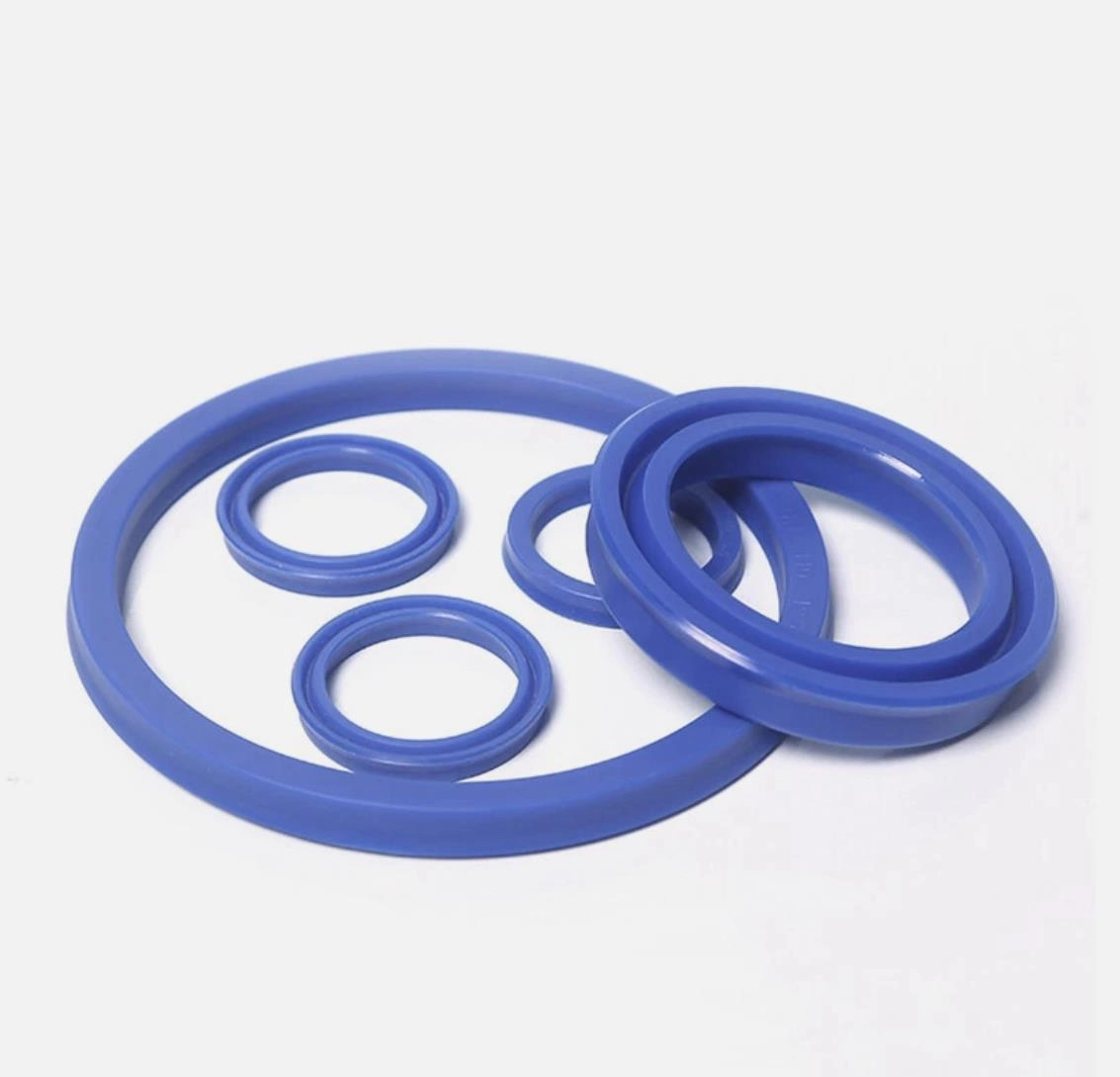
A U-ring seal is a lip-type elastomer seal with a U-shaped cross-section. It is typically used in piston or rod sealing applications within hydraulic and pneumatic cylinders. The U-shaped geometry allows system pressure to energize the sealing lips, improving contact with the mating surface as pressure increases.
Compared with standard O-rings, U-rings provide better sealing stability in dynamic applications, especially where reciprocating motion and pressure fluctuations are present.
In hydraulic cylinders, U-rings are commonly used as:
Piston seals (double-acting or single-acting)
Rod seals
Buffer or secondary seals
A representative example of this design can be found in the black piston U-ring used in industrial hydraulic systems:
https://www.haosealtech.com/UVY-Ring/black-piston-u-ring.html
The sealing principle of a U-ring is based on elastic deformation combined with pressure activation. When installed in the seal groove, the lips make initial contact with the cylinder wall or rod. As hydraulic pressure builds, fluid enters the cavity of the U-shape and forces the lips outward, increasing sealing force proportionally to system pressure.
This self-energizing mechanism provides several advantages:
Consistent sealing across a wide pressure range
Reduced leakage risk during pressure spikes
Improved compensation for minor wear or surface imperfections
Because of this behavior, U-ring seals are especially effective in medium- to high-pressure hydraulic cylinders used in construction machinery, agricultural equipment, industrial presses, and automation systems.
Unlike O-rings, which rely mainly on compression, U-rings are specifically designed for dynamic movement. Their lip structure minimizes friction while maintaining a stable sealing line, making them ideal for reciprocating piston and rod motion.
This results in smoother cylinder operation, reduced stick-slip effects, and improved control accuracy in hydraulic systems.
U-ring seals can withstand significantly higher pressures than conventional rubber O-rings when properly designed and installed. Pressure-assisted lip expansion enhances sealing efficiency without excessive friction or heat generation.
This makes U-rings suitable for hydraulic systems operating under heavy loads and frequent pressure cycling.
The U-ring profile distributes stress more evenly across the sealing lips, reducing localized wear. Combined with proper material selection, this leads to extended seal life and reduced maintenance frequency.
In applications where downtime is costly, longer service intervals directly improve operational efficiency.
U-ring seals can be manufactured using a wide range of elastomer materials to match specific operating conditions, including exposure to oils, fuels, chemicals, water, and extreme temperatures.
Material selection is critical to achieving reliable sealing performance. Depending on the working environment, different elastomers offer distinct advantages.
Common material options include:
NBR (Nitrile Rubber)
Widely used in hydraulic systems due to its excellent resistance to mineral oils and fuels. NBR provides a good balance of mechanical strength, abrasion resistance, and cost-effectiveness.
EPDM
Ideal for applications involving water, steam, or certain chemicals. EPDM offers strong weather and ozone resistance but is not suitable for petroleum-based oils.
Silicone Rubber
Known for flexibility at low temperatures and stability at high temperatures. Silicone is often selected for applications requiring a wide temperature range and low compression set.
FKM (Viton®)
Offers superior resistance to high temperatures, aggressive chemicals, and hydraulic fluids. FKM is commonly used in demanding industrial environments where long-term durability is required.
FFKM
Designed for extreme conditions, FFKM provides exceptional chemical resistance and thermal stability, even in highly aggressive media.
Depending on the material, U-ring seals can operate within a temperature range of -60°C to +320°C. Hardness is typically available from 20 to 90 Shore A, allowing engineers to balance flexibility, extrusion resistance, and wear characteristics based on system pressure and surface finish.
To ensure compatibility with global hydraulic components, U-ring seals can be manufactured according to widely recognized international standards, including:
AS568
ISO 3601
JIS B 2401
In addition to standard sizes, customized U-rings can be produced to meet specific groove designs, tolerances, or application requirements. Customization is particularly valuable for non-standard cylinders, retrofitting projects, or equipment designed for specialized operating environments.
While rubber O-rings remain a versatile sealing solution, they are not always the best choice for dynamic hydraulic cylinders. O-rings can experience rolling, twisting, or accelerated wear under reciprocating motion.
U-ring seals, by contrast, are purpose-built for dynamic sealing. Their geometry reduces the risk of seal failure caused by motion-induced deformation, making them a more reliable option for long-stroke or high-cycle hydraulic systems.
That said, U-rings and O-rings are often used together in multi-seal configurations, each serving a specific function within the sealing system.
High-quality U-ring seals rely on precision molding, accurate dimensional control, and consistent material properties. Advanced manufacturing processes ensure tight tolerances, smooth sealing surfaces, and repeatable performance across production batches.
As part of R&D-driven sealing solutions, precision-engineered rubber seals are developed to meet both standard and customized requirements, helping equipment manufacturers and maintenance teams achieve reliable, long-term sealing performance without unnecessary complexity.
U-ring seals play a vital role in modern hydraulic cylinders by delivering reliable dynamic sealing, high pressure resistance, and long service life. With flexible material options, wide temperature capability, and compliance with international standards, they offer a practical and proven solution for a broad range of hydraulic applications.
Whether used in heavy machinery, industrial automation, or custom hydraulic systems, U-ring seals provide a performance-focused alternative to traditional sealing profiles. With proper material selection and precision manufacturing, they help reduce leakage, extend maintenance intervals, and improve overall system reliability.