
2026/10/09
O-Ring Pressure and Temperature Ratings: How to Select the Right Seal


When choosing a sealing component from an O-Ring manufacturer in China, engineers and buyers often compare O-rings and gaskets for the same equipment. Both are designed to prevent fluid or gas leakage, but they work in different ways and are suited to different sealing structures. Choosing between an O-ring and a gasket depends on the joint design, pressure, temperature, movement, sealing medium, available installation space, and maintenance requirements.
HaO Seal Technology Co.,Ltd provides precision-engineered rubber O-rings for industrial and commercial sealing applications. With NBR, EPDM, FKM, Silicone, FFKM and other material options, the company supports both standard and customized sealing requirements for static and dynamic applications.
The biggest difference is their geometry and sealing mechanism.
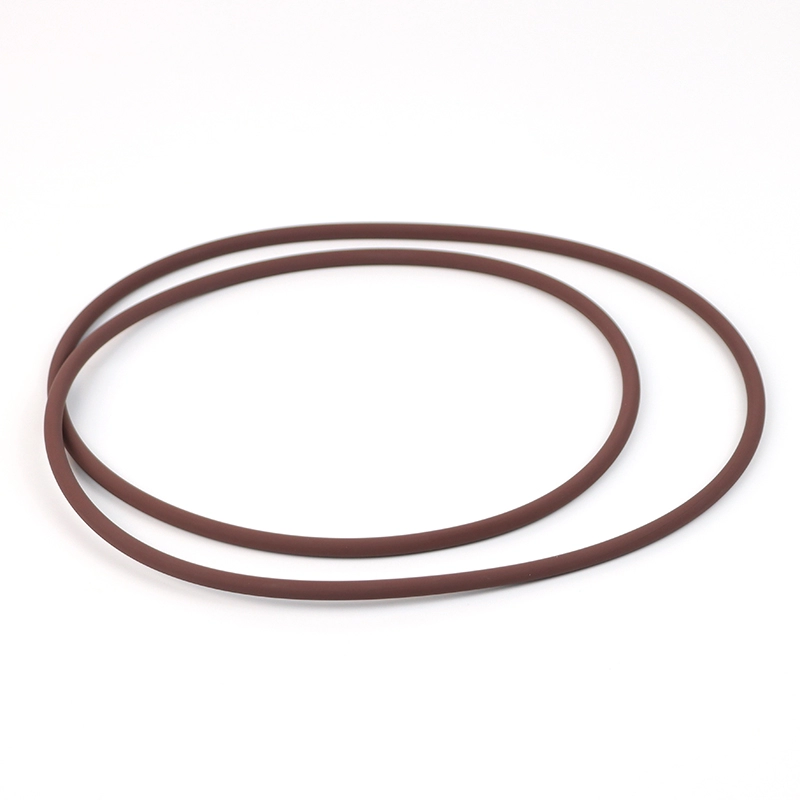
An O-ring is a circular elastomeric ring with a round cross-section. It is normally installed inside a groove and compressed between two mating surfaces. When the components are assembled, the O-ring deforms and creates a sealing line around the joint.
A gasket is usually a flat or specially shaped sealing component installed between two surfaces. Depending on the application, gaskets can be manufactured from rubber, elastomeric sheets, graphite, PTFE, fiber materials, metal, or composite materials.
In simple terms, an O-ring is generally a compact, groove-based seal, while a gasket is commonly used to seal a larger mating surface or flange.
Neither is universally better. The correct choice depends on how the equipment is designed.
O-rings are particularly useful when the equipment has a dedicated groove for a compact elastomeric seal. Their relatively small cross-section makes them suitable for valves, pumps, cylinders, hydraulic equipment, pipe connections, housings, fittings, and many other industrial components.
One major advantage is versatility. The same basic O-ring geometry can be produced in different diameters, cross-sections, materials, and hardness levels to meet different operating requirements.
O-rings can also be used in both static and dynamic applications. In a static application, the O-ring remains stationary between mating components. In a dynamic application, it may seal a moving piston, shaft, or valve component.
For manufacturers that use many different machines, this flexibility can simplify spare-parts management because O-rings are available in standardized dimensions as well as customized specifications.
Gaskets are often more appropriate when two relatively large surfaces need to be sealed across their entire mating area. Flanges, engine covers, pipe connections, heat exchangers, pressure vessels, and large equipment housings are common examples.
A gasket can be manufactured in a shape that follows the complete flange or mating surface, including bolt holes and irregular geometries. This makes it practical for large-area sealing applications where an O-ring groove is not part of the original equipment design.
Gaskets are also available in materials specifically selected for high temperature, chemical resistance, pressure, or particular industrial processes.
If an existing machine is designed around a gasketed flange, replacing the gasket with an O-ring is generally not simply a matter of choosing a different seal. The mating surfaces and groove design would need to be engineered for the O-ring.
Pressure affects both sealing methods, but the design considerations are different.
An O-ring uses elastomer deformation and system pressure to maintain sealing contact. Under increasing pressure, the seal may be pushed toward the clearance gap between mating components. If the clearance is too large or the material is too soft, extrusion can occur.
For high-pressure O-ring applications, engineers should consider material hardness, groove dimensions, clearance, temperature, pressure cycling, and whether a backup ring is required.
Gasket performance depends heavily on flange design, gasket compression, surface condition, bolt load, gasket material, and pressure distribution. An improperly tightened flange can create uneven gasket compression and eventually lead to leakage.
Therefore, pressure rating should never be considered independently from the sealing design. The same gasket or O-ring may behave differently in different equipment configurations.
Temperature selection depends primarily on the material rather than simply whether the component is an O-ring or gasket.
For elastomeric O-rings, NBR is commonly used for oils, fuels, hydraulic fluids, and general industrial applications. EPDM is often selected for water, hot water, steam, weathering, and ozone exposure. FKM is frequently used where higher temperature resistance combined with resistance to oils, fuels, and many chemicals is required.
Other materials can be considered for specialized applications. Silicone/VMQ offers good flexibility across a broad temperature range, while FFKM is designed for particularly demanding chemical and high-temperature environments.
Gaskets have a much broader material category, ranging from rubber and elastomeric sheets to graphite, PTFE, metal, and composite materials. For extreme temperature applications, the gasket material may therefore be selected differently from an elastomeric O-ring.
The key is to start with the actual temperature and sealing medium, then select the material.
This is one area where O-rings have a significant practical advantage in many applications.
O-rings can be designed for both static and dynamic sealing. A hydraulic cylinder, for example, may use an O-ring or another elastomeric seal in a moving assembly, while an equipment cover may use an O-ring for static sealing.
Traditional flat gaskets are generally associated with static sealing because they are compressed between stationary mating surfaces. They are not normally the first choice for applications involving continuous sliding or rotational movement.
If the equipment requires dynamic sealing, an O-ring or specialized dynamic seal is usually considered as part of the engineering design.
For hydraulic applications, customers can also review hydraulic sealing solutions when the application requires dedicated sealing components for moving equipment.
Installation depends on the equipment design, but O-rings can be convenient when the groove is properly designed and accessible.
An O-ring can usually be replaced without replacing a large flange gasket, and standardized sizes make it possible to maintain a relatively compact inventory. However, installation still requires care. Sharp edges, contamination, twisting, excessive stretching, and damaged grooves can cause premature failure.
Gaskets can also be straightforward to replace when the flange structure provides easy access. However, large or complex gaskets may require more handling during installation, and correct bolt tightening is often important for maintaining even compression.
For both types of seals, surface condition and installation procedures have a direct effect on service life.
O-ring material selection is closely tied to elastomer performance. HaO Seal Technology supports a broad range of materials, including:
· Nitrile Rubber (Buna-N/NBR)
· Ethylene-Propylene Rubber (EPR/EPDM)
· Fluorocarbon Rubber (FKM/FPM)
· Fluorosilicone (FVMQ)
· Hydrogenated Nitrile (HNBR)
· Silicone Rubber (VMQ)
· Neoprene Rubber (CR)
· Acrylate Rubber (ACM)
· Polyurethane (PU)
· Styrene-Butadiene Rubber (SBR)
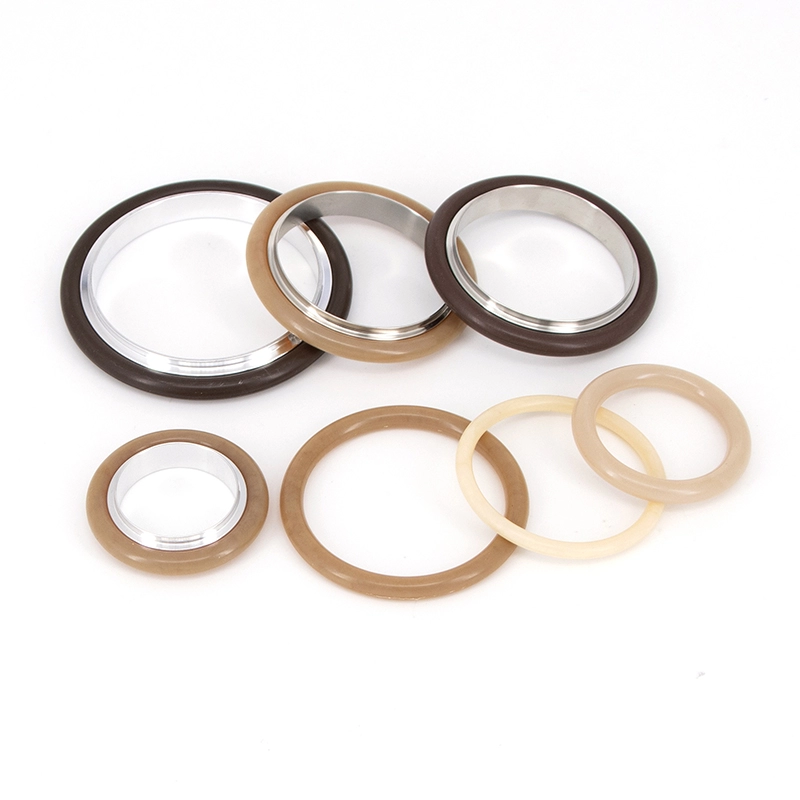
· PTFE
· FFKM
This material range allows customers to select the O-ring compound according to the actual sealing medium, temperature, mechanical requirements, and environment.
For example, NBR may be suitable for many oil and hydraulic applications, while EPDM is more appropriate for many water-based environments. FKM can be considered for applications requiring strong heat, oil, and fuel resistance, while FFKM is used for particularly demanding chemical environments.
O-rings are highly dependent on groove design because the groove determines compression, positioning, and available clearance.
The groove width and depth need to match the O-ring cross-section and intended application. Excessive compression can increase friction and installation stress, while insufficient compression can result in leakage.
For dynamic applications, surface finish and movement direction are also important. High pressure may require tighter control of extrusion clearance.
Gaskets do not normally require an O-ring-style groove, but flange design remains critical. The mating surfaces, bolt pattern, compression, flatness, and surface finish can all affect sealing performance.
This means neither sealing method is simply "design-free." The sealing interface must be engineered for the selected component.
For maintenance teams, the better choice depends on how the equipment is designed and how frequently the seal needs to be replaced.
O-rings can be attractive for equipment requiring compact seals, standardized replacement parts, or repeated maintenance. A wide range of standard sizes makes it easier to source replacements from an O-ring factory or supplier.
Gaskets may be more appropriate for large flanged connections or equipment where the sealing area follows a complex shape.
If equipment is frequently disassembled, the replacement process, accessibility, availability of standard dimensions, and required installation procedure should all be considered before selecting a sealing method.
For customers purchasing O-rings for production equipment, the supplier's material range and customization capability can be just as important as the basic dimensions.
HaO Seal Technology Co.,Ltd provides standard and customized O-Ring sealing solutions for industrial and commercial applications. Its products are designed for static and dynamic sealing and can be manufactured using different elastomers according to application requirements.
The available material options, including NBR, EPDM, FKM, Silicone, FFKM, HNBR, FVMQ, ACM, CR, PU, SBR and PTFE, give customers more flexibility when dealing with different fluids and operating environments.
The company also supports specifications based on AS568, ISO 3601, and JIS B 2401, together with customized sizes. This is particularly useful for equipment manufacturers that require non-standard dimensions or need to replace an existing seal with a drawing or sample.
Whether you are considering an O-ring or gasket, provide the supplier with as much application information as possible. The most useful information includes the sealing medium, operating temperature, pressure, static or dynamic operation, dimensions, groove or flange design, surface condition, movement, and applicable industry standard.
For an O-ring, inside diameter, cross-section, hardness, material, and groove dimensions are especially important. For a gasket, the flange dimensions, thickness, material, bolt pattern, surface finish, and required compression should be considered.
If the existing seal has failed, photographs and failure information can also help. Swelling, cracking, extrusion, compression set, or wear can point toward different causes.
The choice between an O-ring and a gasket should be based on the equipment design rather than simply the perceived advantages of one sealing method.
Choose an O-ring when you need a compact elastomeric seal installed in a suitable groove, particularly when static or dynamic sealing, standardized dimensions, and material flexibility are important. Consider a gasket when you need to seal a larger flange or mating surface, especially when the equipment is specifically designed around a flat or shaped gasket.
For O-ring applications, HaO Seal Technology Co.,Ltd provides high-precision standard and customized sealing components with a broad selection of elastomer materials. By matching the O-ring material, size, hardness, groove design, pressure, temperature, and sealing medium to the actual application, manufacturers and maintenance teams can reduce leakage and improve equipment reliability.