
2026/06/12
How Automotive Seals Enhance Performance in Modern Hydraulic Systems


Automotive seals have a relatively simple job: keep fluids in, keep contaminants out, and maintain reliable contact between components. In practice, achieving long service life is much more complicated. A seal can fail even when the rubber material itself is suitable if the groove design, compression, surface finish, installation process, or operating conditions are not properly controlled.
For vehicle manufacturers and component suppliers, improving sealing performance is therefore not just a matter of choosing a better rubber compound. It requires looking at the entire sealing system. The seal profile, material, dimensional accuracy, mating surface, lubrication, temperature, pressure, vibration, and assembly process all contribute to the final result.
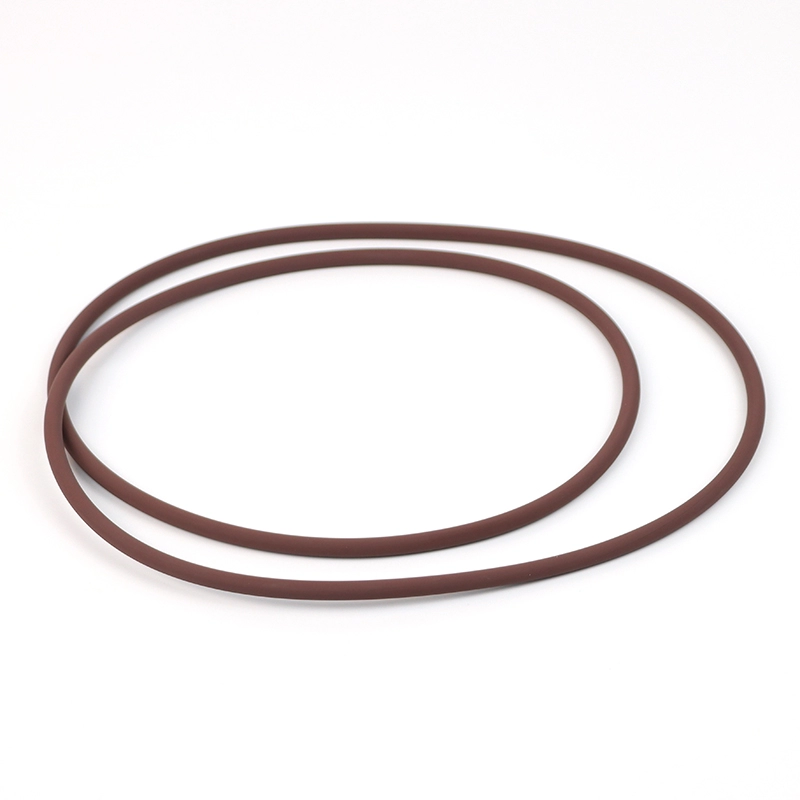
Automotive seals operate through repeated mechanical and environmental changes. During service, the rubber may be compressed for long periods, exposed to fluids, subjected to vibration, or forced to accommodate movement between two components. Over time, these conditions can change the physical properties of the seal.
One common problem is compression set. A seal that remains compressed for an extended period may gradually lose its ability to recover. Once the sealing force becomes insufficient, small leakage paths can appear between the seal and the mating surface.
Dynamic seals face a different problem. Repeated sliding or rotating movement can cause friction and wear. Excessive friction generates heat and accelerates material loss, while insufficient lubrication or an unsuitable surface finish can make the situation worse.
Chemical exposure can also reduce service life. Oil, fuel, coolant, brake fluid, cleaning chemicals, and other automotive fluids can cause some rubber compounds to swell, shrink, soften, or harden. Therefore, a seal should always be evaluated under the actual combination of temperature and fluid exposure rather than under isolated laboratory conditions.
A rubber seal does not work independently of the component into which it is installed. The groove or housing determines how much the seal is compressed and where the sealing force is generated.
For static applications, the compression needs to be sufficient to maintain contact under pressure and temperature changes. Too little compression may result in leakage, while excessive compression can increase assembly force and accelerate permanent deformation.
Dynamic applications require even more careful design. A rod seal, piston seal, rotary seal, or custom profile must provide enough contact to prevent leakage without producing excessive friction. The movement speed, pressure, shaft or rod diameter, and expected number of operating cycles all influence the appropriate profile.
This is why automotive rubber seals should be considered together with the customer's housing and mating components. A technically excellent rubber compound cannot compensate for an unsuitable sealing geometry.
Small dimensional variations can have a noticeable effect on sealing performance. The inner diameter, outer diameter, cross-section, lip geometry, and other critical dimensions determine how the seal interacts with the mating parts.
If the seal is undersized or oversized, the designed compression may not be achieved. A variation in lip geometry can also affect contact pressure and friction. In high-volume automotive production, consistency between batches is particularly important because thousands or millions of components may need to fit the same assembly.
Manufacturing control therefore becomes part of sealing performance. Mold accuracy, curing conditions, trimming, inspection, and handling all need to be controlled to maintain stable dimensions.
For custom automotive seals, engineering drawings should clearly identify critical dimensions and tolerances. Where necessary, samples should be evaluated in the actual assembly rather than relying only on dimensional inspection.
The surface that contacts the seal is just as important as the seal itself. Rough surfaces can increase friction and wear, while scratches, machining marks, burrs, or contamination can create leakage channels or damage sealing lips during assembly.
For dynamic seals, the surface finish needs to be appropriate for the type of movement and seal material. A surface that is acceptable for a static O-ring may not be suitable for a high-speed rotating or reciprocating seal.
The same principle applies to assembly surfaces. Sharp edges around grooves or holes can cut the seal as it is installed. Chamfers, radii, and appropriate assembly tooling can significantly reduce the risk of damage.
In production environments, controlling the condition of mating components is often overlooked because attention is focused primarily on the rubber part. In reality, the seal and the surface form one functional system.
Lubrication can have a major effect on the service life of dynamic seals. Appropriate lubrication reduces friction between the seal and moving component, helping to control heat generation and wear.
However, the lubricant itself must be compatible with the seal material. Using an unsuitable assembly lubricant can cause swelling or degradation, while insufficient lubrication can increase friction during the initial operating period.
Assembly lubrication should also be applied consistently. Excessive lubricant can create contamination problems in some applications, while insufficient coverage can lead to high friction or seal damage.
For production lines, it is useful to establish a defined assembly procedure covering lubricant type, quantity, application method, and storage conditions. This creates a more repeatable process than relying on individual operator judgment.
Many seal failures occur before the vehicle is even put into service. A seal can be cut, twisted, stretched, contaminated, or incorrectly positioned during assembly.
O-rings, for example, can become twisted inside a groove if they are installed incorrectly. A sealing lip can also be damaged when it passes over a sharp edge. If the seal is forced into position with excessive mechanical pressure, permanent deformation may occur.
Cleanliness is another important factor. Dust, metal particles, machining debris, and other contaminants can become trapped between the seal and mating surface. In fluid systems, even small particles may create leakage paths or accelerate wear.
For this reason, installation procedures should specify the correct orientation, tooling, lubrication, insertion force, and inspection method. Where automotive seals are used in high-volume assembly, automated or controlled installation processes can help reduce variation.
A seal should be tested under conditions that represent its actual service environment. Basic material tests such as hardness, tensile strength, elongation, and compression set provide useful information, but they do not fully predict performance inside a vehicle.
Depending on the application, validation may include temperature aging, fluid immersion, pressure testing, leakage testing, dynamic cycling, friction testing, and environmental exposure. For NEV applications, repeated thermal cycling can be particularly important because battery systems, electric drive units, cooling systems, and power electronics can experience significant temperature changes during operation.
Testing should also consider the complete assembly. A seal that performs well in a simple laboratory fixture may behave differently when installed between production components with real dimensional tolerances and surface conditions.
A capable automotive seal manufacturer should be able to support this development process by combining material knowledge with production and application experience.
No. Material selection is important, but it is only one part of the equation.
For example, FKM may be appropriate for an application involving high temperature and oil exposure, while EPDM may be more suitable for certain coolant and water-based environments. NBR can be effective in many oil and fuel applications, while silicone can offer advantages in applications requiring a broad temperature range.
But even a suitable material can fail if the seal is incorrectly designed or installed. Excessive compression, poor surface finish, incorrect dimensions, incompatible lubricant, or repeated mechanical overload can all shorten service life.
The better approach is to match material + geometry + compression + surface + operating conditions + manufacturing quality. This combination gives engineers a much more reliable basis for improving seal performance.
For automotive programs, consistency is often more important than achieving a good result with a single sample. Production seals need to maintain stable properties across different batches and production cycles.
HaO Seal Technology Co., Ltd, established in 2010, specializes in rubber seals and sealing solutions for automotive and NEV, hydraulic and pneumatic, photovoltaic, semiconductor, inkjet marking, and medical and sanitary applications. The company has an R&D centre focused on continuous production-line improvement and the development of rubber sealing products.
From a buyer's perspective, an experienced automotive seal supplier should be able to discuss more than material grades. Questions about compound consistency, mold control, dimensional inspection, curing, trimming, testing, packaging, and application requirements can reveal how well a supplier understands production-level sealing requirements.
This is especially relevant when a custom seal is used in a large-volume automotive program. Stable manufacturing reduces variation during assembly and helps maintain predictable sealing performance throughout production.
The most effective approach is to address potential failure points before production begins. Start by defining the real operating conditions, including temperature range, pressure, fluid exposure, movement, vibration, and expected service cycles. Select a compatible elastomer and then design the seal profile around the actual installation space and movement.
Next, verify the groove and mating surfaces. Check compression, dimensional tolerances, surface finish, edges, and assembly clearances. If the application is critical, test the seal under representative conditions rather than relying only on generic material data.
During mass production, keep the manufacturing and assembly processes controlled. Monitor critical dimensions, material properties, cleanliness, lubrication, and installation procedures. If failures appear in the field, investigate the complete system rather than immediately changing the rubber material.
For vehicle manufacturers and component suppliers, this systematic approach can provide more durable results than simply selecting a higher-grade elastomer.
Longer seal life comes from controlling the details that affect sealing force, material stability, friction, and installation quality. The right rubber compound is important, but it needs to work together with the correct profile, compression, surface condition, manufacturing tolerance, and operating environment.
For automotive and NEV applications, a practical sealing strategy should therefore begin with the complete system. Understand how the seal will move, what it will contact, how hot it will become, which fluids it will encounter, and how it will be assembled. Then validate the design under realistic conditions.
This approach helps turn automotive sealing solutions from a basic component purchase into a controlled engineering process, giving manufacturers a better opportunity to achieve stable sealing performance and longer service life.