
2026/02/02
Common Applications of O-Rings in Industrial Machinery


Automotive seals used in high-temperature environments must do more than tolerate heat. They need to maintain elasticity, resist compression set, remain compatible with oils or coolants, and continue sealing when components expand, contract, vibrate, and cycle through different temperatures. For this reason, choosing the right material is often more important than simply choosing a seal with a high advertised temperature rating.
In automotive applications, heat can come from the engine, exhaust system, turbocharger, transmission, electric motor, inverter, battery thermal management system, or other powertrain components. Each area presents a different combination of temperature, fluid exposure, pressure, and mechanical movement. Materials such as FKM, silicone, EPDM, and NBR can all be useful, but they are not interchangeable.
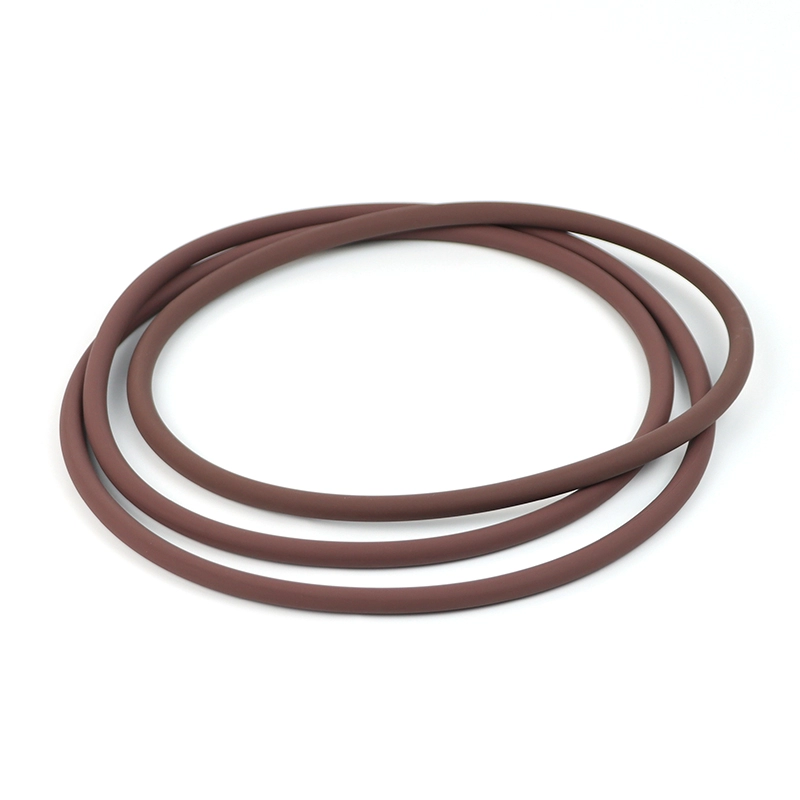
Rubber seals work because their elastomeric properties allow them to deform against mating surfaces and recover their shape when conditions change. Excessive heat can gradually alter this behavior. Depending on the rubber compound and operating environment, prolonged exposure to elevated temperatures can cause hardening, softening, cracking, loss of elasticity, compression set, or chemical degradation.
The actual temperature experienced by a seal is also not always the same as the temperature of the surrounding system. A seal positioned close to a heat source may experience localized temperature peaks, while a seal inside a housing may see slower temperature changes. Heat generated by friction can further increase the temperature of a dynamic seal.
Temperature cycling can be just as important as maximum temperature. A vehicle may repeatedly move from a cold start to operating temperature and then cool down after shutdown. Over thousands of cycles, differences in thermal expansion between rubber, metal, plastic, and other components can place additional stress on the sealing interface.
This is why high-temperature automotive rubber seals should be selected according to the complete operating environment rather than temperature alone.
FKM, commonly known by the trade name Viton in some markets, is widely used for demanding automotive sealing applications where high temperature and chemical resistance are both required. It generally performs well in contact with many oils, fuels, lubricants, and other automotive fluids.
This makes FKM a strong candidate for areas such as engine systems, fuel systems, transmissions, turbocharged applications, and other components where heat and hydrocarbon exposure occur together. Compared with many general-purpose elastomers, FKM can maintain useful mechanical and sealing properties at elevated temperatures for extended periods.
However, FKM should not automatically be selected for every hot application. Different FKM formulations can have different resistance to fuels, chemicals, low temperatures, and specific fluids. Cost considerations may also make another material more appropriate when the operating conditions are less demanding.
For engineering teams, the better approach is to identify the actual fluid, temperature range, pressure, movement, and required service life before specifying the compound.
Silicone rubber is particularly useful when a seal needs to withstand a wide temperature range, including both high and low temperatures. Its flexibility at low temperatures can be an advantage in applications where the vehicle experiences significant seasonal or operating-temperature changes.
Silicone materials are used in selected automotive applications involving sensors, electrical components, lighting, connectors, cooling systems, and other areas where temperature flexibility is important. They can also offer good resistance to weathering and aging.
The limitation is that silicone is not universally resistant to automotive fluids. In applications involving certain oils, fuels, or aggressive chemicals, another elastomer may be more suitable. Silicone also has mechanical characteristics that differ from FKM or NBR, so wear resistance and dynamic sealing requirements need to be considered.
For this reason, silicone works best when its temperature and environmental advantages directly match the application.
EPDM is an important elastomer for automotive systems where resistance to water, steam, weathering, ozone, and certain coolants is required. It can provide good performance in cooling and thermal management applications where the sealing medium is not petroleum-based oil or fuel.
This distinction is important. EPDM generally performs well in water-based environments but is not normally the first choice for applications involving petroleum oils and fuels. Selecting EPDM simply because it has a suitable temperature range can therefore lead to premature seal failure if fluid compatibility has not been considered.
In conventional vehicles, EPDM can be relevant to cooling systems, hoses, and related components. In NEVs, its properties can also be useful in selected battery thermal-management and coolant-related sealing applications.
The practical lesson is that temperature resistance and chemical compatibility must be evaluated together.
NBR remains widely used in automotive sealing because of its good resistance to petroleum-based oils and fuels, combined with useful mechanical properties and broad industrial availability. It can be an effective choice for applications with moderate temperature requirements.
However, conventional NBR has a more limited high-temperature capability than FKM. Long-term exposure to temperatures beyond the compound's suitable operating range can accelerate hardening, aging, and loss of sealing performance.
This does not make NBR unsuitable for automotive applications. It means the material should be used where its properties match the actual conditions. For applications with moderate heat and demanding oil resistance, NBR can still provide a practical balance of performance and durability.
Where temperatures become significantly higher, engineers may need to consider high-temperature NBR formulations or move to a different elastomer such as FKM.
A useful comparison should consider more than the maximum temperature shown on a material datasheet.
Material | High-Temperature Capability | Typical Strengths | Common Automotive Considerations |
FKM | Excellent | Heat, oil, fuel and chemical resistance | Suitable for demanding powertrain and fluid applications |
Silicone | Excellent | Wide temperature range, flexibility, weather resistance | Fluid compatibility must be checked carefully |
EPDM | Very Good | Coolant, water, ozone and weather resistance | Generally unsuitable for petroleum oils and fuels |
NBR | Good | Oil and fuel resistance, mechanical properties | Better suited to moderate-temperature applications |
These categories are only a starting point. The actual performance depends on compound formulation, hardness, sealing profile, manufacturing quality, pressure, exposure time, and operating conditions.
For critical automotive applications, material testing under representative conditions is much more useful than selecting an elastomer based solely on a generic material chart.
Temperature is only one part of seal selection. Fluid compatibility can be equally important. A rubber compound may withstand a high temperature in dry air but perform very differently when continuously exposed to oil, fuel, coolant, brake fluid, refrigerant, or cleaning chemicals.
Compression set is another important consideration for static seals. If the rubber permanently deforms after long-term compression, the contact force against the mating surface can decrease and leakage may develop.
For dynamic seals, friction and wear become more important. A material that performs well in a static application may not be the best choice for a reciprocating or rotating component. Surface finish, lubrication, shaft speed, pressure, and seal geometry all influence service life.
The manufacturing process also matters. Dimensional accuracy, curing conditions, material consistency, flash control, and surface quality can affect how reliably a seal performs after installation. Even a technically suitable elastomer can produce poor results if the finished seal does not meet the required tolerances.
Laboratory testing should reproduce the conditions that the seal will actually experience. Depending on the application, this may include thermal aging, compression set testing, fluid immersion, tensile testing, hardness testing, leakage testing, pressure testing, and repeated temperature cycling.
For automotive applications, it is useful to examine the seal before and after testing. Changes in hardness, volume, dimensions, tensile properties, surface condition, and elasticity can reveal whether the selected compound is suitable for long-term service.
Thermal cycling can be particularly important for NEV components. Battery packs, electric drive units, inverters, and cooling systems may repeatedly move between different temperature conditions. A seal that performs well at one fixed temperature may behave differently after hundreds or thousands of heating and cooling cycles.
A qualified automotive seal manufacturer should therefore be able to support material selection with appropriate testing and manufacturing controls rather than simply supply a standard rubber profile.
A reliable sealing solution usually comes from controlling several factors at the same time. The rubber compound needs to match the fluid and temperature environment, while the seal geometry needs to provide the required contact pressure without creating excessive friction or stress.
Manufacturing consistency is equally important for production programs. Variations in hardness, dimensions, curing, or surface condition can result in inconsistent assembly performance. For automotive customers, stable batch-to-batch production is especially important because seals are often installed in large quantities across the same vehicle platform.
HaO Seal Technology Co., Ltd, established in 2010, specializes in rubber seals and sealing solutions for automotive and NEV, hydraulic and pneumatic, photovoltaic, semiconductor, inkjet marking, and medical and sanitary applications. Its R&D centre focuses on improving production lines and supporting the development of rubber sealing products for demanding industrial applications.
For buyers looking for automotive sealing solutions, the key advantage is not simply access to different rubber materials. What matters is the ability to connect material selection, seal design, manufacturing control, and application requirements into one practical solution.
There is no universal “best” rubber for every high-temperature automotive seal. FKM is often a strong option where high heat and oil or fuel resistance are required. Silicone can be valuable where wide temperature flexibility is important. EPDM is well suited to many coolant and water-based environments, while NBR remains useful for applications involving moderate temperatures and petroleum-based fluids.
The correct choice depends on what the seal actually experiences during service. Before specifying the material, engineers should define the continuous and peak temperatures, fluid exposure, pressure, movement, compression requirements, expected service life, and environmental conditions.
Once these parameters are clear, material selection becomes much more straightforward. The goal is not to choose the material with the highest temperature rating, but to choose a compound that can maintain its sealing function throughout the complete operating cycle of the vehicle.