
2026/07/31
A Complete Guide to UN Hydraulic Piston and Rod Seals: Features, Benefits, and Selection Tips


For hydraulic systems operating under high pressure, seal material selection directly affects leakage control, service life, chemical resistance, and overall equipment reliability. Hydraulic V-Ring Seals must withstand pressure, temperature changes, fluid exposure, friction, and repeated movement without losing their sealing performance. For manufacturers and equipment buyers, understanding the available elastomers is therefore essential when selecting the right sealing solution.
HaO Seal Technology Co.,Ltd. manufactures precision-engineered rubber sealing components using NBR, EPDM, Silicone, FKM, and FFKM. These materials cover a broad range of operating conditions and can be supplied in standard or customized dimensions for hydraulic, industrial, automotive, and commercial applications.
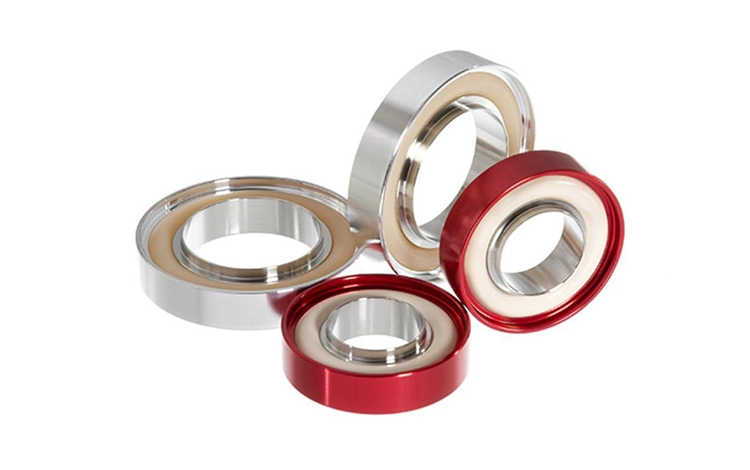
A hydraulic seal does much more than prevent fluid from escaping. It must maintain contact with mating surfaces while accommodating pressure fluctuations, temperature changes, shaft movement, and exposure to hydraulic media.
A material that performs well in mineral oil may not be suitable for aggressive chemicals or high-temperature applications. Likewise, an elastomer designed for chemical resistance may not be the most economical choice for a standard hydraulic system.
For this reason, material selection should consider several factors:
· Hydraulic fluid and chemical compatibility
· Operating and peak temperature
· Working pressure
· Dynamic or static sealing conditions
· Shaft or piston movement
· Hardness and extrusion resistance
· Installation environment
· Expected service life
Choosing the right compound helps the V-Ring Seal maintain its sealing function under actual operating conditions rather than simply meeting dimensional requirements.
NBR, also known as nitrile rubber, is one of the most commonly used elastomers for general industrial sealing applications. It offers good resistance to mineral oils, hydraulic oils, fuels, and many petroleum-based fluids.
Its balance of mechanical strength, wear resistance, and fluid compatibility makes NBR a practical option for hydraulic equipment, pumps, cylinders, valves, and industrial machinery.
NBR is particularly suitable when the application involves:
· Petroleum-based hydraulic oils
· General industrial equipment
· Moderate-temperature environments
· Static or dynamic sealing
· Applications requiring good abrasion resistance
For standard hydraulic systems, NBR can provide a dependable combination of sealing performance and durability.
EPDM is widely selected for applications where resistance to water, steam, weathering, ozone, and certain chemicals is important. It performs well in environments where NBR may not be the ideal material.
EPDM is commonly considered for water-based hydraulic systems, cooling equipment, outdoor machinery, and applications exposed to environmental conditions.
However, EPDM is generally not recommended for petroleum-based oils and fuels. This distinction is important when specifying a hydraulic V-Ring Seal because fluid compatibility can determine whether a seal remains functional over its intended service period.
Silicone rubber offers excellent flexibility and broad temperature capability. It is often selected when a sealing component must remain flexible across significant temperature variations.
Silicone can be useful in industrial and commercial applications where temperature stability, flexibility, and resistance to environmental aging are important considerations.
However, silicone does not provide the same level of resistance to abrasion and certain hydraulic fluids as some other elastomers. Therefore, it should be selected based on the actual operating environment rather than temperature requirements alone.
FKM, commonly associated with the Viton® material family, is frequently used when sealing components must withstand elevated temperatures, fuels, oils, and many aggressive chemicals.
For demanding hydraulic applications, FKM can provide a useful combination of heat resistance, chemical resistance, and mechanical stability. It is often considered for equipment operating in harsh industrial environments or where conventional NBR compounds may have limitations.
FKM is especially relevant when the application involves:
· Elevated operating temperatures
· Petroleum-based fluids
· Fuels and oils
· Chemical exposure
· More demanding industrial conditions
The specific FKM compound should still be matched to the actual fluid and temperature conditions.
FFKM is an advanced perfluoroelastomer designed for applications where exceptional chemical and temperature resistance is required. It is commonly considered for severe operating environments in specialized industrial equipment.
Compared with conventional elastomers, FFKM provides outstanding resistance to a wide range of aggressive chemicals and elevated temperatures. It can therefore be a suitable option when seal failure would result in significant equipment downtime or process disruption.
Because application conditions vary considerably, FFKM selection should be based on the specific chemicals, temperatures, pressure conditions, and mechanical requirements involved.
Material is only one part of seal selection. Correct dimensions and hardness are equally important for achieving reliable sealing performance.
HaO Seal Technology supports a broad range of sealing dimensions, including standard specifications and customized sizes. Available standards include AS568, ISO 3601, and JIS B 2401, while custom dimensions can be developed according to customer drawings or application requirements.
The available hardness range is approximately 20–90 Shore A. Different hardness levels provide different performance characteristics. Softer compounds can offer better conformability and sealing contact, while harder compounds can provide greater resistance to extrusion and mechanical deformation.
The correct hardness depends on factors such as:
1. Operating pressure
2. Groove dimensions
3. Clearance between mating components
4. Static or dynamic application
5. Temperature
6. Seal material
7. Surface finish
A properly specified seal should be evaluated as a complete system rather than selected by material name alone.
The available material options can cover temperatures from approximately -60°C to +320°C, depending on the elastomer and formulation.
Material | Typical Strengths | Application Considerations |
NBR | Oil, fuel, wear resistance | General hydraulic and industrial systems |
EPDM | Water, steam, weather, ozone | Water-based and outdoor applications |
Silicone | Flexibility, temperature stability | Temperature-variable environments |
FKM | Heat, oil, fuel, chemicals | High-temperature industrial applications |
FFKM | Exceptional chemical and heat resistance | Severe and specialized environments |
These ranges should be treated as material-dependent guidelines rather than universal operating limits. Actual performance can also be influenced by pressure, fluid type, mechanical movement, compound formulation, and installation conditions.
Not every hydraulic system can use an off-the-shelf sealing component. Custom dimensions may be required when equipment has non-standard grooves, special clearances, unusual shaft dimensions, or specific installation constraints.
HaO Seal Technology provides both standard and customized rubber sealing solutions. Customers can select materials according to their operating environment and provide dimensions, drawings, or technical requirements for customized production.
As a professional rubber O-ring manufacturer, HaO Seal Technology focuses on dimensional accuracy, material selection, and application suitability. This approach helps customers obtain sealing components that are compatible with their equipment rather than simply matching a nominal size.
When specifying a hydraulic V-Ring Seal, the following process can help narrow down the appropriate material:
1. Identify the working fluid.
Determine whether the seal will contact hydraulic oil, fuel, water, steam, chemicals, or another medium.
2. Confirm the temperature range.
Consider both normal operating temperature and short-term temperature peaks.
3. Determine pressure and movement.
High-pressure dynamic applications may require different hardness and compound characteristics than static sealing applications.
4. Check the dimensions.
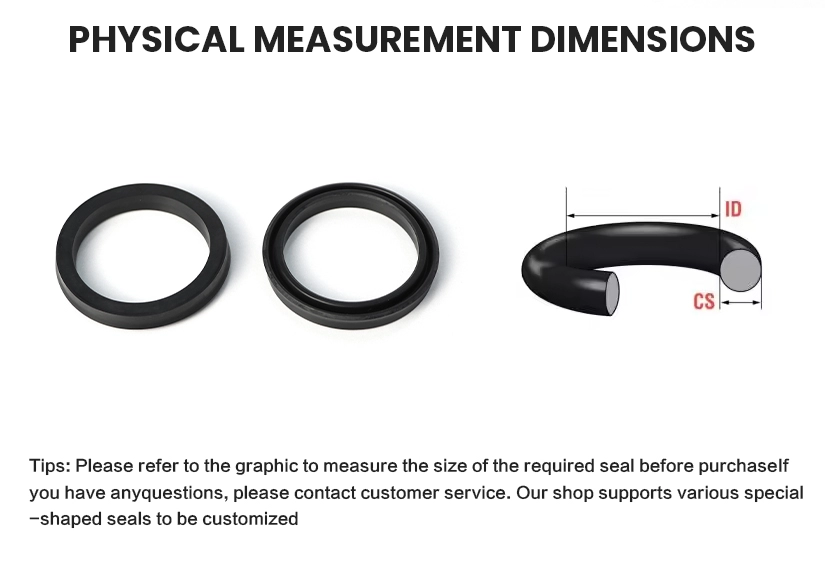
Confirm inside diameter, outside diameter, cross-section, groove dimensions, and installation clearance.
5. Select the appropriate hardness.
Hardness should correspond to pressure, extrusion risk, movement, and installation conditions.
6. Consider relevant standards.
AS568, ISO 3601, and JIS B 2401 can help establish consistent dimensional requirements for compatible sealing components.
This systematic approach reduces the risk of selecting a material or dimension that performs well in laboratory conditions but fails to meet the demands of the actual hydraulic system.
For OEMs, equipment manufacturers, distributors, and industrial users, a reliable sealing supplier should provide more than standard rubber components. Material options, dimensional accuracy, customization capability, and technical understanding are all important when dealing with demanding hydraulic applications.
HaO Seal Technology Co.,Ltd. provides NBR, EPDM, Silicone, FKM, and FFKM sealing solutions with hardness options from 20–90 Shore A and temperature capability ranging from approximately -60°C to +320°C, depending on material selection.
With standard and customized dimensions available, the company can support applications requiring AS568, ISO 3601, JIS B 2401, or application-specific specifications. This combination of material flexibility and dimensional customization makes HaO Seal Technology a practical partner for businesses seeking reliable sealing components.
The materials used in hydraulic V-Ring Seals determine much of their performance under pressure, heat, chemical exposure, and mechanical movement. NBR is a practical choice for many oil-based hydraulic systems, EPDM is well suited to water and weather-resistant applications, Silicone provides excellent flexibility across temperature changes, while FKM and FFKM offer enhanced performance for demanding heat and chemical environments.
Selecting the right material, hardness, dimensions, and applicable standard is essential for achieving dependable sealing performance. With multiple elastomer options, customized dimensions, and precision-engineered production capabilities, HaO Seal Technology Co.,Ltd. provides rubber sealing solutions designed around the actual requirements of industrial and hydraulic applications.