
2026/07/15
Why Are Hydraulic V-Ring Seals Essential in Hydraulic Cylinder Systems?


Automotive seals are not simply rubber components used to prevent leakage. In modern vehicles, a seal may need to withstand high temperature, vibration, pressure changes, oil, coolant, water, dust, chemicals, and thousands of operating cycles without losing its sealing ability. The right automotive seals therefore depend heavily on where the seal is installed, what medium it contacts, and how the vehicle operates.
For passenger cars, commercial vehicles, and NEVs, the sealing requirements can be quite different. A seal used around an engine is exposed to a very different environment from one used in a battery pack, hydraulic system, door, lighting assembly, or electronic control unit. Choosing the correct seal starts with understanding these differences rather than selecting a rubber material based only on its general properties.
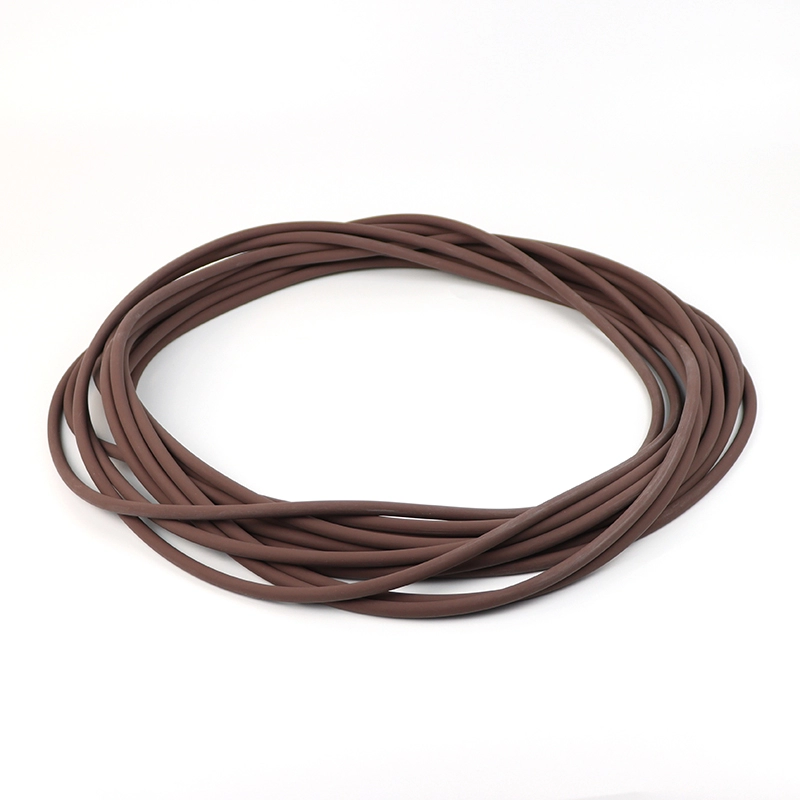
Automotive seals work under conditions that can change significantly during vehicle operation. Temperature may rise and fall repeatedly, components can move relative to each other, and vibration can place continuous mechanical stress on the sealing area. At the same time, the seal may be exposed to engine oil, transmission fluid, coolant, brake fluid, water, road salt, cleaning agents, or other chemicals.
A suitable seal needs to maintain contact pressure against the mating surfaces while accommodating dimensional changes and movement. If the rubber becomes too hard at low temperatures, softens excessively at high temperatures, swells after contact with a fluid, or develops compression set after long-term use, leakage can eventually occur.
This is why automotive rubber seals should be evaluated according to their actual working environment. Material selection, cross-section, hardness, dimensional tolerance, surface condition, and installation method all influence sealing performance.
Different vehicle systems create different sealing challenges, so there is no single rubber compound that is ideal for every application.
Seals around engines, transmissions, and other powertrain components commonly encounter elevated temperatures, lubricating oils, fuels, pressure fluctuations, and vibration. The seal must remain stable over extended operating periods without excessive swelling, hardening, or loss of elasticity.
Depending on the specific fluid and temperature range, manufacturers may consider materials such as NBR, FKM, silicone rubber, or other engineered elastomers. The final selection should be based on the actual oil or fluid chemistry rather than simply choosing the material with the highest nominal temperature rating.
Cooling systems require seals that can maintain reliable sealing when exposed to coolant and repeated temperature cycling. This has become increasingly important in NEVs because battery thermal management, electric motors, power electronics, and charging systems may all require dedicated sealing solutions.
The seal design should account for thermal expansion, pressure changes, installation conditions, and the compatibility between the rubber compound and the coolant being used. A material that performs well with oil may not necessarily provide the same reliability in a particular coolant.
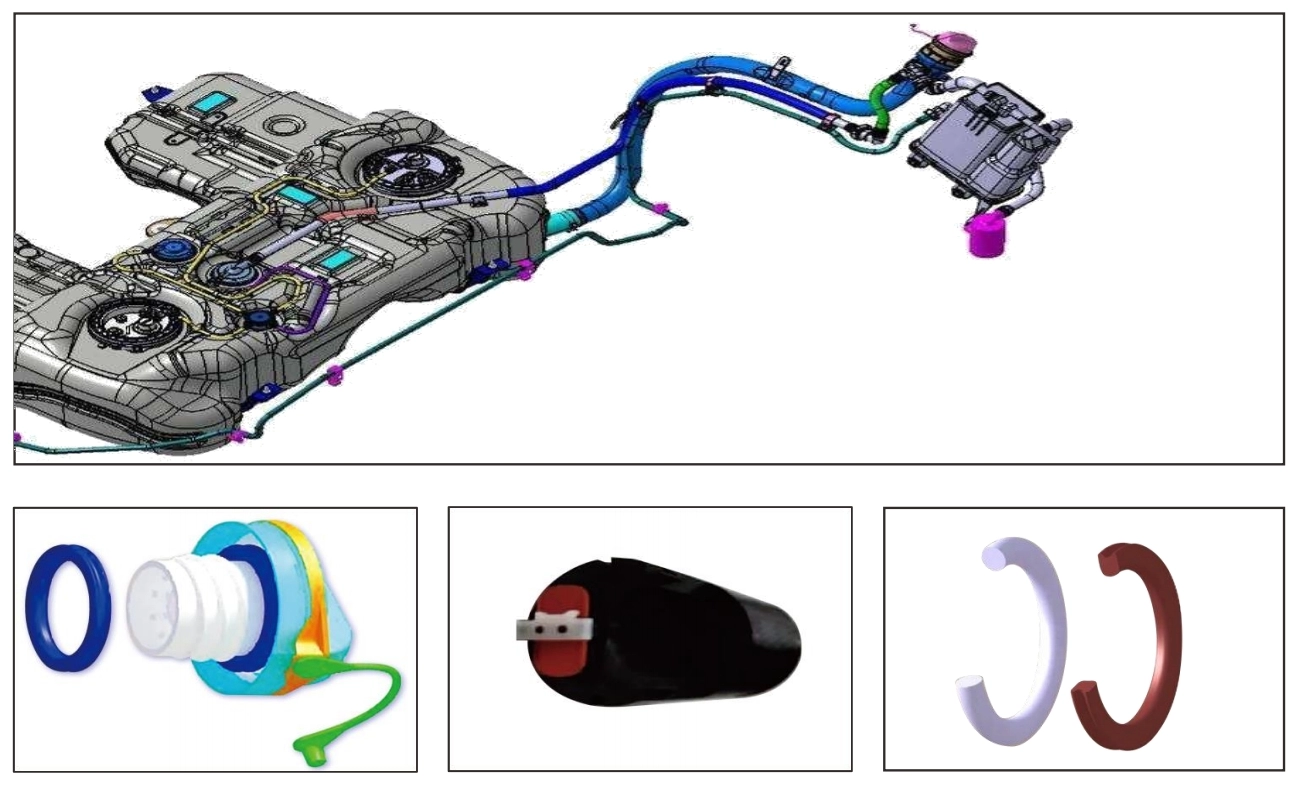
New energy vehicles have created additional sealing requirements that were less prominent in traditional internal-combustion vehicles. Battery enclosures, electrical connectors, cooling plates, drive units, charging components, and electronic modules may require protection against water, dust, coolant, and environmental contamination.
For battery-related applications, sealing is not only about preventing fluid leakage. Maintaining enclosure integrity can also help protect sensitive electrical components from moisture and contaminants. The seal therefore needs to work consistently over temperature changes while maintaining its designed compression and dimensional stability.
For these applications, automotive and NEV seal solutions should be developed around the complete assembly rather than treated as an isolated rubber part.
Hydraulic and pneumatic components introduce another set of requirements because the seal may operate under pressure and continuous or reciprocating movement. Rod seals, piston seals, O-rings, wipers, and other sealing profiles need to control leakage while minimizing friction and wear.
For moving applications, simply increasing seal hardness does not automatically improve performance. Excessive friction can increase heat generation and wear, while insufficient sealing force can lead to leakage. The correct profile, material, hardness, surface finish, and dimensional tolerance need to work together.
Material selection should begin with the medium, temperature, pressure, and movement involved in the application. For example, NBR is widely used where good resistance to petroleum-based oils and fuels is required, while FKM is often considered for applications involving higher temperatures and demanding chemical environments. Silicone rubber can be useful in certain high- and low-temperature applications, while EPDM is commonly considered where water, steam, and certain coolants are involved.
However, these are general material characteristics rather than universal rules. The exact compound formulation can significantly affect performance. Two seals made from the same basic elastomer family may behave differently because of differences in formulation, curing, hardness, reinforcement, and manufacturing process.
This is particularly important for automotive components because the expected service life can be long. A seal that performs well during a short laboratory test may still require further validation under actual temperature cycling, fluid exposure, compression, pressure, and mechanical movement.
Many sealing problems can be traced back to a mismatch between the seal and its operating conditions. Leakage may result from compression set, swelling, thermal aging, extrusion, abrasion, cracking, incorrect dimensions, or damage during installation.
Compression set is particularly important for static seals. After long-term compression, the rubber may lose its ability to recover and maintain sufficient contact pressure. In dynamic applications, abrasion and friction can gradually remove material from the sealing surface.
Installation is another common source of failure. A correctly manufactured seal can still fail if it is twisted, cut, stretched beyond its recommended range, installed into a damaged groove, or exposed to excessive assembly force. Contamination on the sealing surface can also create leakage paths.
For this reason, automotive seal development should consider the complete sealing system, including groove design, mating surfaces, compression ratio, assembly process, and expected operating cycles.
Before a seal enters mass production, testing should reflect its intended application as closely as possible. Depending on the component, validation may include dimensional inspection, hardness testing, tensile and elongation testing, compression set testing, fluid compatibility, temperature aging, pressure testing, leakage testing, and durability testing.
For automotive and NEV applications, environmental testing can be particularly valuable. A seal may need to withstand repeated temperature changes rather than a single high-temperature exposure. Fluid compatibility should also be evaluated using the actual or representative operating medium whenever possible.
Production consistency is equally important. Automotive seals are precision components, and variations in dimensions or material properties can affect assembly and sealing performance. A capable automotive seal manufacturer should therefore be able to control both material formulation and production parameters while maintaining stable quality between batches.
For buyers, the most useful question is not simply whether a supplier can manufacture rubber seals. The more important issue is whether the supplier can understand the application and convert its requirements into a suitable sealing solution.
A reliable supplier should be able to discuss material compatibility, working temperature, pressure, movement, sealing profile, dimensional requirements, testing, and production capability. Technical communication is especially important when the seal is a custom component rather than an off-the-shelf O-ring.
HaO Seal Technology Co., Ltd, established in 2010, focuses on rubber seals and sealing solutions for automotive and NEV, hydraulic and pneumatic, photovoltaic, semiconductor, inkjet marking, and medical and sanitary applications. Its R&D centre works on production-line improvements and supports the development of sealing products for different industrial requirements.
For automotive buyers, this type of technical capability can be more valuable than simply having a large product catalog. The objective is to match the seal material and design with the actual application and then maintain consistent manufacturing quality.
A practical selection process should begin with the application rather than the product name. Identify the installation location, sealing function, operating temperature, pressure, medium, movement, expected service life, and environmental exposure. Then determine the appropriate elastomer and seal profile based on these conditions.
After the initial selection, check groove dimensions, compression, tolerances, mating-surface condition, and installation requirements. Prototype testing should follow where the application is critical, especially for battery systems, powertrain components, hydraulic equipment, and other safety- or performance-sensitive assemblies.
The best automotive seals are not necessarily the hardest, thickest, or most expensive products. They are the products whose material, geometry, manufacturing quality, and validation match the actual working environment. For global automotive and NEV manufacturers, working with a technically capable supplier can help reduce repeated trial-and-error during development and improve long-term sealing reliability.