

2026/05/07
Custom High-Pressure O-Rings for Industrial Sealing


Hydraulic cylinders rely on reliable sealing systems to maintain pressure, reduce leakage, and ensure consistent performance. Choosing the right <a href="https://www.haosealtech.com/products-491/UNHydraulicPistonRodSealsPUEqualLipSealforLowPressureCylinders.html">UN Hydraulic Seals</a> is one of the most important decisions for engineers, equipment manufacturers, and maintenance professionals working with low pressure hydraulic systems. The correct seal not only improves equipment efficiency but also reduces maintenance frequency, extends service life, and lowers overall operating costs.
Among various sealing profiles, the <a href="https://www.haosealtech.com/products-491/UNHydraulicPistonRodSealsPUEqualLipSealforLowPressureCylinders.html">UN Hydraulic Piston Rod Seal</a> has become a preferred solution for low pressure cylinders because of its equal-lip design, durable polyurethane material, and versatile application on both pistons and rods. This article explains how to select the right UN hydraulic seal, what technical factors matter most, and why polyurethane seals continue to be the preferred choice across many hydraulic industries.
Every hydraulic cylinder depends on sealing components to contain hydraulic oil while allowing smooth movement of the piston and rod. Even a small amount of leakage can lead to several problems:
· Reduced hydraulic efficiency
· Pressure loss
· Increased oil consumption
· Contamination entering the hydraulic system
· More frequent maintenance
· Shorter equipment lifespan
Unlike high-pressure systems that often require complex sealing combinations, low pressure cylinders need seals that provide excellent sealing performance under light loads while maintaining low friction during operation.
This is where the UN hydraulic seal profile performs particularly well.
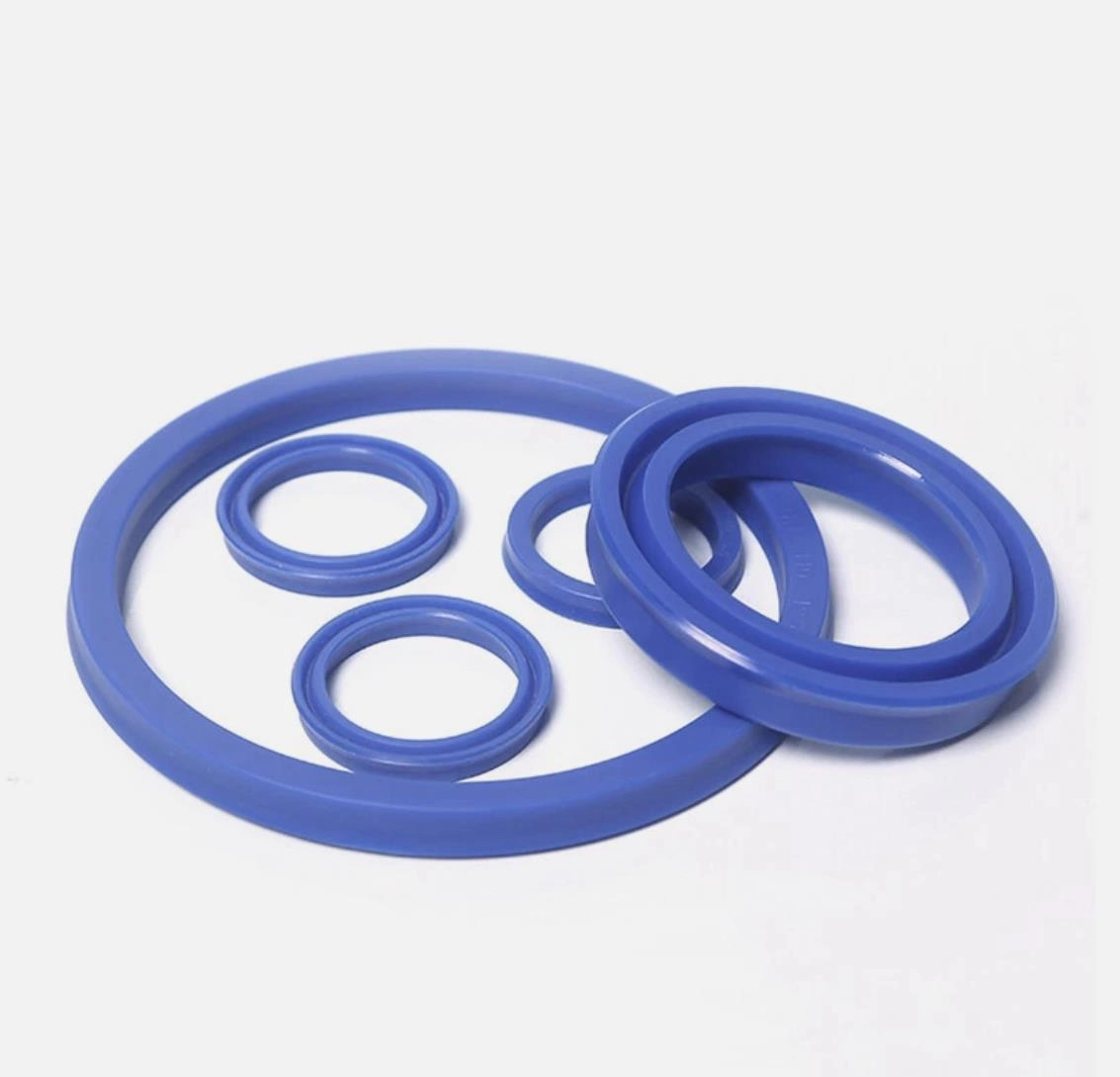
The UNS/UN piston rod seal features an asymmetrical U-shaped profile with a wide cross-section. One of its most distinctive characteristics is that both sealing lips have the same height, allowing the seal to work equally well on both piston and rod applications.
This equal-lip configuration offers several practical advantages:
· One seal profile can serve multiple applications.
· Inventory management becomes easier.
· Installation is more convenient.
· Maintenance costs can be reduced.
Because of its wider sealing section, the UN profile performs especially well in hydraulic cylinders operating under relatively low working pressures.
Material selection is just as important as seal geometry.
Modern UN hydraulic seals are commonly manufactured from polyurethane (PU), which combines the elasticity of rubber with the mechanical strength of engineering plastics.
Typical material specifications include:
· Material: Polyurethane (PU)
· Hardness: 90–95 Shore A
· Available colors: Blue and Green
Compared with conventional rubber materials, polyurethane offers several significant advantages.
Hydraulic cylinders experience continuous reciprocating movement. Polyurethane resists abrasion much better than many traditional elastomers, allowing seals to maintain their sealing edge for longer periods.
During installation or long-term operation, seals may experience localized stress. PU materials provide excellent resistance to tearing, reducing premature failures.
Polyurethane maintains its shape under mechanical loading, making it suitable for demanding industrial applications.
Hydraulic systems occasionally experience pressure spikes and sudden directional changes. PU absorbs these impacts without significant deformation.
A durable seal means fewer replacements, less downtime, and improved equipment availability.
Before selecting a UN hydraulic seal, engineers should evaluate several operating conditions.
Recommended operating pressure:
≤31.5 MPa
Although primarily designed for low pressure hydraulic cylinders, the UN profile still provides reliable sealing performance within this pressure range.
Recommended temperature:
-35°C to +110°C
This wide temperature range allows the seal to perform in outdoor equipment, industrial machinery, agricultural equipment, and mobile hydraulic systems.
Maximum speed:
≤0.5 m/s
Maintaining operation within the recommended speed range helps maximize sealing performance and reduce wear.
UN polyurethane seals are designed primarily for:
· Mineral oil-based hydraulic oils
Before selecting any seal, always verify compatibility with the hydraulic fluid being used.
Unlike directional sealing profiles that require careful orientation, equal-lip seals simplify installation.
Benefits include:
· Reduced installation errors
· Faster assembly
· Lower maintenance time
· Easier replacement during servicing
For equipment manufacturers producing multiple hydraulic cylinder sizes, this versatility also simplifies inventory management.
UN hydraulic seals are widely used in low pressure hydraulic cylinders across many industries.
Common applications include:
Hydraulic cylinders are used extensively in tractors, seeders, loaders, and harvesting equipment where reliable sealing is essential despite dust, mud, and changing weather.
Compact hydraulic systems in lifting mechanisms, support equipment, and auxiliary cylinders benefit from durable polyurethane sealing solutions.
Forklifts, lifting platforms, and warehouse automation equipment rely on smooth cylinder movement to improve operating efficiency.
Manufacturing equipment often requires reliable hydraulic actuation with minimal oil leakage and consistent performance over long production cycles.
Many OEM hydraulic cylinders use UN seals because they provide an excellent balance between sealing efficiency, durability, and ease of maintenance.
When comparing different sealing profiles, the UN design offers several practical advantages.
Continuous reciprocating motion places significant stress on sealing surfaces. Polyurethane minimizes wear while maintaining sealing effectiveness.
Even though designed for lower pressure applications, the seal tolerates occasional pressure fluctuations effectively.
The material maintains structural integrity even under repeated compression cycles.
Some sealing materials become stiff in cold environments.
Polyurethane maintains flexibility across a broad operating temperature range, allowing reliable sealing even during cold starts.
The seal geometry allows straightforward installation into monolithic cylinder structures without complicated assembly procedures.
Selecting the wrong hydraulic seal often results in premature leakage and increased maintenance.
Avoid these common mistakes:
Not every elastomer performs well in hydraulic oil.
Always confirm compatibility with mineral oil-based hydraulic fluids before installation.
Softer materials may deform excessively, while overly hard materials can increase friction.
A hardness of 90–95 Shore A provides an excellent balance between flexibility and durability.
Temperature, speed, pressure, and contamination levels should all be considered together rather than individually.
Even high-quality seals cannot compensate for incorrect groove dimensions or excessive cylinder wear.
Always verify installation dimensions according to the equipment manufacturer's specifications.
When sourcing hydraulic sealing products, consistency matters just as much as design.
HaO Seal Technology Co., Ltd. focuses on producing precision sealing solutions for industrial hydraulic applications. The company's polyurethane UN hydraulic seals are manufactured with strict quality control to deliver:
· Stable dimensional accuracy
· Consistent material quality
· Excellent wear resistance
· Reliable sealing performance
· Long service life
· Easy installation
Whether supporting OEM production or aftermarket maintenance, selecting a reliable manufacturer helps reduce quality variations and ensures dependable long-term operation.
To learn more about the product specifications, materials, and application details, visit the <a href="https://www.haosealtech.com/products-491/UNHydraulicPistonRodSealsPUEqualLipSealforLowPressureCylinders.html">UN Hydraulic Piston Rod Seal for Low Pressure Cylinders</a> page.
Selecting the right UN hydraulic seal involves much more than matching dimensions. Engineers should evaluate operating pressure, temperature, hydraulic media, installation requirements, and material performance together to ensure long-term sealing reliability.
With its equal-lip structure, durable polyurethane construction, excellent wear resistance, and simple installation, the UN hydraulic piston rod seal remains one of the most practical sealing solutions for low pressure hydraulic cylinders. By choosing high-quality seals from an experienced manufacturer, equipment builders and maintenance teams can improve system efficiency, reduce leakage, and extend the service life of hydraulic equipment.