
2025/12/31
NBR to FFKM: Comparing Material Options for Colorful O-Rings


When selecting sealing components for hydraulic cylinders, choosing the right <a href="https://www.haosealtech.com/products-491/UNHydraulicPistonRodSealsPUEqualLipSealforLowPressureCylinders.html">UN Hydraulic Seals</a> can significantly improve equipment reliability, reduce oil leakage, and extend maintenance intervals. While standard piston seals and rod seals have been widely used in hydraulic systems for decades, the <a href="https://www.haosealtech.com/products-491/UNHydraulicPistonRodSealsPUEqualLipSealforLowPressureCylinders.html">UN Hydraulic Piston Rod Seal</a> offers a unique equal-lip design that combines piston and rod sealing functions into one versatile solution. Understanding the differences between these sealing options helps equipment manufacturers, maintenance engineers, and hydraulic system designers make informed decisions for low-pressure cylinder applications.
Hydraulic seals are often overlooked until leakage begins affecting system performance. However, the seal profile, material, and application conditions all determine whether a hydraulic cylinder operates efficiently throughout its service life.
This article compares UN hydraulic seals with conventional piston and rod seals, explains their structural differences, and highlights where each sealing solution performs best.
Every hydraulic cylinder depends on seals to keep hydraulic oil contained while allowing smooth movement of internal components.
Their primary responsibilities include:
· Preventing internal and external oil leakage
· Maintaining hydraulic pressure
· Protecting against contaminants
· Reducing friction during reciprocating motion
· Improving equipment reliability
If a seal fails, hydraulic pressure drops, efficiency decreases, and oil leakage may create safety and environmental concerns. Choosing the correct sealing profile is therefore a key part of hydraulic system design rather than a simple replacement decision.
Traditional hydraulic cylinders usually use two separate sealing components.
Piston seals are installed on the piston itself.
Their job is to separate pressure chambers inside the cylinder and prevent hydraulic oil from bypassing the piston during operation.
They are specifically designed for piston applications and normally cannot be installed on the rod.
Rod seals are installed inside the cylinder head.
Their function is to prevent hydraulic fluid from leaking along the piston rod as it moves in and out of the cylinder.
Because rod seals experience direct exposure to contamination and environmental conditions, they are among the most critical sealing components in hydraulic equipment.
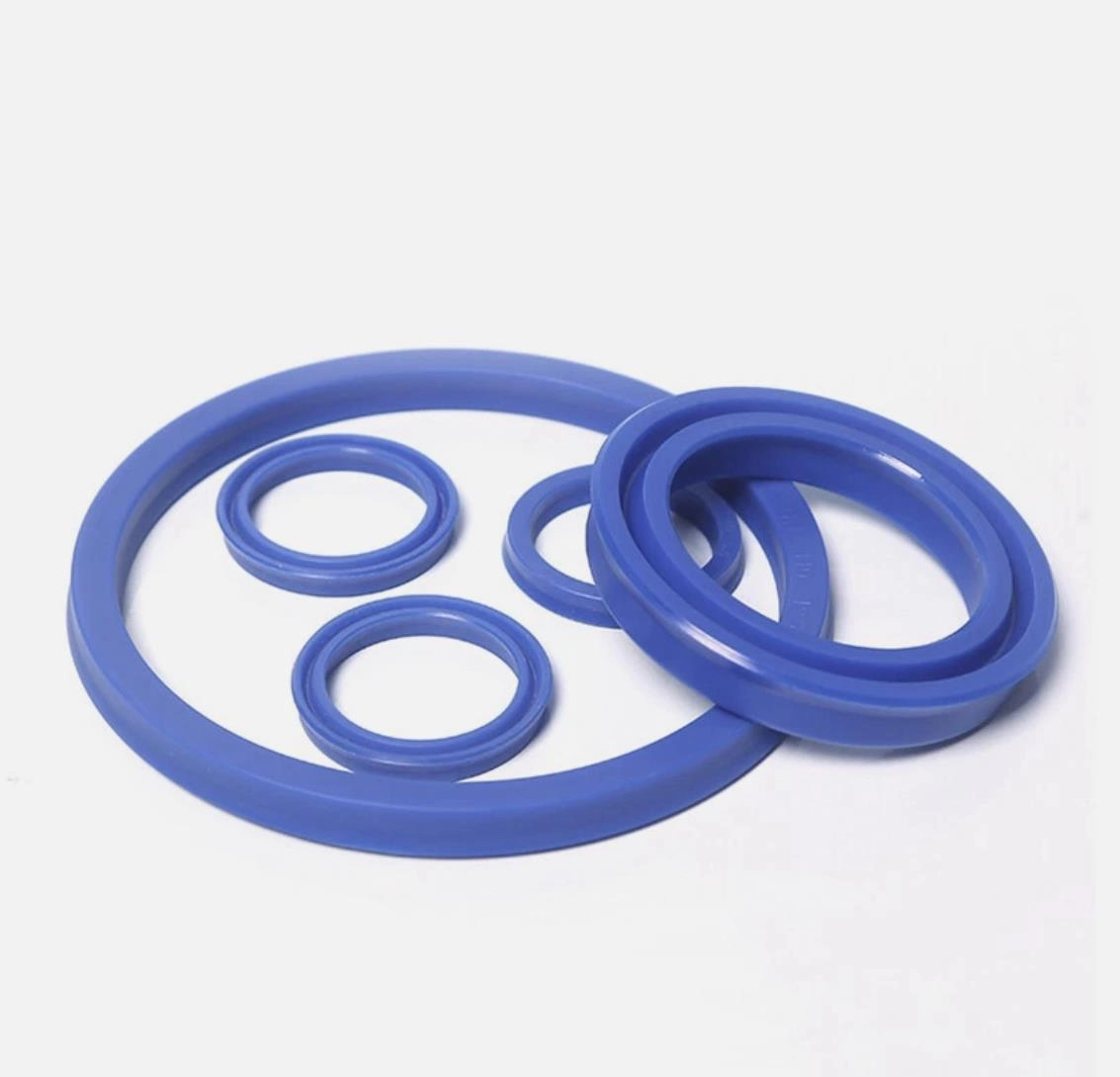
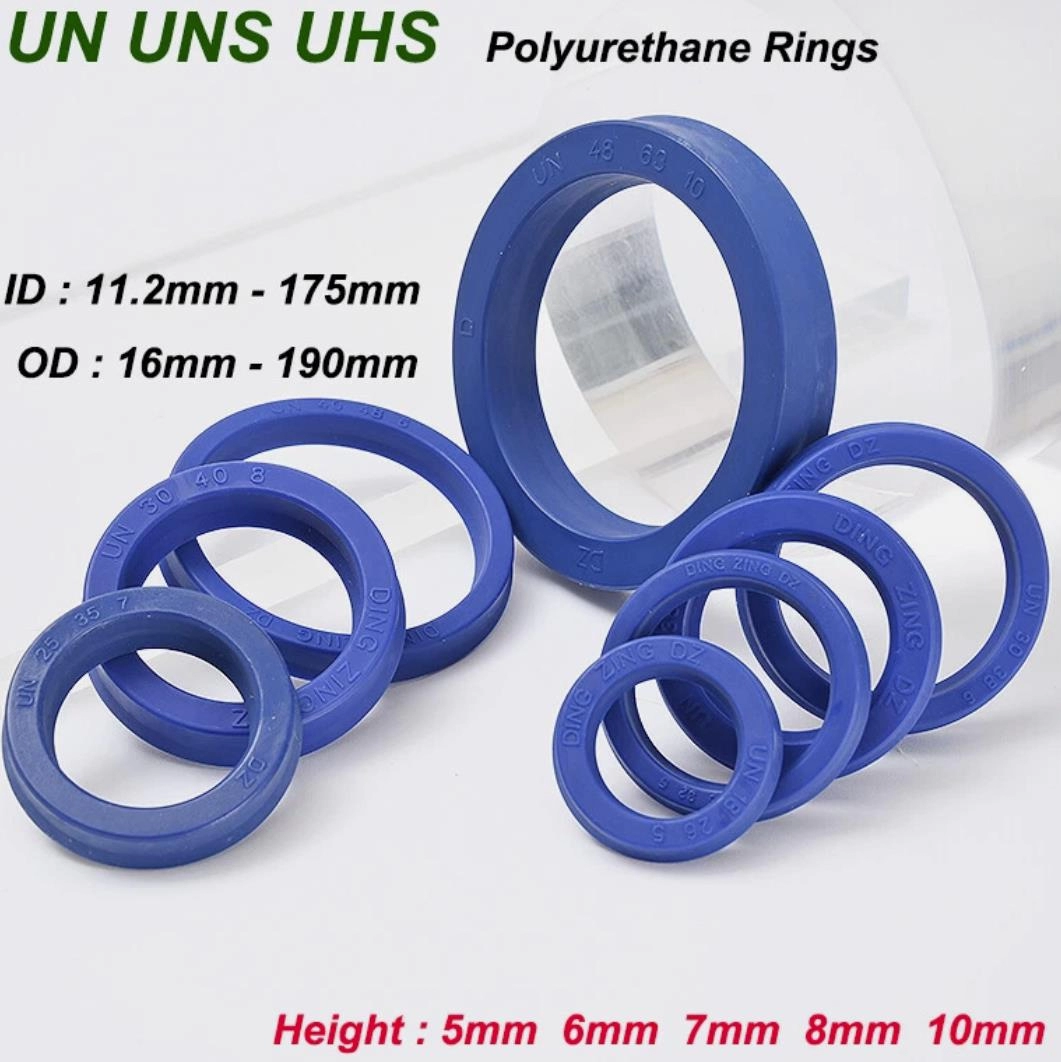
Unlike conventional sealing systems, the UNS/UN profile combines piston and rod sealing capabilities into one design.
The seal features:
· Wide cross-section
· Asymmetrical U-shaped profile
· Equal height of both sealing lips
· Polyurethane construction
· Easy installation into monolithic structures
The equal-lip design allows the same seal profile to be installed on both the piston and the rod.
This significantly simplifies product selection for many hydraulic cylinder manufacturers.
The defining feature of the UN seal is its equal sealing lips.
Traditional hydraulic seals are directional.
They are designed specifically for either piston or rod installation.
UN hydraulic seals eliminate this limitation.
Because both sealing lips have identical height, they provide effective sealing performance regardless of whether they are installed on the piston or rod.
This creates several practical advantages.
Manufacturers can stock fewer sealing profiles while covering multiple cylinder designs.
Maintenance technicians spend less time identifying replacement seals.
Using one seal profile across different cylinder types reduces installation errors.
OEM manufacturers benefit from simplified assembly processes and reduced inventory management.
Another major difference lies in material selection.
Many conventional hydraulic seals use nitrile rubber, synthetic rubber, or engineering plastics depending on the application.
UN hydraulic seals are manufactured from polyurethane (PU), a material that combines elasticity with outstanding mechanical strength.
Typical specifications include:
· Material: PU
· Hardness: 90–95 Shore A
· Colors: Blue and Green
Compared with traditional sealing materials, polyurethane delivers several measurable advantages.
Hydraulic cylinders perform continuous reciprocating motion.
Polyurethane maintains its sealing edge much longer than many rubber compounds.
This reduces replacement frequency.
Installation damage is a common cause of seal failure.
PU resists tearing during installation and repeated operation.
Hydraulic systems often experience sudden pressure spikes.
Polyurethane absorbs these impacts without significant deformation.
Compared with standard rubber materials, PU withstands heavier mechanical loads while maintaining dimensional stability.
Reduced wear directly translates into longer maintenance intervals and lower equipment downtime.
The practical differences become clearer when comparing actual operating characteristics.
Feature | UN Hydraulic Seals | Standard Piston & Rod Seals |
Application | Piston and rod | Separate designs |
Lip Design | Equal lips | Directional lips |
Installation | Easier | More application-specific |
Material | Polyurethane | Various elastomers |
Wear Resistance | Excellent | Moderate to high |
Inventory Management | Simplified | More seal types required |
Low Pressure Performance | Excellent | Depends on seal profile |
For low-pressure hydraulic cylinders, UN hydraulic seals often provide a more economical and maintenance-friendly solution.
UN hydraulic seals are engineered for demanding industrial environments.
Typical operating specifications include:
Working Pressure
≤31.5 MPa
Temperature Range
-35°C to +110°C
Maximum Speed
≤0.5 m/s
Compatible Media
Mineral oil-based hydraulic oils
These operating ranges make UN seals suitable for many industrial hydraulic cylinders used in manufacturing, agriculture, logistics, and construction equipment.
Factory automation requires stable hydraulic motion with minimal downtime.
The durable PU construction reduces seal replacement frequency.
Dust, vibration, and changing temperatures create challenging working environments.
UN seals maintain reliable sealing under these conditions.
Forklifts and lifting platforms rely on smooth hydraulic movement.
Low friction characteristics help improve equipment efficiency.
Auxiliary hydraulic cylinders often operate under varying loads.
The seal's resistance to pressure peaks helps maintain long-term performance.
The wide cross-section of the UN profile is particularly suitable for low-pressure hydraulic cylinders.
Its geometry provides stable sealing without requiring extremely high contact pressure.
Additional advantages include:
· Reliable sealing during startup
· Excellent low-temperature performance
· Stable operation under no-load conditions
· Good resistance to pressure fluctuations
· Easy assembly
These characteristics explain why UN hydraulic seals continue to be widely adopted across hydraulic cylinder manufacturers worldwide.
Maintenance engineers appreciate the simplicity of UN hydraulic seals.
The seal can be installed into monolithic cylinder structures with fewer installation complications than many traditional sealing profiles.
Benefits include:
· Shorter maintenance time
· Lower risk of incorrect installation
· Improved assembly efficiency
· Reduced labor costs
· Better sealing consistency
Proper installation remains important, but the equal-lip profile offers greater flexibility during assembly.
Hydraulic seals operate in demanding environments where dimensional accuracy and material consistency directly influence service life.
HaO Seal Technology Co., Ltd. manufactures polyurethane UN hydraulic seals with strict quality control to ensure consistent performance across industrial applications.
Its sealing products offer:
· Precision manufacturing
· High-quality polyurethane materials
· Strong abrasion resistance
· Excellent crush resistance
· Reliable sealing under low-load conditions
· Easy installation
· Long operational life
For detailed specifications and technical information, visit the <a href="https://www.haosealtech.com/products-491/UNHydraulicPistonRodSealsPUEqualLipSealforLowPressureCylinders.html">UN Hydraulic Piston Rod Seal for Low Pressure Cylinders</a> product page.
Engineers looking for dependable hydraulic sealing components can also explore additional <a href="https://www.haosealtech.com/">hydraulic sealing solutions</a> from HaO Seal Technology to find products that match different operating requirements.
Although traditional piston seals and rod seals continue to serve many hydraulic applications, the UN hydraulic seal provides a more versatile alternative for low-pressure cylinders. Its equal-lip structure allows one seal to perform both piston and rod sealing functions, reducing inventory complexity while simplifying installation and maintenance.
Combined with the excellent wear resistance, impact strength, and durability of polyurethane, UN hydraulic seals deliver reliable long-term sealing performance in demanding industrial environments. For equipment manufacturers, maintenance providers, and hydraulic system designers seeking dependable sealing solutions, choosing high-quality UN hydraulic seals from an experienced manufacturer like HaO Seal Technology Co., Ltd. is a practical investment in equipment efficiency, reliability, and service life.