
2026/01/15
Common Dynamic Sealing Problems and How Rubber X-Rings Solve Them


Hydraulic V-Ring Seals are important sealing components for equipment that operates under pressure, movement, temperature changes, and exposure to fluids or chemicals. For manufacturers looking for a reliable hydraulic seal supplier, material selection, dimensional accuracy, hardness, and application compatibility all need to be considered together.
HaO Seal Technology Co.,Ltd provides precision-engineered rubber sealing solutions using NBR, EPDM, Silicone, FKM, and FFKM elastomers. Its customized rubber V-ring seals are available in standard and customized sizes for different industrial and commercial applications.
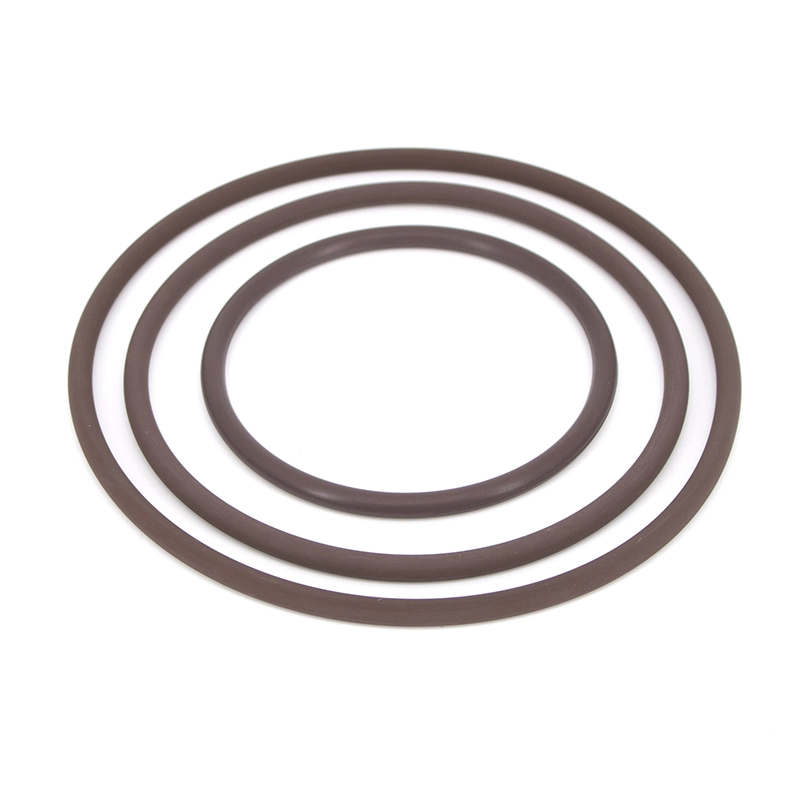
A V-ring seal is an elastomeric sealing component designed to create a reliable sealing interface between mating components. Its flexible rubber structure allows it to maintain contact with the sealing surface while accommodating certain movement and dimensional changes.
In hydraulic and industrial equipment, effective sealing helps prevent fluid leakage and protects internal components from contaminants.
A suitable V-ring seal can help reduce:
· Hydraulic fluid leakage
· Contamination from dust or moisture
· Unplanned equipment maintenance
· Component wear
· Pressure loss
· Production downtime
The actual performance depends on the seal material, operating conditions, installation dimensions, and equipment design.
Different applications require different sealing characteristics. The rubber V-ring seals supplied by HaO Seal Technology Co.,Ltd can be manufactured using several elastomer options, providing flexibility for a wide range of working environments.
Key product characteristics include:
· Multiple elastomer choices
· Temperature capability from -60°C to +320°C, depending on material
· Hardness options from 20–90 Shore A
· Standard sizes available
· Customized dimensions available
· Compatibility with AS568, ISO 3601, and JIS B 2401
· Resistance to oils, fuels, water, chemicals, and heat, depending on material selection
These options allow manufacturers to select a sealing solution according to actual operating conditions rather than using the same rubber compound for every application.
The material used in a V-ring seal directly affects its resistance to temperature, fluids, chemicals, and mechanical stress.
NBR, also known as nitrile rubber, is widely used for applications involving petroleum-based oils and fuels.
Its advantages include:
· Good oil resistance
· Good wear resistance
· Reliable mechanical properties
· Suitable performance for many hydraulic applications
NBR is often a practical choice for general hydraulic equipment where extreme temperature or chemical resistance is not the primary concern.
EPDM provides strong resistance to water, weathering, ozone, and certain chemicals.
It can be considered for applications involving:
· Water
· Hot water
· Steam
· Outdoor environments
· Selected chemical media
However, EPDM is generally not the preferred material for applications involving petroleum-based oils or fuels, so fluid compatibility should be confirmed before selection.
Silicone provides excellent flexibility across a broad temperature range. It can maintain useful elastic properties in applications involving significant temperature fluctuations.
Typical advantages include:
· Good low-temperature flexibility
· High-temperature capability
· Stable elasticity
· Good resistance to environmental aging
Silicone may be suitable for applications where temperature variation is more important than resistance to petroleum-based fluids.
FKM, commonly associated with Viton® materials, is known for its resistance to heat, oils, fuels, and many chemicals.
It is often selected for more demanding industrial environments where NBR or other general-purpose elastomers may not provide sufficient temperature or chemical resistance.
FKM can be particularly useful for equipment exposed to elevated temperatures and aggressive fluids.
FFKM is a high-performance elastomer intended for severe chemical and thermal environments.
It provides excellent resistance to a broad range of aggressive chemicals and can maintain sealing properties under demanding conditions.
For specialized equipment where chemical compatibility is a major concern, FFKM offers an advanced sealing material option.
The available material range supports applications from approximately -60°C to +320°C, but this should not be interpreted as one universal operating range for every seal.
Each elastomer has its own recommended temperature limits.
For example, the appropriate choice depends on whether the application involves:
· Continuous high temperatures
· Short-term temperature peaks
· Very low temperatures
· Rapid temperature changes
· Contact with heated fluids
Manufacturers should evaluate the actual operating temperature rather than selecting a material based solely on its maximum published temperature.
Seal hardness can influence installation, deformation resistance, flexibility, and sealing contact.
HaO Seal Technology Co.,Ltd provides rubber sealing products with hardness options ranging from 20–90 Shore A.
In practical applications, softer materials can provide better conformity to certain surfaces, while harder compounds may offer improved resistance to deformation under suitable conditions.
The ideal hardness depends on:
· Operating pressure
· Groove design
· Sealing gap
· Surface finish
· Temperature
· Dynamic movement
· Material properties
Selecting hardness together with the seal geometry and equipment design is therefore more reliable than choosing hardness independently.
Dimensional accuracy is essential for proper sealing.
HaO Seal Technology Co.,Ltd supports commonly used standards including:
· AS568
· ISO 3601
· JIS B 2401
Customized sizes are also available for applications where standard dimensions do not match the existing equipment.
This is particularly useful for OEM manufacturers, equipment developers, and maintenance teams working with specialized groove designs.
Customers can provide drawings, dimensions, samples, or technical requirements to help determine the appropriate customized sealing configuration.
For specialized applications, customized rubber V-ring seals can provide greater flexibility than forcing an existing system to accommodate an unsuitable standard size.
The primary purpose of a sealing component is to control unwanted fluid movement. A properly selected material and correctly fitted seal can help maintain reliable sealing performance.
Seals can help prevent contaminants such as dust, moisture, and other external substances from reaching sensitive components.
Reliable sealing can reduce leakage-related maintenance and help prevent premature component deterioration.
With NBR, EPDM, Silicone, FKM, and FFKM available, manufacturers can select materials according to the specific operating environment.
Non-standard dimensions can be produced according to customer requirements, making the products suitable for specialized equipment and OEM applications.
Hydraulic V-ring seals can be used in a wide range of industrial and commercial equipment.
Hydraulic cylinders, power units, valves, pumps, and related systems require dependable sealing to control hydraulic fluids and maintain system performance.
NBR is commonly considered for general oil-based hydraulic environments, while FKM may be selected for applications involving higher temperatures or more demanding fluid conditions.
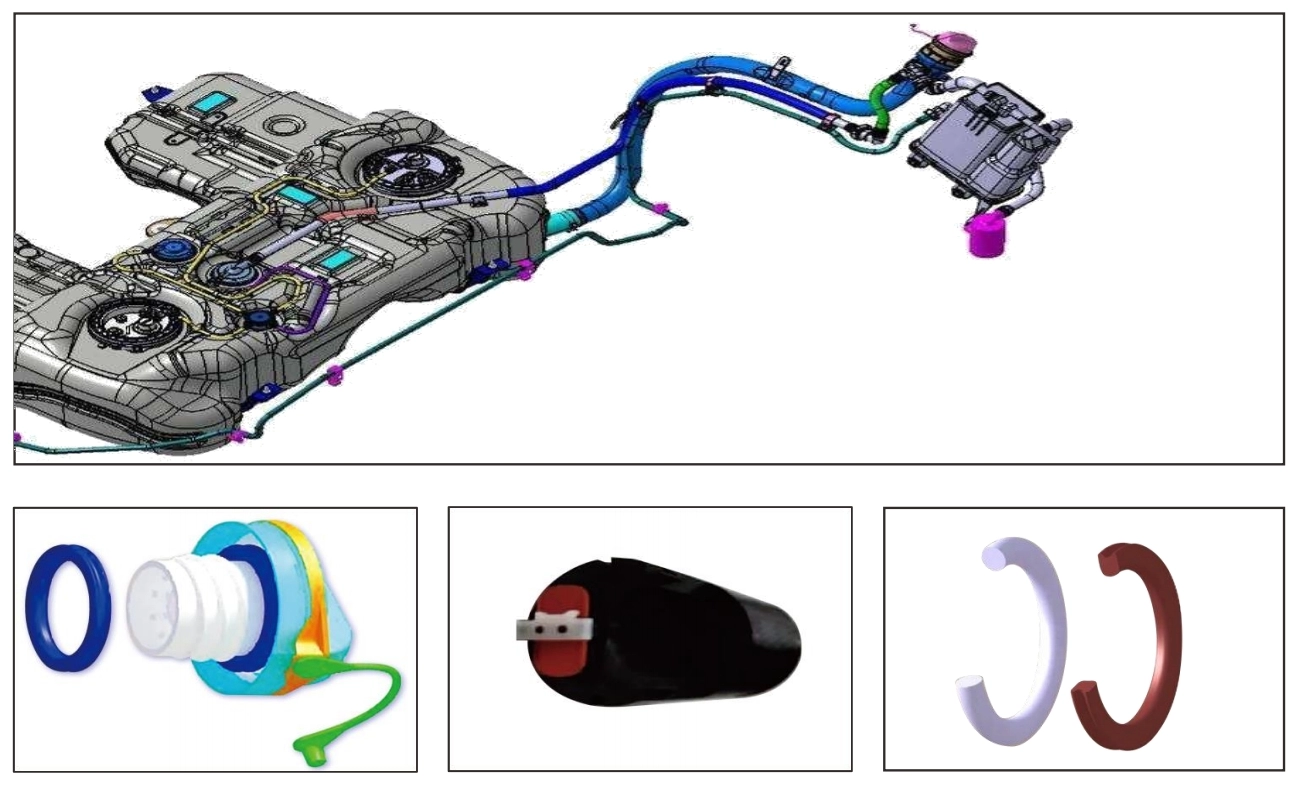
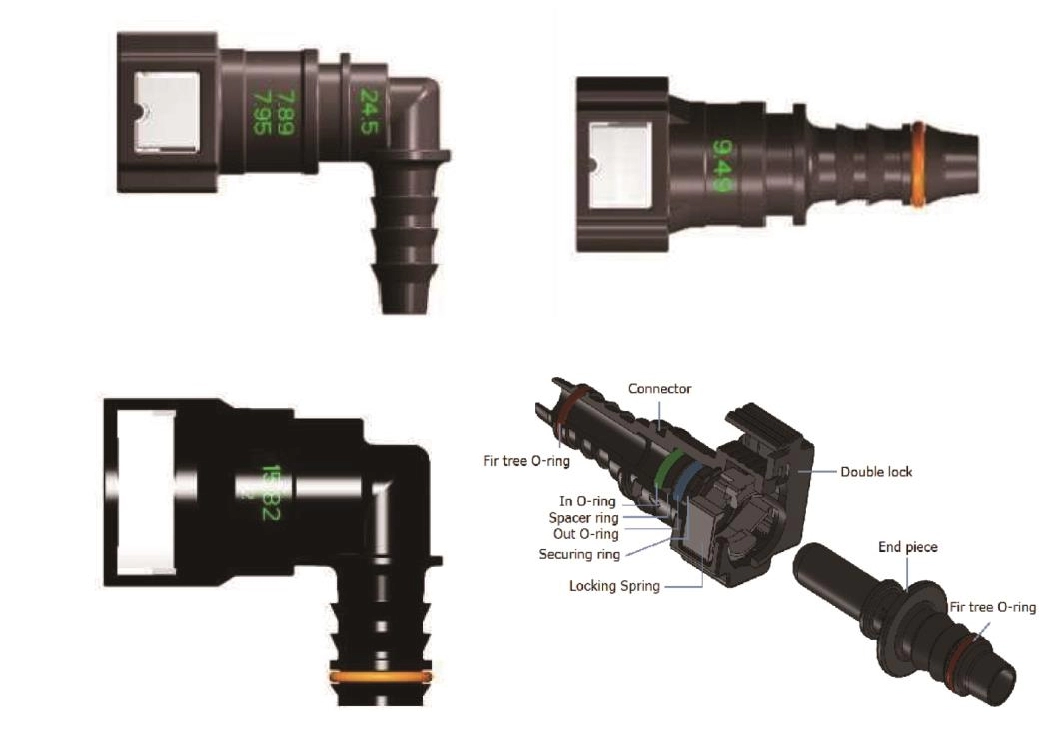
Automotive systems contain numerous fluid-handling and mechanical components where elastomeric seals are required.
Material selection should be based on the specific fluid, temperature, and mechanical environment.
Pumps and valves may handle water, oils, fuels, chemicals, or other fluids. Selecting a compatible elastomer is essential to prevent premature seal deterioration.
Manufacturing equipment often operates continuously, making seal reliability important for reducing unplanned maintenance and downtime.
Where aggressive chemicals are involved, FKM or FFKM may be considered depending on the specific chemical medium, concentration, temperature, and operating conditions.
Water and other fluid systems can benefit from EPDM or other compatible elastomers when their chemical and temperature requirements match the application.
Selecting a seal should begin with the operating environment rather than the seal size alone.
Determine exactly what the seal will contact, including hydraulic oil, fuel, water, steam, or chemicals.
Record the normal operating temperature as well as possible temperature peaks and low-temperature conditions.
Operating pressure, dynamic movement, and sealing gaps can influence material hardness and seal design.
Provide the required dimensions, groove information, or technical drawings.
Choose NBR, EPDM, Silicone, FKM, or FFKM based on actual chemical and temperature requirements.
For standard products, AS568, ISO 3601, and JIS B 2401 can help simplify dimensional selection. Customized sizes are available when standard specifications are unsuitable.
For manufacturers searching for a China hydraulic seal factory or rubber seal manufacturer, product variety and customization capability are important considerations.
HaO Seal Technology Co.,Ltd focuses on precision-engineered rubber sealing components for industrial and commercial applications.
Its capabilities include:
· NBR, EPDM, Silicone, FKM, and FFKM materials
· 20–90 Shore A hardness
· Temperature capability from -60°C to +320°C, depending on material
· AS568, ISO 3601, and JIS B 2401 standard sizes
· Customized dimensions
· Application-specific sealing solutions
The company can support customers requiring both standard sealing components and products developed according to specific project requirements.
For more information, customers can review the company's rubber V-ring sealing solutions and discuss material and dimensional requirements for their applications.
Hydraulic V-ring seals are relatively simple components, but their performance can have a direct impact on equipment reliability. Choosing the right elastomer, hardness, dimensions, and sealing configuration is essential when equipment operates under pressure, temperature changes, or chemical exposure.
NBR, EPDM, Silicone, FKM, and FFKM provide different performance characteristics, allowing manufacturers to match the seal material to the actual operating environment. With temperatures ranging from -60°C to +320°C depending on material, hardness options from 20–90 Shore A, and standard or customized dimensions, these sealing products can serve a broad range of industrial requirements.
For manufacturers looking for a hydraulic V-ring seal supplier in China, HaO Seal Technology Co.,Ltd provides precision-engineered sealing components with flexible material and dimensional options. By evaluating fluid compatibility, temperature, pressure, hardness, dimensions, and applicable standards before ordering, manufacturers can select a sealing solution that better matches their equipment and operating conditions.