
2026/01/28
O-Ring vs X-Ring vs Y-Ring: Key Differences and Applications


Dynamic sealing applications present some of the most demanding challenges in industrial systems. Unlike static seals, dynamic seals must maintain reliable performance while components move—whether through reciprocating motion, rotation, vibration, or pressure cycling. In such environments, traditional sealing solutions can suffer from premature wear, leakage, or instability.
This is where the Rubber X-Ring for dynamic sealing has proven to be a superior alternative. With its unique cross-sectional geometry and material versatility, the Rubber X-Ring delivers enhanced sealing efficiency, longer service life, and greater operational stability across a wide range of industries.
This article explains what a Rubber X-Ring is, how it works, and why it consistently outperforms conventional sealing solutions in dynamic applications.
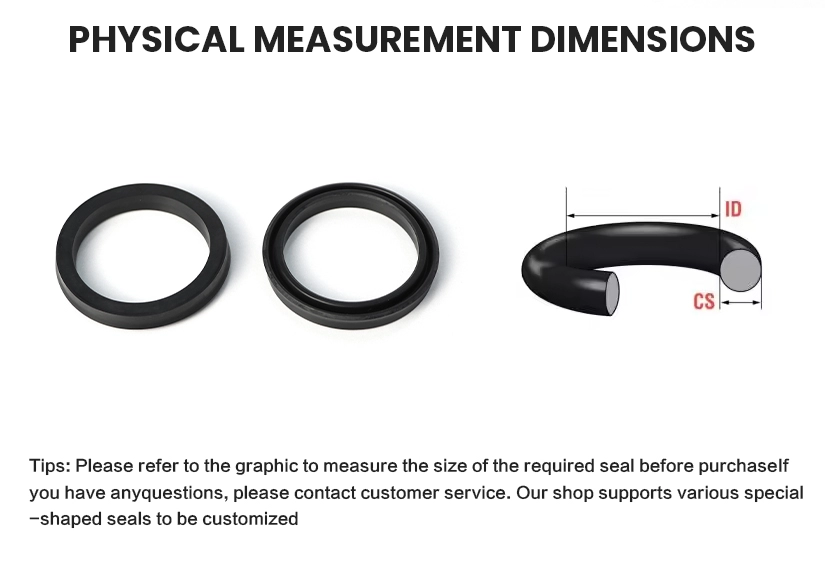
A Rubber X-Ring, sometimes referred to as a quad ring, features a four-lobed “X-shaped” cross section rather than the circular profile of a standard O-ring. This geometry is not a cosmetic change—it fundamentally improves sealing behavior under dynamic conditions.
The four sealing lips create multiple contact points between the seal and the mating surfaces. This design allows the X-Ring to maintain sealing integrity even when system pressure fluctuates or motion direction changes. At the same time, the geometry stabilizes the seal within the groove, reducing the risk of rolling, twisting, or extrusion.
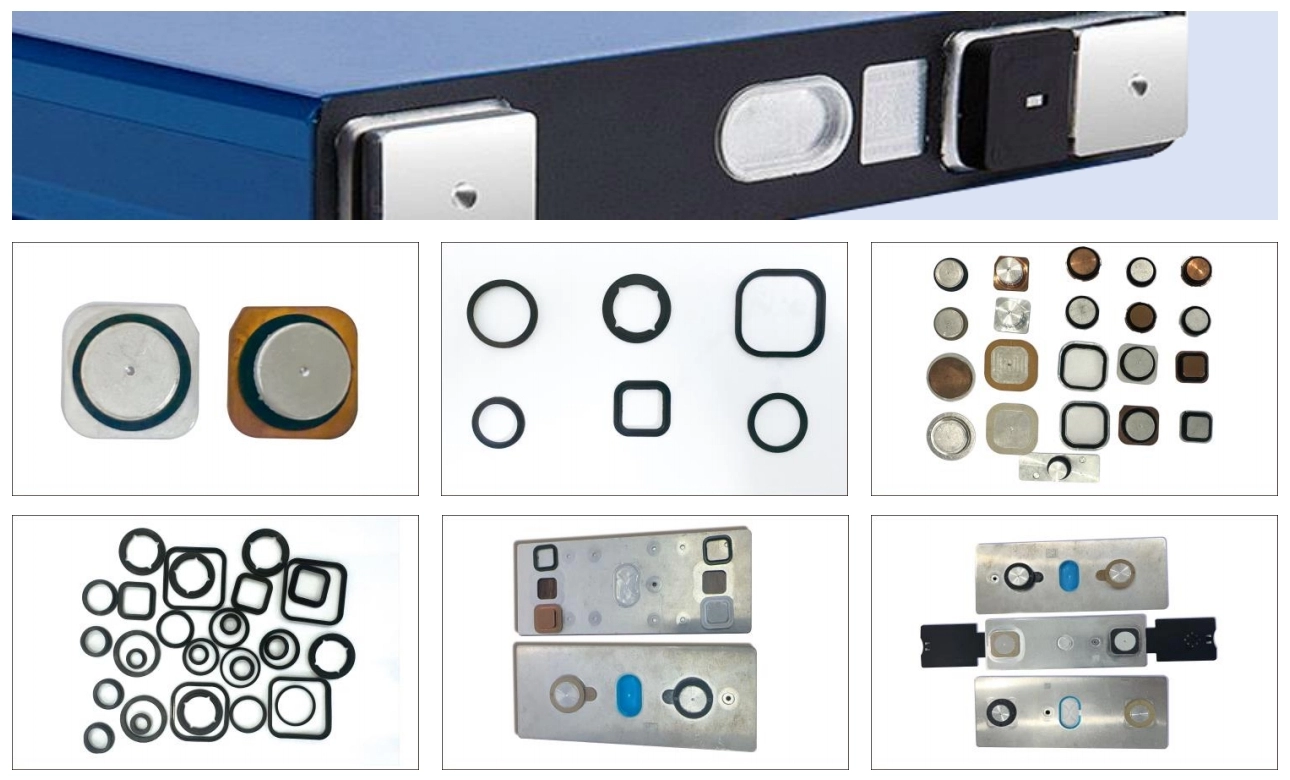
When used as part of metal bonded rubber seals, the Rubber X-Ring benefits further from the dimensional stability and mechanical strength provided by a bonded metal insert.
One of the most significant advantages of a Rubber X-Ring is its ability to retain lubricant. The valleys between the sealing lips act as lubricant reservoirs, ensuring continuous lubrication during motion.
This reduces friction and heat buildup, which are primary causes of seal degradation in dynamic systems such as hydraulic cylinders, rotary shafts, and compressors.
Compared to O-rings, X-Rings exhibit lower friction in dynamic sealing environments. The optimized contact geometry minimizes surface drag while maintaining a tight seal. This directly translates to:
Reduced wear on both the seal and mating surfaces
Extended service life
Improved energy efficiency in moving systems
This is particularly beneficial in high-cycle or high-speed applications.
In dynamic systems, pressure can shift rapidly. Rubber X-Rings respond more effectively to these changes due to their multi-lip design. Pressure energizes the sealing lips evenly, preventing localized stress and minimizing deformation.
When bonded to stainless steel, carbon steel, or aluminum inserts, the seal achieves excellent dimensional stability, even under high pressure and vibration.
Selecting the correct elastomer is critical for sealing performance. Rubber X-Rings are available in a wide range of materials to suit different operating environments:
NBR (Nitrile Rubber) – Suitable for oils, fuels, and hydraulic fluids
EPDM – Ideal for water, steam, and brake systems
Silicone – Excellent for low-temperature flexibility and thermal stability
FKM (Viton® equivalent) – Resistant to high temperatures and aggressive chemicals
FFKM – Designed for extreme temperatures and highly corrosive media
These elastomers can be bonded to metal substrates using vulcanization or chemical bonding processes, ensuring long-term adhesion and structural integrity.
Rubber X-Rings are engineered to perform reliably across extreme operating conditions:
Temperature range: from -60°C to +320°C, depending on rubber compound
Hardness: 40–95 Shore A, allowing customization for flexibility or load-bearing requirements
Dimensional precision: suitable for tight-tolerance dynamic assemblies
These characteristics make Rubber X-Rings suitable for both heavy industrial machinery and precision equipment.
For industries with strict regulatory requirements, Rubber X-Rings can be manufactured to meet major international standards, including:
RoHS
REACH
FDA (for food and medical-related applications)
UL compliance
These certifications ensure material safety, environmental compliance, and suitability for sensitive applications.
Modern industrial systems often require more than standard sealing solutions. Rubber X-Rings can be fully customized in terms of:
Cross-sectional geometry
Thickness and outer dimensions
Rubber-to-metal bonding design
Metal substrate selection
This flexibility allows engineers to design seals that integrate seamlessly into complex assemblies. Companies such as Guangdong Haoou Sealing Technology Co., Ltd. provide engineered solutions and custom designs tailored to specific dynamic sealing challenges. You can explore specialized sealing components and bonded rubber solutions through their product offerings at
https://www.haosealtech.com/product/.
Thanks to their durability and performance stability, Rubber X-Rings are widely used across industries:
Braking systems
Engine mounts
Shock absorbers
Pumps and valves
Compressors
Hydraulic and pneumatic systems
Oil and gas pipelines
HVAC systems
Power transmission equipment
Semiconductor manufacturing equipment
Electronic housings
Precision instruments requiring contamination-free sealing
In many of these applications, the combination of rubber flexibility and metal strength ensures leak-proof sealing while also providing vibration damping and noise reduction.
A Rubber X-Ring is far more than a modified O-ring. Its advanced geometry, material adaptability, and compatibility with metal bonded designs make it a high-performance solution for dynamic sealing applications. By reducing friction, improving lubrication retention, and maintaining stability under pressure, Rubber X-Rings help engineers solve some of the most persistent sealing challenges in modern industry.
When paired with precision manufacturing and custom engineering, Rubber X-Rings offer long-term reliability in environments where failure is not an option.