
2026/07/24
Why PU Equal Lip UN Hydraulic Seals Improve Cylinder Sealing Performance


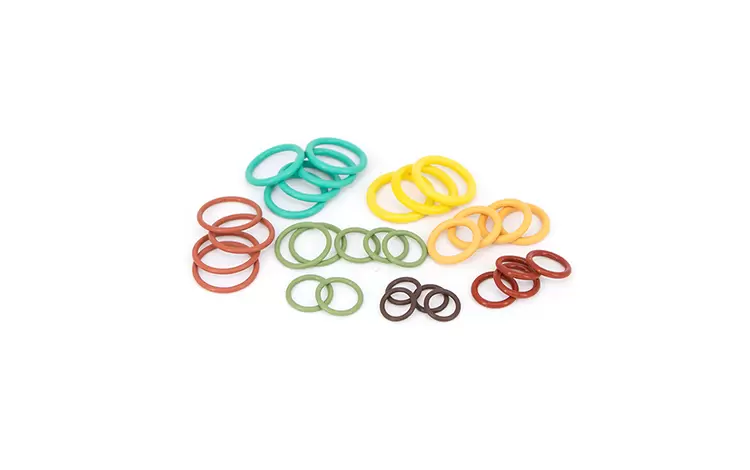
In sealing applications, O-rings are often treated as small, interchangeable parts. In reality, the right O-ring selection has a direct impact on system reliability, maintenance cycles, and long-term operating cost. This is especially true when working with colorful rubber O-rings, where material performance must be matched precisely to temperature, media, and mechanical demands—while color adds value for identification, safety, or branding.

This guide explains how to choose the right Colorful Rubber O-ring by focusing on material options, temperature resistance, hardness, and international standards. The goal is practical decision-making, not theory.
Color in O-rings is not just aesthetic. In many industries, color coding improves efficiency and safety:
Maintenance identification: Different colors quickly distinguish materials during installation or replacement
Quality control: Prevents mixing incompatible elastomers on the same production line
Regulatory and hygiene use: Food, pharmaceutical, and medical equipment often rely on visual identification
OEM branding and assembly logic: Color simplifies training and reduces human error
However, color should never compromise performance. The base elastomer still determines chemical resistance, temperature range, and service life.
Choosing the right elastomer is the most important decision. Below are the most common material options and how they perform in real-world applications.
NBR is widely used for oil and fuel sealing.
Good resistance to mineral oils, hydraulic fluids, and grease
Cost-effective and easy to process
Moderate temperature resistance
Best suited for: Automotive systems, industrial hydraulics, pneumatic tools
EPDM performs well in outdoor and water-based environments.
Excellent resistance to water, steam, and weathering
Good performance with brake fluids and mild chemicals
Poor compatibility with petroleum oils
Best suited for: HVAC systems, water treatment, outdoor equipment
Silicone stands out for temperature stability and flexibility.
Maintains elasticity at very low temperatures
Clean, non-toxic formulation available
Lower tear strength compared to other rubbers
Best suited for: Medical devices, food equipment, electronics sealing
FKM offers high chemical and temperature resistance.
Excellent resistance to fuels, solvents, and aggressive chemicals
Strong performance at elevated temperatures
Higher cost than general-purpose rubbers
Best suited for: Chemical processing, aerospace, high-temperature machinery
FFKM represents the highest-performance elastomer category.
Exceptional chemical compatibility
Stable in extreme temperatures up to the highest ranges
Used only where failure is not an option
Best suited for: Semiconductor manufacturing, critical chemical systems
Colorful rubber O-rings are available across a wide temperature range, from -60°C to +320°C, depending on material choice. Temperature directly affects sealing force, elasticity, and long-term aging.
Key considerations:
Low temperatures can cause hardening and loss of sealing force
High temperatures accelerate compression set and material degradation
Continuous temperature ratings matter more than short-term peaks
Always evaluate the actual operating temperature, not just the maximum rating.
O-ring hardness determines how the seal responds to pressure and surface finish.
20–40 Shore A: Soft, flexible, ideal for low-pressure static seals
50–70 Shore A: General-purpose range for most industrial uses
80–90 Shore A: High-pressure systems and extrusion resistance
Choosing hardness incorrectly can lead to leakage, premature wear, or installation damage. Colorful O-rings are available across this range without sacrificing material integrity.
O-ring dimensions must match both groove design and application standard. Commonly supported standards include:
AS568 (inch-based, widely used in North America)
ISO 3601 (international metric standard)
JIS B 2401 (commonly used in Japan and Asia)
For non-standard equipment, custom sizes ensure precise fit and consistent sealing performance. Custom colors can be matched to specific materials or internal specifications.
To avoid overengineering or under-specifying, align your O-ring choice with real conditions:
Identify the sealing media (oil, water, chemicals, gas)
Confirm continuous operating temperature
Evaluate pressure level and dynamic movement
Choose color for identification, not performance substitution
A well-selected colorful rubber O-ring simplifies maintenance while maintaining reliability.
Consistency in color, hardness, and material quality depends heavily on manufacturing control. A qualified supplier ensures:
Stable color pigmentation without performance loss
Tight dimensional tolerance
Compliance with international standards
Material traceability and testing support
This is where experience in elastomer formulation and industrial sealing matters.
Choosing the right colorful rubber O-ring is about more than appearance. Material selection, temperature resistance, hardness, and standard compliance all work together to define sealing performance. When specified correctly, colorful O-rings improve efficiency, reduce maintenance errors, and support long-term system reliability.
With a clear understanding of application conditions and material behavior, engineers and buyers can confidently select the optimal sealing solution.