
2026/07/22
UN Hydraulic Seals vs Standard Piston and Rod Seals: What's the Difference?


Selecting the correct hydraulic V-ring seal size is essential for reliable contamination protection in industrial machinery. An incorrectly sized V-ring may stretch excessively, lose proper contact with the counterface, or wear prematurely during operation. Understanding shaft dimensions, seal fit, installation conditions, and material compatibility helps engineers and maintenance teams choose a suitable sealing solution for their equipment.
For manufacturers working with hydraulic systems, pumps, motors, gearboxes, and rotating machinery, accurate measurements are the starting point. HaO Seal Technology Co.,Ltd provides industrial rubber sealing products and customized solutions to support different equipment requirements.
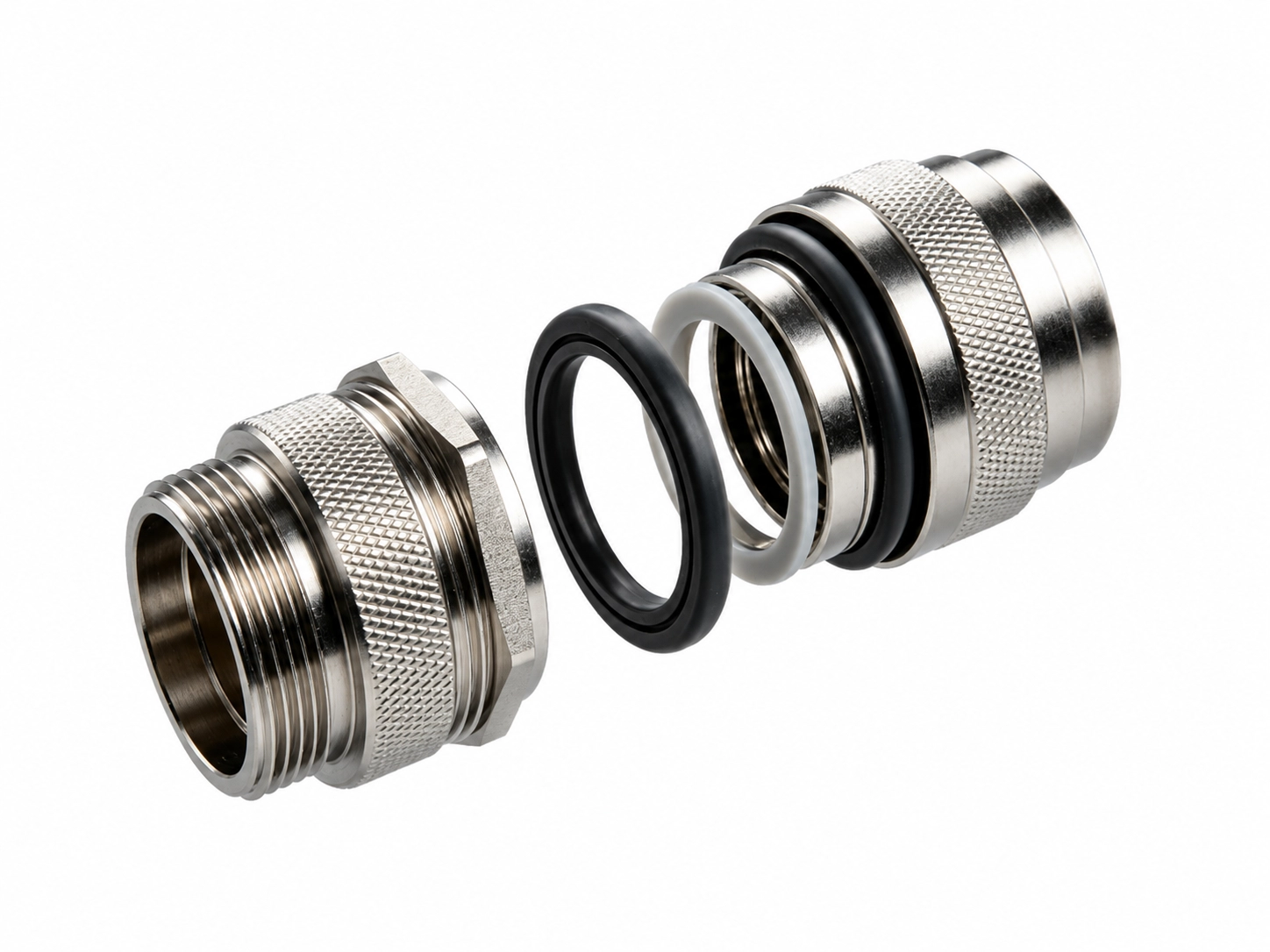
A V-ring seal is an elastomeric sealing component designed primarily for axial sealing against a stationary counterface. It is commonly installed on a rotating shaft, with its flexible lip contacting a nearby housing, flange, or other suitable surface.
Unlike conventional radial shaft seals, which seal against the shaft diameter, V-ring seals use axial contact. This difference matters when selecting the correct size because the seal must fit securely around the shaft while maintaining suitable contact with the mating surface.
Several dimensions and design factors should be considered:
Shaft diameter: The actual outside diameter of the shaft where the V-ring will be installed.
Free seal diameter: The relevant inside diameter of the uninstalled seal, as defined by the manufacturer's dimensional specification.
Seal cross-section: The overall rubber profile, which influences flexibility, installation space, and lip geometry.
Lip contact geometry: The shape and flexibility of the sealing lip determine how it contacts the counterface.
Axial installation space: The available clearance around the shaft and adjacent components.
Not every manufacturer uses identical dimensional conventions for every V-ring series. Always check the applicable product drawing and dimensional table before ordering a replacement or specifying a custom seal.
Shaft measurement is one of the most important steps in V-ring selection. Even a small dimensional error can affect installation stretch and the position of the sealing lip.
Use a calibrated outside micrometer or suitable measuring instrument to measure the shaft diameter at the intended installation position.
Take measurements at several positions around the circumference and, where practical, at multiple points along the shaft. This helps identify ovality, wear, or local dimensional variation.
If the shaft has a keyway, groove, shoulder, or damaged surface, determine whether that feature affects the installation path or the final position of the seal.
A shaft may have the correct nominal diameter but still be unsuitable for seal installation.
Inspect for:
Burrs and sharp edges that could cut the rubber during fitting.
Corrosion, scratches, or surface damage.
Excessive runout or misalignment.
Wear that changes the effective installation diameter.
A smooth, properly prepared shaft helps reduce the risk of installation damage and supports more consistent seal positioning.
V-ring performance also depends on the counterface. Check its flatness, surface finish, available contact width, and condition.
A rough, damaged, or misaligned counterface can accelerate lip wear. Conversely, the appropriate surface specification depends on the seal design and operating conditions, so the manufacturer's recommendations should be followed rather than applying a universal finish requirement.
The selected V-ring must fit the shaft correctly without excessive stretching or an overly loose installation.
Many V-ring designs use an elastic body that stretches over the shaft and remains in position through its interference fit. However, the acceptable stretch range varies by seal series, size, compound, and manufacturer.
When evaluating a candidate seal, consider the following:
Selection factor | What to check | Why it matters |
Shaft diameter | Actual measured diameter and tolerances | Determines the required seal fit |
Free seal diameter | Manufacturer's specified dimension | Helps assess installation stretch |
Seal profile | Lip geometry and cross-section | Affects contact behavior and available space |
Rotational speed | Expected operating speed | Influences friction, heat, and wear |
Counterface position | Distance and alignment relative to the shaft | Determines whether the lip can contact correctly |
Operating environment | Dust, water, oils, chemicals, and temperature | Influences material and design selection |
Do not assume that a seal with a nominal diameter close to the shaft diameter will automatically fit correctly. Confirm the dimensional relationship using the manufacturer's catalog or engineering drawing.
If a standard size does not meet the required fit or installation constraints, a custom design may be worth considering.
Seal stretch is the increase in the relevant seal diameter when the V-ring is fitted onto the shaft. The actual calculation method should follow the manufacturer's dimensional definitions.
Where the free inside diameter and shaft diameter are defined as directly comparable dimensions, a preliminary stretch calculation can be expressed as:
Stretch (%) = (Shaft diameter − Free seal diameter) ÷ Free seal diameter × 100
For example, assume a hypothetical seal has a free inside diameter of 48 mm and is intended for a shaft measuring 50 mm.
Stretch = (50 − 48) ÷ 48 × 100 = approximately 4.17%.
This is a dimensional example, not a recommended stretch target. Whether the resulting fit is acceptable depends on the particular V-ring design and its specified installation range.
Too much stretch may alter the seal profile, increase installation stress, or affect lip contact. Too little stretch may allow the seal to move from its intended position or fail to maintain the required fit.
For this reason, engineers should confirm acceptable stretch with the seal manufacturer's specifications rather than relying on a general percentage.
Correct shaft sizing alone does not guarantee reliable sealing. A V-ring also requires an appropriate counterface position and sufficient installation clearance.
Before selecting the seal, verify the distance between the shaft-mounted seal and the stationary contact surface. This distance affects how the flexible lip meets the counterface and how much deformation occurs during operation.
If the lip is compressed excessively, friction and heat may increase. If contact is insufficient, contamination can pass through the sealing interface.
Other installation factors include:
Shaft runout and vibration.
Axial movement during operation.
Counterface alignment and surface condition.
Nearby shoulders, bearings, and housing components.
Available space for fitting and future maintenance.
For higher-speed applications, these factors deserve particular attention because frictional heating and dynamic behavior can influence service life.
A practical approach is to evaluate the shaft, seal, and counterface as a complete assembly instead of treating the V-ring as an isolated replacement part.
The elastomer compound affects flexibility, environmental resistance, and long-term performance. A seal that fits correctly may still fail early if its material is incompatible with the operating environment.
Common industrial rubber materials include:
NBR (Nitrile): Commonly used where resistance to many mineral oils and lubricants is required.
EPDM: Suitable for many water-exposed and outdoor applications, but generally unsuitable for petroleum-based oils.
Silicone: Offers useful flexibility across a broad temperature range, although its mechanical wear resistance must be evaluated for the application.
FKM (Viton®): Often selected for applications involving many oils, fuels, and elevated temperatures.
FFKM: Used in demanding chemical environments where its specific compatibility and performance characteristics justify its selection.
The best material depends on the actual fluid or contaminant, temperature range, mechanical loading, rotational conditions, and required service life.
HaO Seal Technology Co.,Ltd supplies precision-engineered rubber O-rings and sealing products made from materials including NBR, EPDM, silicone, FKM, and FFKM.
Although O-rings and V-ring seals have different geometries and functions, both require careful material selection and dimensional control. For customized projects, sharing the operating conditions with the manufacturer helps narrow down suitable materials and product specifications.
Incorrect installation can damage a seal before the equipment even starts operating. The following mistakes are worth avoiding.
Installing the seal over sharp edges: Burrs and grooves can cut or nick the elastomer. Prepare the shaft and use suitable installation tools.
Stretching the seal excessively: Do not force a seal onto a shaft without confirming that the size and installation method are appropriate.
Ignoring counterface alignment: An uneven contact surface can lead to inconsistent lip loading and premature wear.
Using an incompatible lubricant: If lubrication is required during installation, verify compatibility with the rubber compound and follow the manufacturer's instructions.
Replacing the seal without investigating the cause of failure: Repeated damage may result from shaft wear, excessive runout, contamination, unsuitable material, or incorrect installation dimensions.
Identifying the root cause is often more effective than simply replacing the same seal with another identical part.
Standard V-ring seals are suitable for many applications, but specialized machinery may require non-standard dimensions, particular rubber compounds, or a specific installation arrangement.
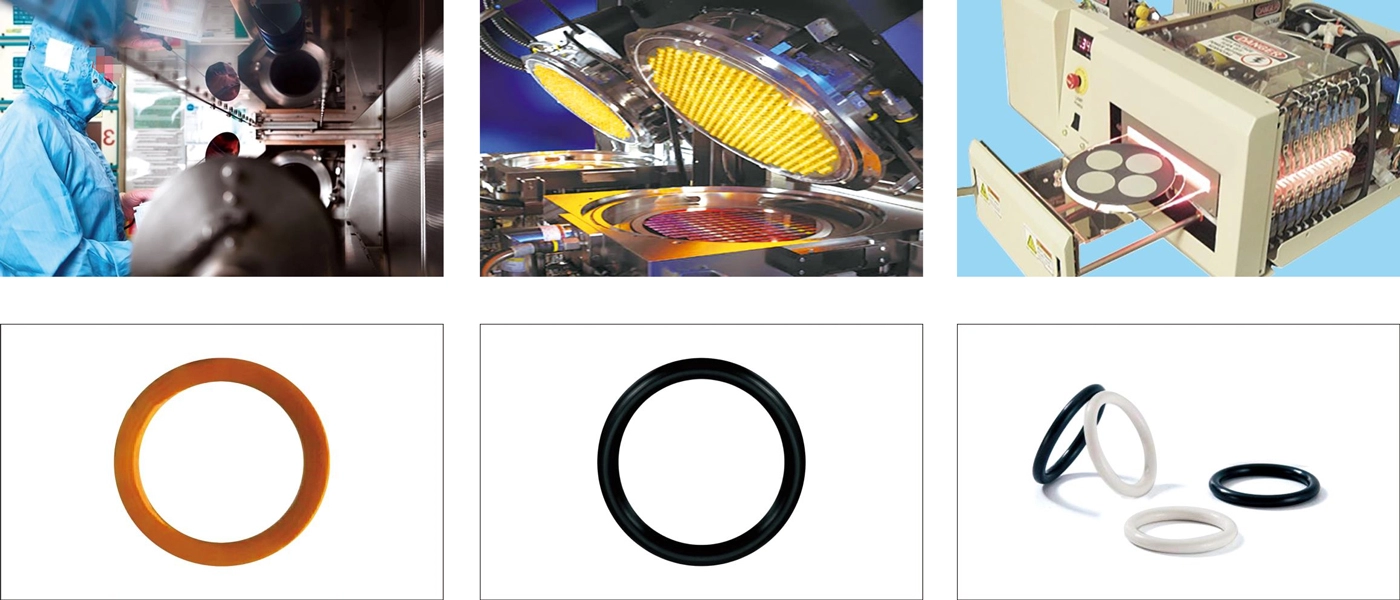
Established in 2010, HaO Seal Technology Co.,Ltd specializes in rubber seals and industrial sealing solutions. Its application areas include photovoltaic equipment, semiconductor equipment, inkjet marking equipment, automotive and new energy vehicles, hydraulic and pneumatic systems, and medical and sanitary equipment.
When sourcing from a China rubber seal manufacturer or factory, buyers should evaluate dimensional consistency, material selection, technical communication, and the ability to support customized requirements.
A useful inquiry should include the measured shaft diameter, the equipment type, operating speed, temperature, contaminant exposure, counterface dimensions, and any existing seal drawing or part number.
HaO Seal Technology Co.,Ltd offers standard and customized rubber O-rings and supports industrial customers seeking application-specific sealing components. Its industrial sealing solutions can be explored when comparing product options for different equipment requirements.
Providing complete technical information at the beginning of a project helps reduce sizing uncertainty and makes it easier to assess whether a standard product or custom design is more appropriate.
Choosing the correct hydraulic V-ring seal involves more than matching a nominal diameter. Accurate shaft measurements, acceptable seal stretch, suitable counterface geometry, installation clearance, and rubber material compatibility all influence performance.
By checking these factors before ordering, engineers and maintenance teams can reduce installation errors, improve contamination protection, and avoid premature seal replacement.
For equipment with non-standard dimensions or demanding operating conditions, working with an experienced rubber seal manufacturer can help identify a practical solution. HaO Seal Technology Co.,Ltd supports industrial sealing requirements through rubber O-rings, material options, and customized sealing products designed around real application needs.