
2026/02/06
Why X-Rings Offer Better Sealing Performance Than O-Rings


Industrial machinery often operates in environments where dust, moisture, metal particles, and other contaminants can damage critical components. Custom hydraulic V-ring seals provide an effective way to protect rotating shafts and adjacent sealing areas from external contamination. By selecting the right seal design, material, and dimensions, manufacturers can improve equipment reliability, reduce maintenance requirements, and extend component service life.
For hydraulic systems, construction equipment, automotive production lines, and other demanding industrial applications, contamination control is an important part of maintaining consistent performance. HaO Seal Technology Co.,Ltd provides engineered rubber sealing products and customized sealing solutions designed to meet different industrial operating conditions.
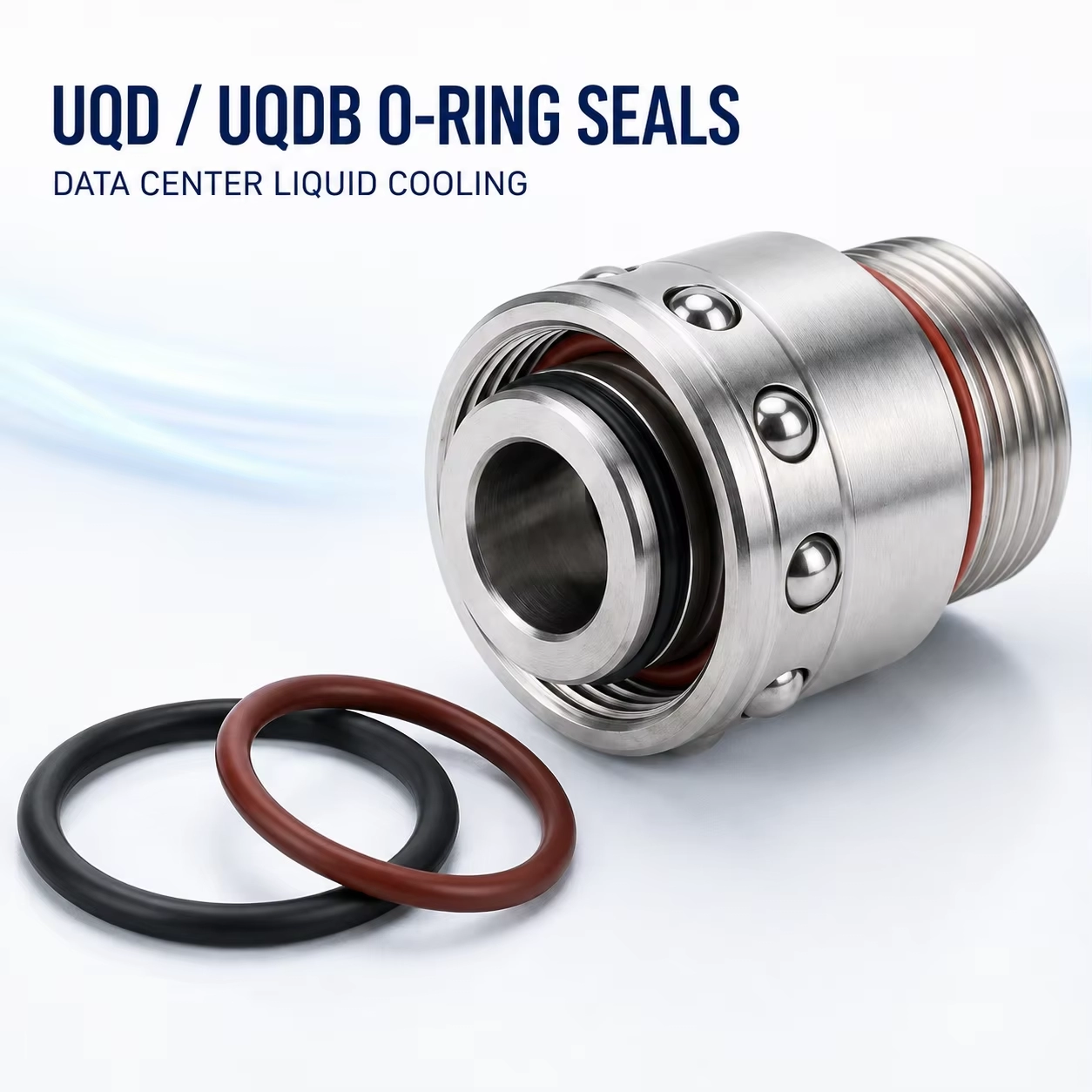
Hydraulic equipment depends on clean operating conditions to maintain stable performance. Although hydraulic filters help remove particles from the fluid, they cannot prevent every contaminant from entering through exposed shafts, rotating interfaces, or poorly protected external components.
Common sources of contamination include:
Dust and airborne particles: Frequently found in factories, construction sites, and material handling facilities.
Water and moisture: Can enter equipment during outdoor operation, cleaning, or exposure to humid environments.
Mud and industrial debris: Particularly problematic for machinery operating near soil, metalworking residue, or abrasive materials.
External chemical exposure: Oils, cleaning agents, and process chemicals may affect the durability of unsuitable sealing materials.
Once contaminants reach sensitive interfaces, they can accelerate wear, damage adjacent sealing components, and increase maintenance frequency. In hydraulic systems, contamination may also contribute to fluid degradation and damage to precision components if it enters the hydraulic circuit.
A properly selected V-ring seal helps address one important part of this problem: preventing external contaminants from passing into protected areas around rotating shafts.
A V-ring seal is a flexible elastomeric sealing component designed primarily for axial sealing applications. It typically consists of a rubber body, an elastic mounting section, and a flexible sealing lip.
The seal is fitted onto a rotating shaft, where the lip makes contact with a stationary counterface, such as a housing surface or metal flange. As the shaft rotates, the sealing lip maintains contact with the counterface, helping exclude dust, splashing water, grease, and other external contaminants.
Unlike a conventional radial shaft seal, which generally seals against the shaft diameter, a V-ring seal works through axial contact with a mating surface. This design makes it useful in applications where external contamination protection is required around rotating equipment.
Custom designs are particularly valuable when standard dimensions do not match the shaft diameter, available installation space, operating speed, or environmental requirements.
For example, machinery exposed to abrasive dust may require a different lip configuration or elastomer compound from equipment operating in a clean, temperature-controlled factory. Choosing the correct specification helps ensure that the seal performs its intended function without creating unnecessary friction or premature wear.
It is also important to understand that a V-ring seal is generally an auxiliary contamination-exclusion seal, not a replacement for a pressure-rated hydraulic piston seal, rod seal, or other primary pressure-sealing component.
The primary advantage of a V-ring seal is its ability to help keep unwanted materials away from protected interfaces. Its flexible lip forms a contact barrier against the mating surface, reducing the entry of dust, moisture, and other environmental contaminants.
This is especially useful for pumps, motors, gearboxes, and rotating assemblies installed in harsh industrial environments.
When contaminants are kept away from bearings and adjacent sealing components, the risk of abrasive wear and contamination-related failures can be reduced. The actual improvement depends on the application, installation quality, operating conditions, and the performance of the complete sealing arrangement.
For maintenance teams, better contamination control can mean fewer unexpected shutdowns and more predictable servicing schedules.
A custom hydraulic V-ring seal can be specified according to shaft dimensions, counterface geometry, installation clearance, rotational speed, temperature, and exposure conditions.
Customization is particularly useful when equipment uses non-standard dimensions or when an existing seal fails to provide sufficient protection under actual working conditions.
HaO Seal Technology Co.,Ltd offers custom rubber sealing products to support industrial projects requiring application-specific dimensions and material selection.
Rubber compounds vary in their resistance to oils, water, chemicals, temperature, and weathering. Choosing an appropriate compound helps maintain elasticity, sealing contact, and dimensional stability throughout the intended service life.
The correct selection depends on the specific medium, temperature range, mechanical conditions, and required service life rather than on the material name alone.
Material selection is one of the most important factors in the performance of a custom seal. A compound that works well in one environment may deteriorate quickly in another.
Common elastomers used in industrial sealing applications include the following:
Material | Typical characteristics | Potential applications |
NBR (Nitrile) | Good resistance to many mineral oils and lubricants | General industrial equipment and oil-exposed environments |
EPDM | Good resistance to water, weathering, and many outdoor conditions | Water-exposed equipment and outdoor machinery |
Silicone | Good flexibility across a broad temperature range | Applications requiring temperature flexibility |
FKM (Viton®) | Good resistance to many oils, fuels, and elevated temperatures | Selected demanding automotive and industrial environments |
FFKM | High chemical resistance in many aggressive environments | Specialized chemical processing and semiconductor applications |
These materials are not interchangeable. For example, EPDM is generally unsuitable for continuous exposure to petroleum-based oils, while silicone may not provide the mechanical wear resistance required in every rotating contact application. FFKM may be appropriate for highly demanding chemical environments, but its suitability must still be evaluated against the specific operating conditions.
HaO Seal Technology Co.,Ltd manufactures precision-engineered rubber O-rings and sealing components using materials such as NBR, EPDM, silicone, FKM, and FFKM. Although O-rings and V-ring seals have different geometries and sealing functions, both require careful material selection to achieve reliable performance.
For a custom V-ring project, the material should be selected according to the actual exposure conditions, required elasticity, wear expectations, and compatibility with the counterface.
Custom V-ring seals are suitable for various types of rotating machinery where external contamination protection is needed.
Hydraulic pumps and motors: V-rings can help protect exposed shaft areas and adjacent components from dust and moisture. They are generally used as supplementary seals rather than the primary barriers against hydraulic pressure.
Gearboxes and industrial drives: In dusty manufacturing environments, V-rings can help reduce the entry of airborne particles around rotating shafts and protect nearby bearing assemblies.
Automotive and new energy vehicle equipment: Production machinery, selected rotating assemblies, and auxiliary equipment may benefit from application-specific sealing designs that account for vibration, temperature, and environmental exposure.
Semiconductor and photovoltaic manufacturing equipment: These industries often require carefully controlled operating environments. Seal selection should consider particle generation, chemical compatibility, temperature, and cleanliness requirements, with the final design validated for the particular machine.
General industrial machinery: Conveyors, processing equipment, and other rotating assemblies may require customized contamination barriers to suit installation constraints and working conditions.
The right sealing arrangement depends on whether the main concern is dust exclusion, splash protection, moisture exposure, or another environmental challenge. A V-ring should be evaluated as part of the complete assembly rather than as an isolated component.
Standard seals are suitable for many common applications, but they may not provide the best fit for specialized equipment. A custom solution allows engineers and purchasing teams to address practical installation and operating requirements before production begins.
When working with a hydraulic V-ring seal manufacturer, consider the following details.
Shaft diameter and dimensional tolerances.
Available installation space and counterface dimensions.
Shaft rotational speed and expected contact conditions.
Operating temperature and exposure to oils, water, chemicals, or abrasive particles.
Required hardness, elasticity, and wear resistance.
Expected service life and maintenance intervals.
Providing accurate application information helps the manufacturer recommend a suitable geometry and compound. Where necessary, prototype testing and dimensional verification can help confirm that the selected design performs as expected.
For buyers sourcing from a China rubber seal factory or industrial sealing supplier, manufacturing consistency, material traceability, dimensional inspection, and technical communication are also important considerations. A qualified supplier should be able to discuss the application's requirements rather than simply recommend a standard product based on diameter alone.
Established in 2010, HaO Seal Technology Co.,Ltd specializes in rubber seals and industrial sealing solutions. The company combines sealing development and manufacturing experience with equipment and application knowledge to support customers across several industries.
Its areas of focus include photovoltaic equipment, semiconductor equipment, inkjet marking equipment, automotive and new energy vehicles, hydraulic and pneumatic systems, and medical and sanitary applications.
HaO Seal Technology Co.,Ltd provides standard and customized rubber O-rings made from high-quality elastomers selected for the requirements of different applications. These components are designed to deliver dependable sealing performance across a range of industrial and commercial environments.
For projects involving hydraulic V-ring seals, rubber O-rings, or other customized sealing components, customers can discuss operating conditions, material requirements, dimensions, and application constraints with the supplier. This approach helps identify a practical sealing solution instead of relying on a one-size-fits-all specification.
Explore the company's industrial rubber seal solutions to learn more about available sealing products and customization options.
Even a well-designed seal can underperform if it is installed incorrectly or operated outside its intended conditions. A few practical measures can help improve service life.
Inspect the counterface. Scratches, corrosion, and excessive surface roughness may accelerate lip wear and reduce sealing effectiveness.
Check installation dimensions. An incorrectly stretched seal or unsuitable contact geometry can affect lip pressure and sealing stability.
Use compatible lubricants where required. Follow the seal manufacturer's recommendations for installation and operation. Avoid assuming that every elastomer is compatible with every lubricant or process fluid.
Monitor wear during scheduled maintenance. Cracking, hardening, permanent deformation, and excessive lip wear may indicate that the material or operating conditions need to be reassessed.
Investigate repeated failures. If contamination continues despite seal replacement, review shaft alignment, counterface condition, installation methods, exposure levels, and the complete sealing arrangement.
These steps help ensure that the selected seal is supported by suitable installation and maintenance practices.
Custom hydraulic V-ring seals play an important role in reducing external contamination around rotating industrial equipment. By providing an effective barrier against dust, moisture, and other environmental contaminants, they can help protect adjacent components, reduce wear, and support more reliable machinery operation.
The best results come from selecting the right seal geometry, elastomer compound, and installation arrangement for the actual working environment. For specialized applications, customization also helps address non-standard dimensions and demanding operating conditions.
With experience in rubber sealing products and industrial applications, HaO Seal Technology Co.,Ltd supports customers seeking dependable sealing components and application-specific solutions. Whether your project requires custom V-ring seals, precision rubber O-rings, or other industrial sealing products, choosing the right specifications is an important step toward improving contamination control and equipment reliability.