
2026/02/06
Why X-Rings Offer Better Sealing Performance Than O-Rings


Choosing the right acid-resistant seals manufacturer is critical when equipment operates with acids, solvents, fuels, water, or other aggressive media. A suitable rubber seal must do more than prevent leakage. It needs to maintain elasticity, chemical resistance, dimensional stability, and sealing pressure throughout the working cycle. As an experienced rubber seal supplier in China, HaO Seal Technology Co., Ltd. provides precision-engineered O-rings and customized sealing solutions for chemical, industrial, photovoltaic, semiconductor, automotive, hydraulic, pneumatic, and medical applications.
Chemical environments can be challenging for conventional sealing materials. Depending on the medium and operating conditions, a rubber O-ring may experience swelling, shrinkage, hardening, softening, cracking, or loss of elasticity.
A seal that initially performs well may gradually deteriorate if the elastomer is not compatible with the chemical medium. Once the sealing force decreases, leakage can occur around joints, valves, cylinders, pumps, fluid lines, or other components.
For this reason, selecting an acid-resistant seal should begin with the actual operating conditions rather than simply choosing the most commonly used rubber material.
A practical seal selection process should consider:
· Chemical composition of the working medium
· Operating and peak temperature
· Working pressure
· Static or dynamic sealing conditions
· Contact time with chemicals
· Required compression and recovery
· O-ring dimensions and groove design
· Expected service environment
· Cleaning and maintenance procedures
These factors work together to determine whether a particular elastomer is suitable for the application.
HaO Seal Technology produces rubber O-rings using several high-quality elastomers, including NBR, EPDM, Silicone, FKM, and FFKM. Each material has different characteristics, making material selection an important part of the sealing design process.
NBR, also known as nitrile rubber, is widely used in industrial sealing applications. It offers good resistance to oils, fuels, and many petroleum-based fluids while providing useful mechanical strength and abrasion resistance.
NBR O-rings are commonly considered for hydraulic equipment, automotive components, industrial machinery, and general fluid-handling systems.
However, NBR should not automatically be selected for every chemical application. When strong acids, aggressive chemicals, or elevated temperatures are involved, the compatibility of NBR with the specific medium needs to be evaluated carefully.
EPDM is particularly useful in applications involving water, steam, weathering, and many water-based chemicals. Its resistance to environmental aging makes it suitable for equipment that operates in humid or outdoor conditions.
EPDM can be considered for industrial water systems, fluid-handling equipment, sanitary applications, and other environments where water and chemical resistance are important.
Its performance profile makes it a practical alternative when the application requires properties that differ from those offered by oil-resistant NBR.
Silicone rubber is known for its flexibility and wide operating temperature capability. It can maintain useful elasticity across temperature changes, making it suitable for applications where thermal cycling is part of normal operation.
Silicone O-rings are used in various industrial, medical, sanitary, and specialized equipment. They can also be considered where flexibility and temperature stability are important design requirements.
For chemical applications, however, compatibility should still be evaluated based on the exact chemical medium rather than relying solely on general material characteristics.
FKM, commonly associated with Viton® elastomers, is widely used when resistance to oils, fuels, chemicals, and elevated temperatures is required.
FKM O-rings are frequently considered for automotive systems, industrial machinery, chemical-processing equipment, hydraulic systems, and other applications involving demanding operating conditions.
For equipment exposed to hydrocarbons or higher temperatures, FKM may provide a better overall performance balance than general-purpose elastomers.
FFKM is designed for applications where chemical resistance and temperature performance are especially demanding. It is often selected for specialized equipment in semiconductor manufacturing, chemical processing, and other high-performance industrial environments.
When standard elastomers cannot provide the required combination of chemical compatibility and temperature resistance, FFKM may be considered as part of a more specialized sealing solution.
The correct material should always be selected according to the actual chemical, temperature, pressure, and mechanical requirements of the equipment.
Material | Typical Strength | Common Application Considerations |
NBR | Oil and fuel resistance | Hydraulic, automotive, industrial equipment |
EPDM | Water and environmental resistance | Water systems, sanitary, industrial equipment |
Silicone | Flexibility and temperature performance | Medical, sanitary, specialized equipment |
FKM | Chemical, oil, fuel and heat resistance | Automotive, chemical, industrial applications |
FFKM | High chemical and temperature resistance | Semiconductor and demanding industrial equipment |
This comparison is only a starting point. Chemical compatibility depends on the exact formulation, concentration, temperature, exposure time, and operating conditions.
A common mistake is to focus only on chemical resistance. In actual equipment, the seal must also work correctly from a mechanical perspective.
For example, an O-ring installed in a static flange may have very different requirements from one used in a moving hydraulic piston. A material with excellent chemical resistance may still fail prematurely if the O-ring is incorrectly sized or exposed to excessive compression, extrusion, friction, or mechanical movement.
The groove design is equally important. The O-ring must be compressed within an appropriate range to generate sufficient sealing force without creating excessive stress.
For dynamic applications, engineers should also consider friction, surface finish, movement speed, lubrication, and extrusion risk.
This is why professional sealing selection combines material engineering with dimensional and application engineering.
Standard O-rings are suitable for many common equipment designs, but industrial machinery often has specific dimensional or performance requirements.
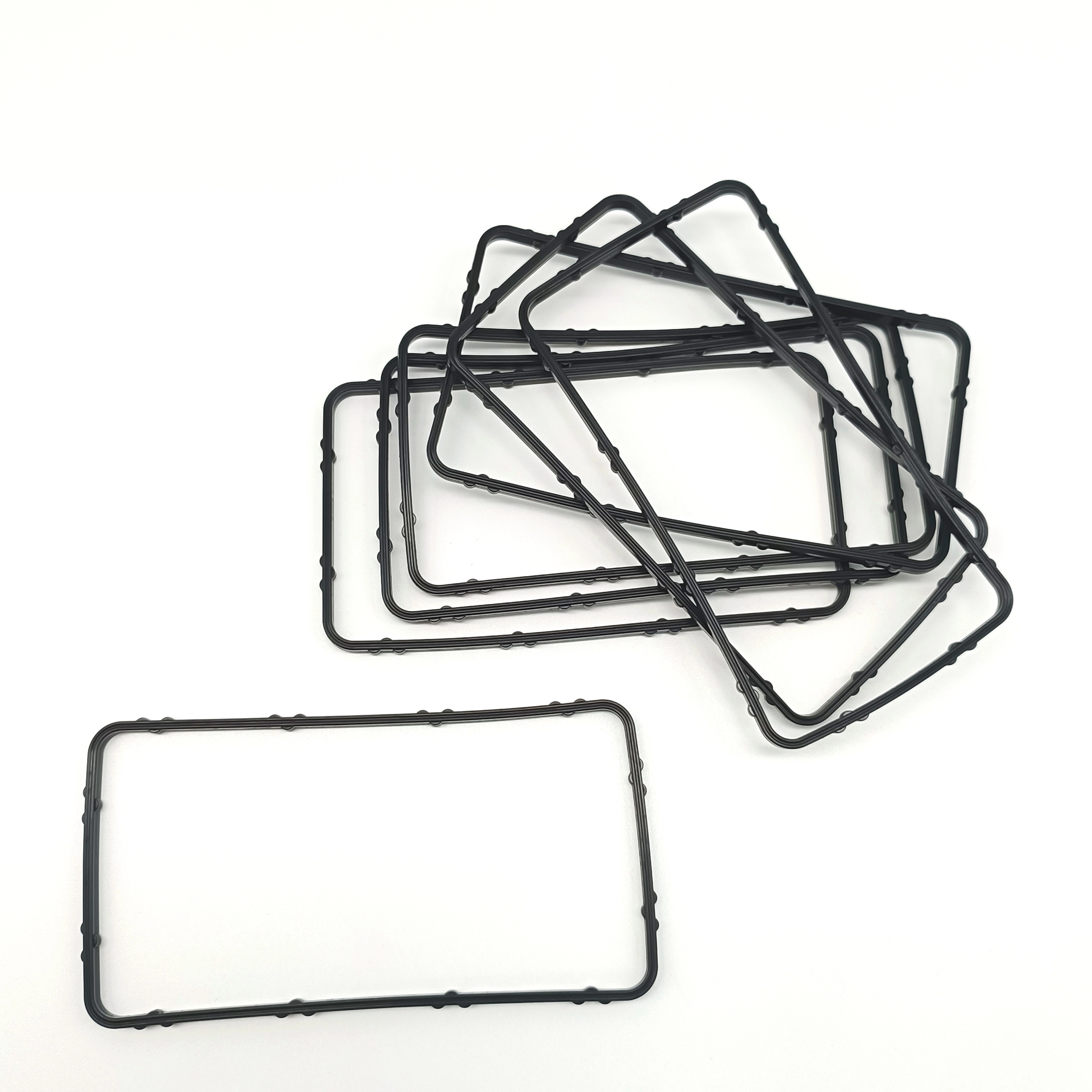
Customized rubber O-rings can be developed for applications where standard dimensions or materials cannot fully satisfy the equipment design. Depending on the project, customization may involve dimensions, elastomer selection, hardness, cross-section, or application-specific requirements.
Rubber O-Rings and Sealing Products provide options for both standard and customized applications. The products are precision-engineered to support reliable sealing performance across a wide range of industrial and commercial equipment.
For equipment manufacturers, customized sealing components can be particularly useful when working with compact assemblies, specialized grooves, limited installation space, or demanding operating environments.
Acid-resistant and chemically resistant rubber seals have applications across multiple industries.
Chemical-processing systems may handle acids, solvents, cleaning agents, and other aggressive fluids. O-rings used in pumps, valves, connectors, and processing equipment need to maintain their sealing properties when exposed to these media.
Material compatibility should be evaluated before production because chemical concentration and temperature can significantly influence seal performance.
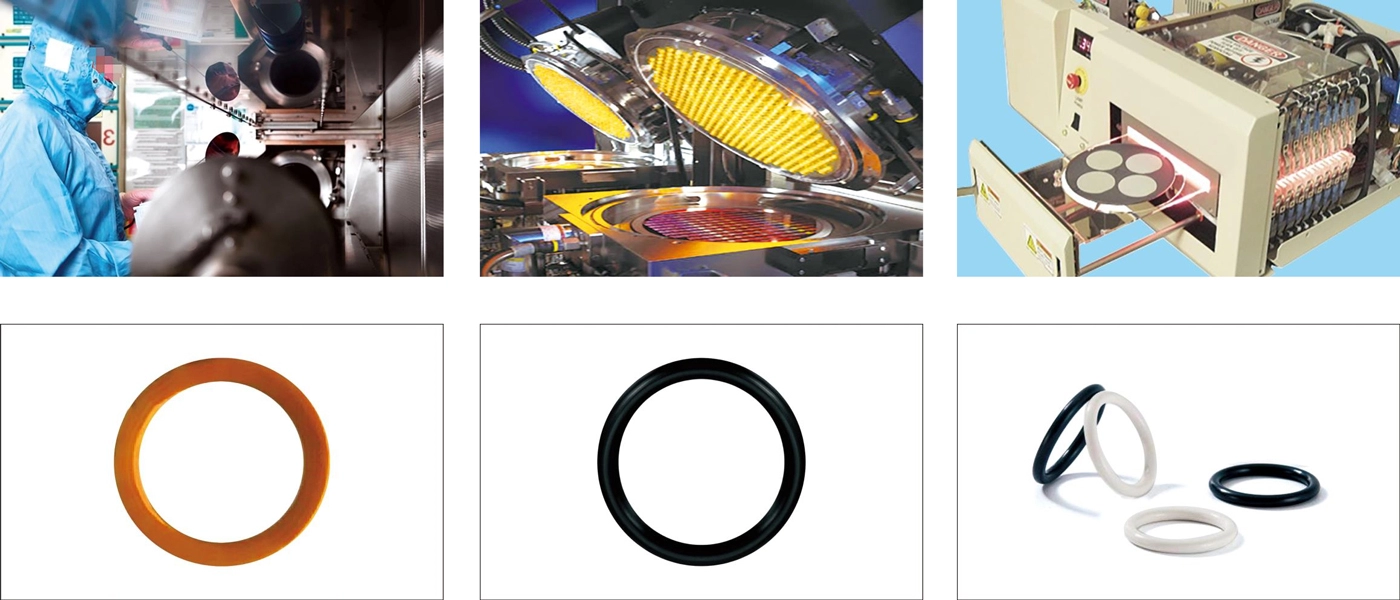
Photovoltaic manufacturing equipment can involve chemical cleaning processes, fluid delivery, temperature changes, and continuous production cycles. Seals must provide stable performance without introducing unnecessary contamination or leakage risks.
Semiconductor equipment often operates under tightly controlled conditions. Seal performance can directly affect process stability, equipment cleanliness, and maintenance requirements. Specialized elastomers such as FFKM may be considered for particularly demanding applications.
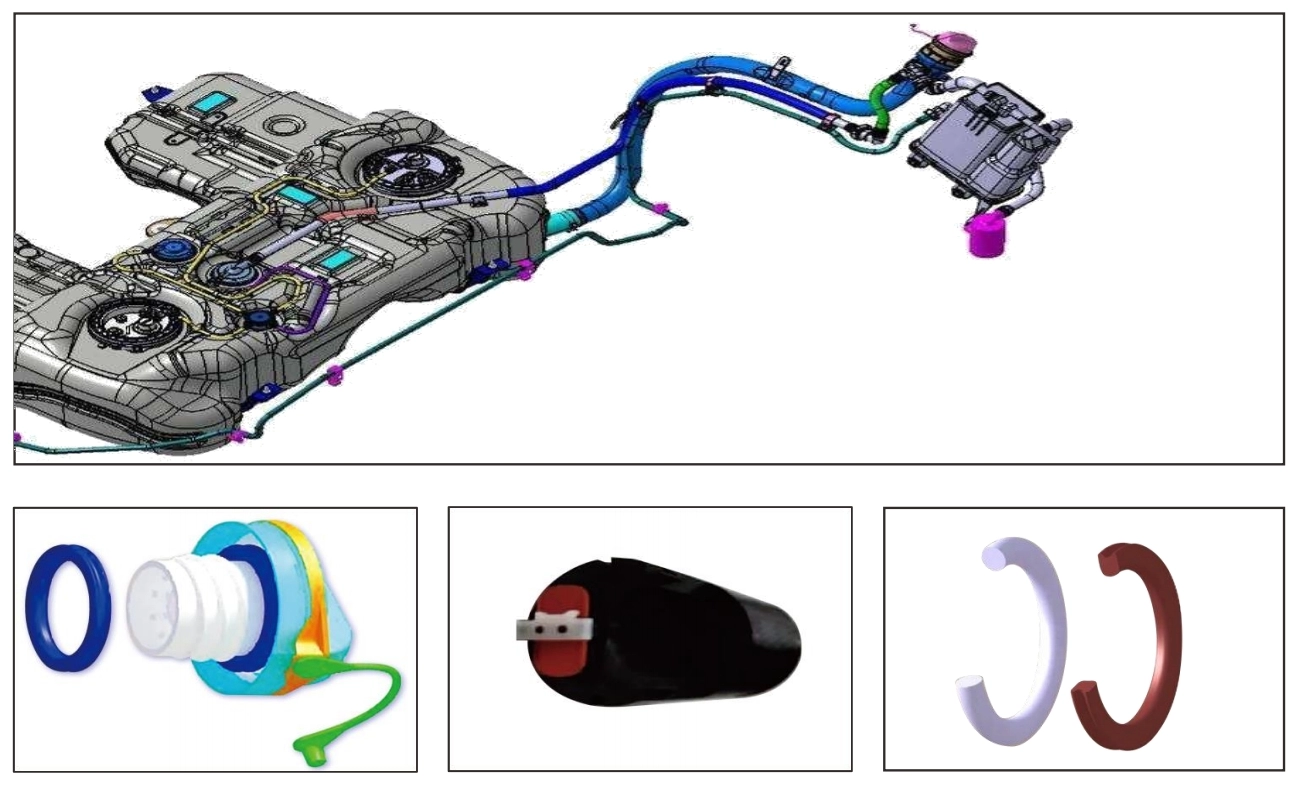
Automotive and new energy vehicle equipment contains numerous sealing points involving fluids, lubricants, cooling systems, hydraulic systems, and thermal-management components.
Depending on the application, NBR, EPDM, FKM, or other suitable elastomers can be evaluated based on the fluid and temperature conditions.
Hydraulic and pneumatic equipment requires seals to withstand pressure, movement, temperature variation, and contact with working fluids. Dimensional accuracy and appropriate material selection are both essential.
Medical and sanitary equipment may require flexible, chemically compatible, and reliable sealing materials. Silicone and other suitable elastomers can be used according to the specific equipment and application requirements.
Industrial Rubber Sealing Solutions are developed for different equipment structures and operating environments, helping customers identify suitable sealing options for their projects.
To help a rubber seal manufacturer recommend an appropriate product, customers should provide as much application information as possible.
Useful information includes:
1. Working medium:
Specify the acid, solvent, oil, water, gas, or other fluid that will contact the seal.
2. Temperature:
Provide the normal operating temperature as well as the maximum and minimum temperatures.
3. Pressure:
Indicate the working pressure and whether pressure changes occur during operation.
4. Movement:
Clarify whether the seal is used in a static or dynamic application.
5. Dimensions:
Provide the O-ring size, groove dimensions, or equipment drawings when available.
6. Operating conditions:
Include information about cleaning cycles, exposure frequency, installation conditions, and expected service requirements.
The more accurate the application information, the easier it is for a professional rubber seal factory to recommend a suitable material and design.
HaO Seal Technology Co., Ltd. was established in 2010 and specializes in rubber seals and sealing solutions. The company was founded by a team with experience in the research, development, and manufacturing of rubber sealing products.
Its product range includes O-rings made from NBR, EPDM, Silicone, FKM, and FFKM, allowing customers to evaluate different elastomers according to their application requirements.
HaO Seal Technology serves a variety of industries, including photovoltaic equipment, semiconductor equipment, inkjet marking equipment, automotive and NEV systems, hydraulic and pneumatic equipment, and medical and sanitary applications.
The company also operates an R&D center focused on improving production processes and developing practical sealing solutions. This engineering capability supports both standard product requirements and customized O-ring projects.
For manufacturers seeking a reliable China rubber seal supplier, this combination of material options, precision manufacturing, customization capability, and application knowledge provides a practical foundation for developing suitable sealing components.
Choosing an acid-resistant seal should never be based on a single specification. Chemical compatibility, temperature, pressure, movement, dimensions, compression, and equipment design all influence the final result.
NBR may be suitable for oil and fuel applications, EPDM for water and selected chemical environments, Silicone for flexible and temperature-sensitive applications, FKM for demanding oil and chemical conditions, and FFKM for highly aggressive industrial environments.
The key is to match the elastomer and O-ring design to the actual operating environment.
With precision-engineered rubber O-rings, multiple elastomer options, customization capabilities, and application-focused R&D, HaO Seal Technology Co., Ltd. provides sealing solutions for manufacturers and equipment users working in demanding industrial environments.
When selecting a sealing component, the goal is not simply to find a rubber O-ring that fits. The goal is to find a seal that fits the material, equipment, operating conditions, and long-term application requirements.