
2026/07/24
Why PU Equal Lip UN Hydraulic Seals Improve Cylinder Sealing Performance


Seal failure is one of the most common and costly issues in industrial and commercial equipment. A leaking seal may seem like a minor problem at first, but it often leads to larger consequences such as equipment downtime, product contamination, safety risks, and increased maintenance costs. Understanding why seals fail and how leakage can be prevented is essential for engineers, maintenance teams, and procurement managers alike.
This article explores the most common causes of seal failure in real-world applications and provides practical, proven methods to prevent leakage through proper material selection, design, installation, and maintenance. The discussion is based on typical rubber sealing products, including O-rings and custom sealing solutions used across multiple industries.
A wide range of rubber sealing products and configurations can be referenced here:
https://www.haosealtech.com/product/
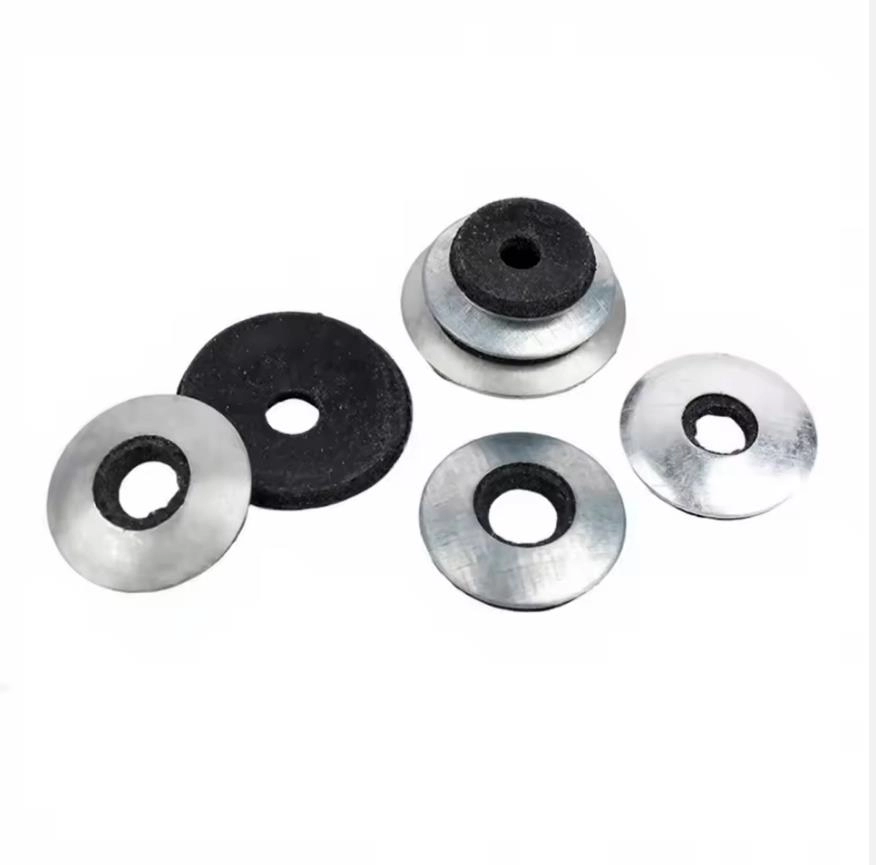
Seals are often small components, but they operate under complex conditions. Pressure, temperature, chemical exposure, vibration, and mechanical movement usually act together rather than independently. In many cases, seal failure is not caused by a single factor but by a combination of design, material, and application mismatches.
Recognizing the root cause is the first step toward effective prevention.
One of the most frequent reasons for seal failure is choosing the wrong elastomer for the application.
Rubber seals must be compatible with:
The working media (oil, fuel, water, chemicals)
Operating temperature
Pressure conditions
Environmental exposure
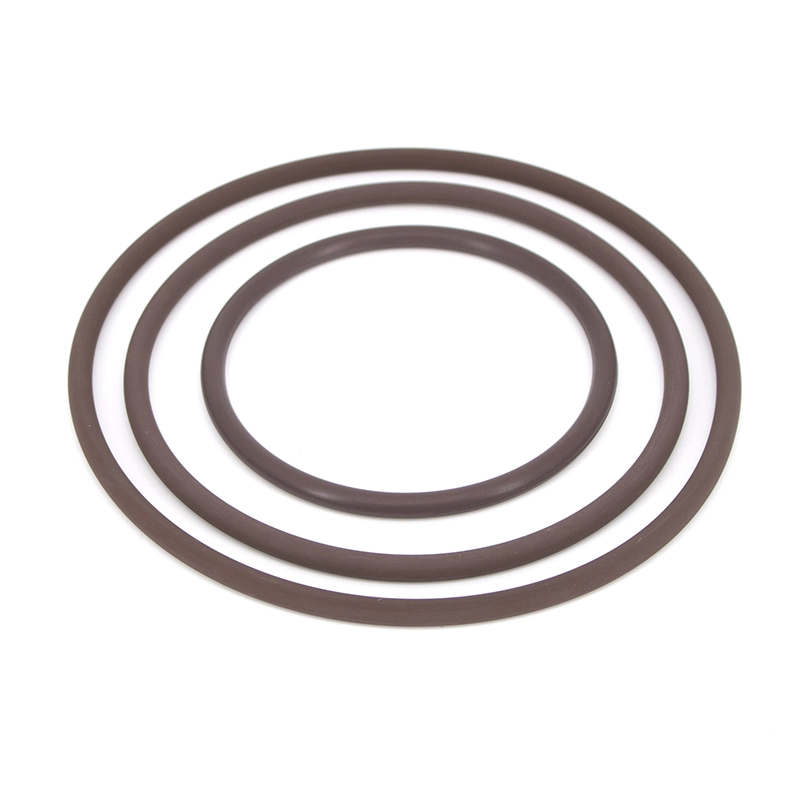
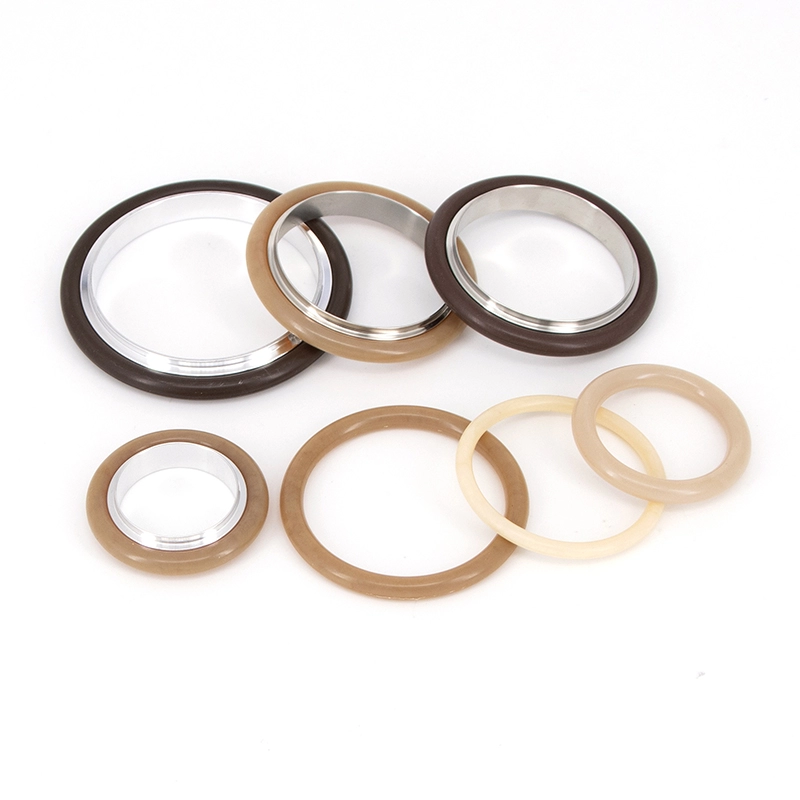
High-quality rubber O-rings are typically manufactured from elastomers such as NBR, EPDM, Silicone, FKM (Viton®), and FFKM, each with distinct performance characteristics.
Swelling or softening when the rubber is incompatible with the fluid
Hardening or cracking due to excessive heat
Chemical attack leading to loss of elasticity
Use NBR for oil and fuel-based systems
Choose EPDM for water, steam, and outdoor environments
Select FKM for high-temperature or chemical exposure
Apply Silicone for wide temperature ranges and flexibility
Use FFKM for extreme chemical and thermal conditions
Matching the elastomer to the actual working environment is one of the most effective ways to prevent leakage.
Even the best material will fail if the seal or groove is poorly designed. Incorrect groove dimensions can cause over-compression, under-compression, or uneven load distribution.
Excessive squeeze causing rapid wear or extrusion
Insufficient squeeze leading to leakage
Sharp edges damaging the seal during installation
Inadequate clearance under pressure
Follow proven design guidelines for groove width, depth, and radii
Ensure proper compression ratios for static and dynamic applications
Avoid sharp edges and burrs on metal components
Consider back-up rings in high-pressure systems
Precision-engineered seals manufactured to tight tolerances perform far more reliably than poorly fitted alternatives.
Improper installation is a major contributor to early seal failure. Even a correctly selected seal can be damaged during assembly if installation procedures are not followed.
Twisting or rolling of O-rings
Cuts or nicks caused by sharp edges
Stretching beyond allowable limits
Use of incompatible lubricants
Use proper installation tools where necessary
Lightly lubricate seals with a compatible lubricant
Avoid excessive stretching during assembly
Ensure seals are seated evenly in the groove
Training assembly personnel and following standardized installation practices significantly reduce leakage risk.
When system pressure exceeds the seal’s capability, rubber material may be forced into clearance gaps, resulting in extrusion and eventual tearing.
Deformed seal edges
Torn or shredded rubber
Sudden leakage after pressure spikes
Select seals with appropriate hardness for the pressure level
Use anti-extrusion or backup rings when necessary
Reduce clearance gaps in critical sealing areas
Choose higher-performance materials for demanding conditions
Pressure-related failures are especially common in hydraulic and pneumatic systems where pressure cycling is frequent.
Temperature has a direct impact on rubber elasticity. Continuous exposure to temperatures outside the material’s effective range accelerates aging and failure.
Depending on the elastomer, rubber seals can operate across a wide temperature range, typically from -60°C to +320°C, but only within their specific material limits.
Brittleness at low temperatures
Hardening or compression set at high temperatures
Loss of sealing force during thermal cycling
Select materials rated for both continuous and peak temperatures
Consider thermal expansion of mating components
Avoid rapid temperature changes where possible
Choosing a seal material based on real operating temperatures, not just nominal values, is critical.
Dynamic sealing applications involve movement, such as reciprocating or rotating motion. Over time, friction and abrasion can wear down sealing surfaces.
Poor surface finish on metal parts
Inadequate lubrication
Misalignment or vibration
Ensure proper surface roughness on mating components
Use seals designed for dynamic motion
Maintain consistent lubrication
Address alignment and vibration issues at the system level
Dynamic applications often benefit from specialized seal profiles rather than standard O-rings alone.
Rubber materials naturally age over time, especially when exposed to ozone, UV light, moisture, or oxygen.
Surface cracking
Loss of elasticity
Reduced sealing force
Choose materials with good aging resistance for outdoor or long-life applications
Store seals properly before installation
Replace seals as part of preventive maintenance rather than waiting for failure
Proactive replacement is often more cost-effective than reactive repairs.
Modern rubber O-rings and sealing rings are no longer simple commodity parts. Precision engineering, controlled compounding, and strict quality inspection are essential to consistent sealing performance.
High-quality seals are designed to deliver:
Reliable resistance to oils, fuels, water, and chemicals
Stable performance across temperature extremes
Long service life in both standard and customized applications
Whether standard sizes or custom-designed seals are required, precision manufacturing plays a key role in leakage prevention.
Seal failure is rarely accidental. In most cases, leakage can be traced back to material mismatch, design errors, improper installation, or unsuitable operating conditions. By understanding the common causes of seal failure and addressing them proactively, equipment reliability can be significantly improved.
Selecting the right elastomer, designing proper grooves, following correct installation procedures, and using precision-engineered sealing components all contribute to longer service life and reduced maintenance costs. When seals are treated as critical system components rather than afterthoughts, leakage prevention becomes a realistic and achievable goal.