
2026/04/22
Hydraulic V-Ring Seals: Heavy-Duty System Performance


In chemical processing, semiconductor manufacturing, photovoltaic equipment, medical systems, and industrial machinery, equipment often operates in environments where acids, solvents, chemicals, heat, and moisture can gradually damage sealing components. Choosing the right acid-resistant seals manufacturer is therefore essential for preventing leakage, protecting critical components, and maintaining stable equipment performance. As a professional rubber seals supplier in China, HaO Seal Technology Co., Ltd. provides engineered sealing solutions using NBR, EPDM, Silicone, FKM (Viton®), and FFKM elastomers for demanding industrial applications.
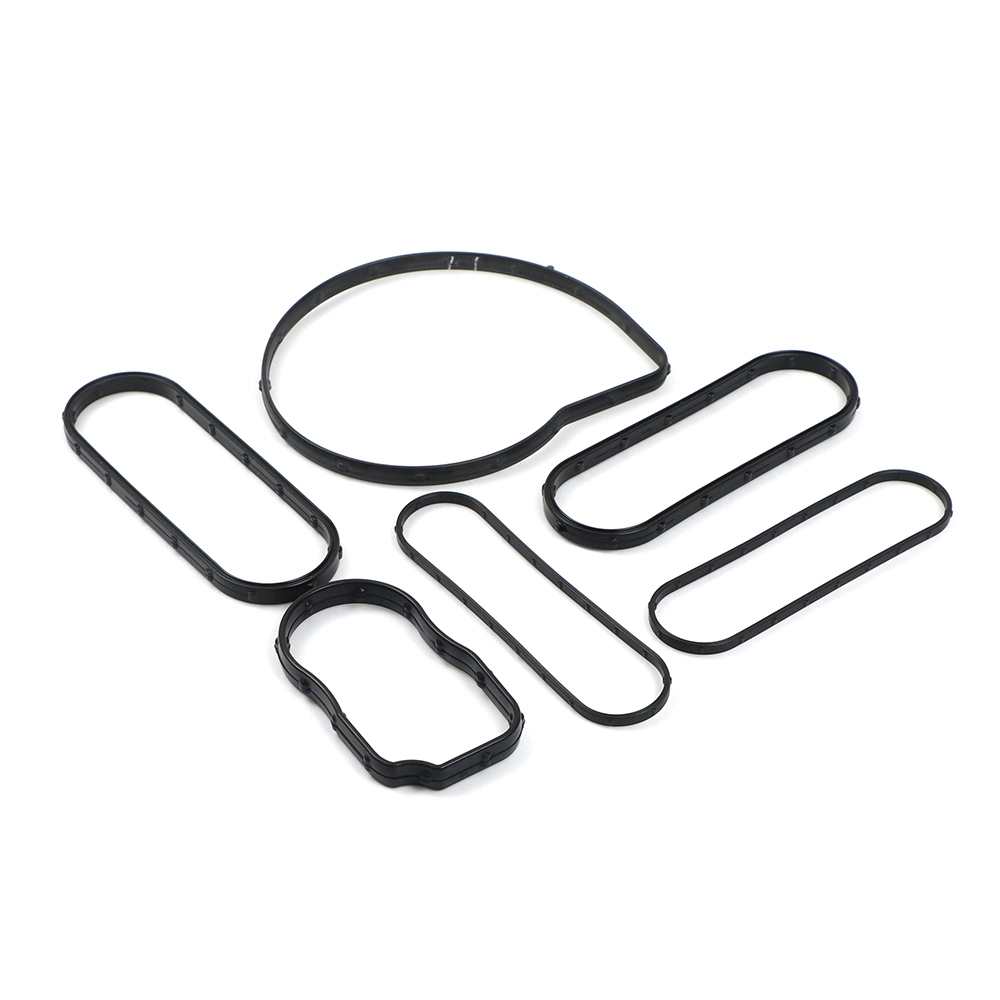
Seals are small components, but their failure can create significant problems. When a sealing material is exposed to aggressive chemicals, it may swell, harden, soften, crack, or lose its elasticity. Once the seal can no longer maintain sufficient contact pressure, leakage can occur.
In corrosive environments, conventional rubber materials may not provide adequate chemical resistance. This is why selecting an appropriate elastomer is one of the most important steps when designing or maintaining industrial equipment.
Acid-resistant seals are designed to maintain their physical properties when exposed to challenging chemical conditions. Depending on the application, they can help provide:
· Better resistance to chemical attack
· Stable sealing performance under temperature changes
· Reduced risk of leakage
· Longer service intervals
· Improved equipment reliability
· Better protection of internal components
· More consistent performance in demanding operating environments
For equipment manufacturers, the correct sealing material can also reduce maintenance requirements and help prevent unplanned equipment downtime.
Not every rubber seal performs in the same way. The chemical composition of the working environment, operating temperature, pressure, and exposure time all influence material selection.
NBR, or nitrile rubber, is widely used for applications involving oils, fuels, and hydraulic fluids. It provides a practical combination of mechanical strength, abrasion resistance, and sealing performance.
NBR is suitable for many general industrial applications, but it is not the first choice for every aggressive chemical environment. When strong acids or highly aggressive chemicals are involved, another elastomer may be more appropriate.
EPDM offers excellent resistance to water, steam, weathering, and many chemicals. It is particularly useful in applications where the sealing component is frequently exposed to water-based fluids or harsh environmental conditions.
EPDM is commonly considered for industrial equipment, water systems, and applications where resistance to aging and environmental exposure is important.
Silicone rubber is known for its wide temperature range and good flexibility. It can maintain elasticity under temperature fluctuations and is frequently used in medical, sanitary, food-related, and specialized industrial equipment.
Its flexibility makes silicone useful where the seal needs to maintain contact with components that experience thermal movement.
FKM, commonly associated with Viton® elastomers, provides strong resistance to oils, fuels, many chemicals, and elevated temperatures. It is frequently selected for automotive, industrial, hydraulic, and chemical-processing applications.
For equipment exposed to hydrocarbons or elevated temperatures, FKM can offer a more suitable sealing solution than standard rubber materials.
FFKM is designed for particularly demanding chemical and high-temperature environments. It is often considered when conventional elastomers cannot provide the required combination of chemical resistance and temperature stability.
This makes FFKM valuable in specialized applications such as semiconductor equipment and advanced industrial processing systems where seal failure can affect both equipment operation and production quality.
The main function of a seal is to prevent unwanted movement of fluids or gases between connected components. In corrosive environments, however, the seal has another important role: protecting the equipment itself.
A properly selected seal forms a reliable barrier between aggressive media and sensitive mechanical components. This can help prevent corrosive fluids from reaching bearings, shafts, electrical components, precision surfaces, and other internal parts.
For example, in chemical-processing equipment, a failed O-ring may allow corrosive liquid to escape from a connection. The immediate problem may be leakage, but the longer-term consequences can include corrosion of nearby components, contamination, equipment shutdown, and increased maintenance work.
By using a suitable elastomer with adequate chemical resistance, manufacturers can reduce these risks and improve the overall reliability of the equipment.
Chemical resistance alone does not guarantee reliable sealing. The dimensional accuracy and design of the O-ring are equally important.
An O-ring that is too large, too small, incorrectly compressed, or poorly matched to the groove can experience premature wear even when the rubber itself has good chemical resistance.
For this reason, precision manufacturing is especially important for industrial sealing components.
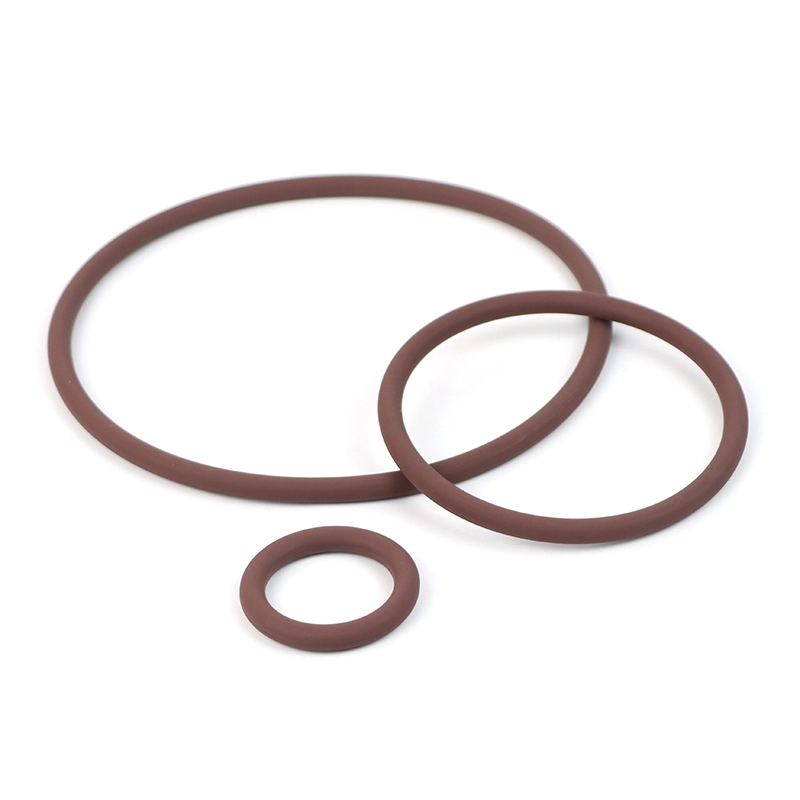
Rubber O-Rings and Sealing Products are precision-engineered for different industrial and commercial requirements. Standard sizes can be used for common applications, while customized O-rings can be developed according to specific equipment designs, dimensions, materials, and operating conditions.
Important factors to consider include:
· O-ring size and cross-section
· Groove design
· Compression ratio
· Operating temperature
· Working pressure
· Chemical exposure
· Dynamic or static sealing conditions
· Required mechanical properties
· Expected service environment
A complete sealing solution should consider these factors together rather than selecting a seal based only on chemical resistance.
Acid-resistant and chemically resistant seals are used across a wide range of industries.
Photovoltaic manufacturing equipment can involve chemicals, cleaning agents, vacuum systems, elevated temperatures, and continuous production cycles. Sealing components must maintain dimensional stability and reliability under these conditions.
Semiconductor manufacturing requires extremely controlled production environments. Contamination, leakage, and seal degradation can affect equipment operation and process stability. FFKM and other specialized elastomers may be considered for demanding semiconductor applications.
Inkjet marking systems rely on controlled fluid delivery. Seals must be compatible with inks, solvents, and cleaning fluids while maintaining reliable performance during repeated operation.
Automotive and NEV systems contain hydraulic, pneumatic, thermal-management, and fluid-handling components that require reliable sealing. Depending on the application, NBR, EPDM, FKM, or other specialized materials may be selected.
Hydraulic and pneumatic equipment requires seals that can withstand pressure, movement, temperature changes, and contact with working fluids. Material selection and dimensional precision are both critical for maintaining system performance.
Medical and sanitary applications place additional requirements on material selection, cleanliness, flexibility, and chemical compatibility. Silicone and other suitable elastomers can be used for applications where these characteristics are required.
Industrial Rubber Seal Solutions can be adapted to different equipment structures and operating conditions, helping manufacturers select suitable sealing materials for their specific applications.
Working directly with an experienced rubber seal manufacturer in China can make it easier to control material selection, dimensional accuracy, production consistency, and customization requirements.
HaO Seal Technology Co., Ltd. was established in 2010 and specializes in rubber seals and sealing solutions. The company serves customers across photovoltaic equipment, semiconductor equipment, inkjet marking equipment, automotive and new energy vehicle, hydraulic and pneumatic, and medical and sanitary industries.
Its product capabilities include rubber O-rings manufactured from NBR, EPDM, Silicone, FKM, and FFKM materials. This range allows customers to select sealing materials according to their actual operating environment rather than relying on a single rubber formulation for every application.
HaO Seal Technology also maintains an R&D center focused on improving production processes and developing practical sealing solutions for different industrial requirements. This engineering-oriented approach is particularly useful when standard O-rings cannot fully satisfy equipment requirements.
Before ordering, equipment manufacturers and maintenance teams should provide as much application information as possible.
At minimum, consider:
1. Chemical medium: Identify the acid, solvent, oil, water, or other fluid contacting the seal.
2. Operating temperature: Determine both normal and peak temperatures.
3. Pressure: Check whether the application is static or dynamic and identify the working pressure.
4. Movement: Determine whether the seal is used in a stationary connection or moving assembly.
5. Material requirements: Select an elastomer based on chemical compatibility and operating conditions.
6. Dimensions: Confirm the correct O-ring size, groove dimensions, and compression requirements.
7. Service expectations: Consider operating cycles, maintenance intervals, and expected service life.
Providing these details to a professional rubber seal supplier helps reduce the risk of choosing a material that performs well in one condition but fails under another.
Acid-resistant seals play an important role in protecting industrial equipment from leakage, chemical exposure, and premature component damage. However, reliable sealing is not simply a matter of choosing the strongest rubber material. The elastomer, dimensions, groove design, temperature, pressure, chemical medium, and operating conditions must all work together.
For equipment manufacturers and industrial users, selecting an experienced sealing partner can simplify this process. With multiple elastomer options, precision manufacturing capabilities, customization support, and application-focused R&D, HaO Seal Technology Co., Ltd. provides practical rubber sealing solutions for demanding industrial environments.
Whether the requirement involves a standard O-ring or a customized seal for photovoltaic, semiconductor, automotive, hydraulic, pneumatic, inkjet marking, or medical equipment, the right combination of material and design can make a significant difference in equipment reliability and service life.