
2026/03/30
Why Long-Life Industrial Rubber Seals Matter in Modern Manufacturing


An acid-resistant seal compatibility chart helps engineers, maintenance teams, and industrial buyers identify suitable sealing materials for different chemical media. Choosing the right material is essential because acids, alkalis, solvents, and other process fluids can cause seals to swell, harden, crack, or lose their sealing performance. The correct choice depends not only on chemical resistance but also on temperature, pressure, movement, and operating conditions. This guide compares common rubber and polymer sealing materials and explains how to evaluate their suitability for demanding industrial applications.
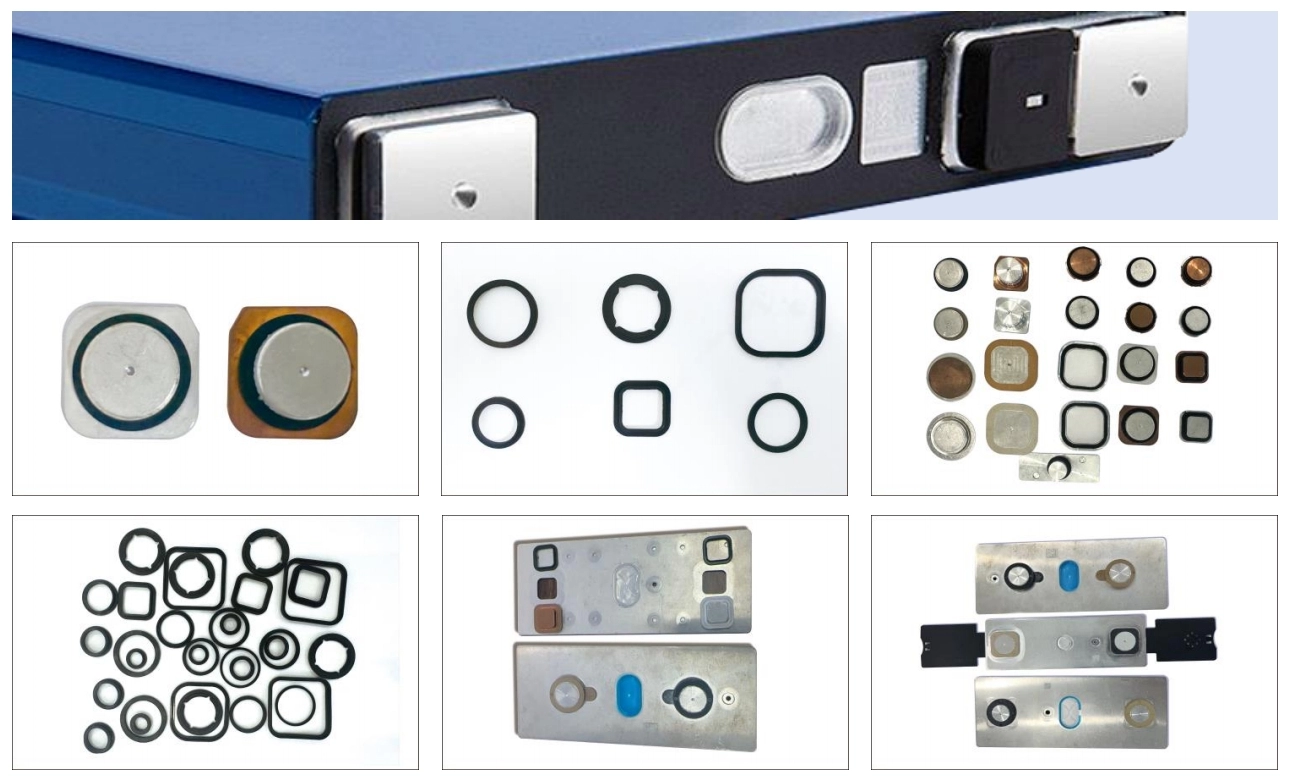
Seals prevent fluids from escaping equipment and stop external contaminants from entering critical systems. In chemical processing, manufacturing, water treatment, and hydraulic applications, an incompatible seal material can deteriorate prematurely and lead to leakage, equipment downtime, and potential safety or environmental concerns.
Chemical compatibility is influenced by several factors:
Chemical concentration: A material may tolerate a diluted acid but perform poorly when exposed to a concentrated solution.
Operating temperature: Higher temperatures can accelerate chemical attack and change material properties.
Exposure duration: Continuous immersion may produce different results from brief or intermittent contact.
Mechanical conditions: Pressure, friction, extrusion gaps, and repeated movement can affect sealing performance.
Material formulation: Rubber compounds with different additives, curing systems, and hardness levels may behave differently in the same chemical.
For these reasons, a compatibility chart should be treated as a preliminary selection tool rather than a guarantee of service life. Final material selection should be based on the actual chemical specification and operating environment.
The following table provides a general comparison of commonly used sealing materials. Actual compatibility depends on the specific chemical, concentration, temperature, and compound formulation.
Seal material | General chemical resistance | Typical applications | Key limitations |
EPDM | Often suitable for many diluted acids, alkalis, and water-based chemicals | Water treatment, chemical handling, outdoor equipment | Generally unsuitable for petroleum-based oils and fuels |
FKM (fluoroelastomer) | Good resistance to many oils, fuels, and selected chemicals | Industrial machinery, automotive systems, chemical equipment | Not universally resistant to hot water, steam, or every acid and solvent |
NBR (nitrile rubber) | Good resistance to mineral oils and many petroleum-based fluids | Hydraulic cylinders, pumps, oil-handling equipment | Generally less suitable for strong oxidizing chemicals and many aggressive acids |
FFKM (perfluoroelastomer) | Broad chemical resistance, depending on compound grade | Demanding chemical processing and semiconductor applications | Performance and suitability must be verified for the specific chemical and temperature |
PTFE (polytetrafluoroethylene) | Excellent resistance to many acids, alkalis, and solvents | Chemical pumps, valves, static seals, and specialized dynamic seals | Limited elasticity and potential cold-flow issues require suitable seal design |
Silicone rubber | Useful for selected temperature-sensitive applications and some chemical environments | Food, medical, and general industrial equipment where specified | Often unsuitable for demanding abrasion, tear, and many solvent exposures |
PU (polyurethane) | Good mechanical durability and resistance to many mineral-oil-based hydraulic fluids | Hydraulic cylinders, piston seals, rod seals, and wear components | Not a universal acid-resistant material; compatibility with aggressive chemicals must be confirmed |
No single material is suitable for every chemical environment. For example, EPDM is often considered for water-based acidic solutions, while PTFE may be preferable where broad chemical resistance is needed. FKM can be useful in oil-rich environments, but its suitability for a particular acid must be checked carefully. FFKM may be considered for highly demanding chemical applications when the operating requirements justify its use.
The best choice always depends on the exact formulation and service conditions rather than the generic material name alone.
Diluted acids are used in water treatment, cleaning operations, and some manufacturing processes. EPDM may be suitable for certain diluted acidic solutions, while PTFE can provide broader chemical resistance in applications where elasticity is not the primary sealing requirement.
However, acid identity matters. Hydrochloric acid, sulfuric acid, nitric acid, and hydrofluoric acid have different chemical characteristics. Concentration and temperature can significantly change the compatibility of a material. Always verify the specific chemical rather than selecting a seal based on the term “acid-resistant” alone.
Strong acids and oxidizing media require more careful evaluation. PTFE and selected FFKM compounds may be candidates for some severe chemical environments, but neither should be assumed compatible with every chemical under every condition.
For applications involving concentrated acids, elevated temperatures, or long exposure periods, consult compound-specific chemical resistance data and the seal manufacturer's technical team. A controlled compatibility test may also be necessary before full-scale deployment.
EPDM is commonly used in many water-based and alkaline environments. PTFE can also be suitable for a broad range of alkaline media. The final choice depends on temperature, concentration, sealing geometry, and mechanical requirements.
In moving equipment, chemical resistance alone is insufficient. The material must also withstand friction, pressure fluctuations, and the required service life.
Hydraulic equipment presents a different set of requirements. Seals must prevent fluid leakage while resisting wear, pressure changes, and repeated movement. NBR and PU are frequently considered for mineral-oil-based hydraulic systems, provided their temperature, pressure, and compatibility limits match the application.
This distinction is particularly important when choosing between acid-resistant seals and conventional hydraulic seals. A material with excellent acid resistance may not deliver the best wear performance in a moving hydraulic cylinder, while a durable hydraulic seal may be unsuitable for aggressive chemical media.
Polyurethane combines elastic recovery with high mechanical strength, making it useful for hydraulic sealing and wear-related components. Compared with many conventional rubbers, suitable PU formulations can offer strong abrasion resistance, good tear resistance, and high load-bearing capacity.
These properties make PU an attractive option for applications where seals experience repeated movement, contact friction, and mechanical stress. Polyurethane can also replace certain plastic or metal components in suitable applications, potentially reducing component weight, noise, and wear.
For hydraulic equipment, material selection must consider more than hardness. The seal profile, cylinder surface finish, clearance, fluid type, and installation method all influence the final result.
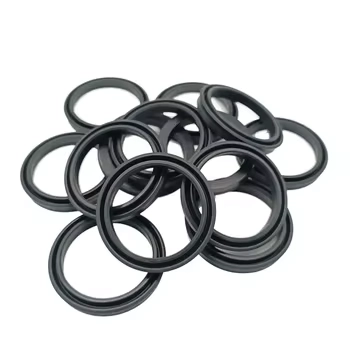
HaO Seal Technology Co.,Ltd offers the UN Hydraulic Piston Rod Seal PU Equal Lip Seal for Low Pressure Cylinders, designed for hydraulic cylinder applications.
The UNS/UN piston rod seal features a wide cross-section and an asymmetrical U-shaped profile, with the inner and outer lips having equal heights. This configuration allows the seal to be used in suitable piston or rod applications and makes installation into a compatible one-piece structure straightforward. Its broad cross-section is particularly relevant to low-pressure hydraulic cylinder applications.
The product uses PU with a specified hardness of 90–95 Shore A and is available in blue and green. According to the supplied technical specifications, its operating limits are:
Material: Polyurethane (PU)
Hardness: 90–95 Shore A
Color: Blue and green
Pressure: ≤31.5 MPa
Temperature: -35°C to +110°C
Speed: ≤0.5 m/s
Media: Mineral-oil-based hydraulic oils
The stated pressure limit should be checked against the specific cylinder design and operating conditions before selection. Although the seal is described as suitable for low-pressure hydraulic cylinders, actual performance depends on the application and installation details.
Its key advantages include strong wear resistance, resistance to shock loads and pressure peaks, high crush resistance, reliable sealing under specified no-load and low-temperature conditions, and convenient installation. These features make it a practical option for suitable hydraulic systems where mechanical durability and leakage control are priorities.
Importantly, the stated media specification is mineral-oil-based hydraulic oil. This PU seal should not automatically be selected for acid handling or aggressive chemical service. For those applications, the chemical compatibility of the exact PU compound must be confirmed before use.
Before ordering a seal for an industrial application, review the following points.
Step 1: Identify the chemical. Record the chemical name, concentration, and any additives or contaminants.
Step 2: Confirm operating conditions. Document the minimum and maximum temperatures, working pressure, pressure peaks, movement speed, and exposure duration.
Step 3: Select candidate materials. Use a compatibility chart to shortlist suitable compounds, then check manufacturer-specific data.
Step 4: Evaluate mechanical performance. Consider abrasion, tear strength, compression behavior, extrusion risk, and the seal's movement pattern.
Step 5: Verify the seal design. Confirm dimensions, lip geometry, installation space, surface finish, and compatibility with the equipment.
Step 6: Request technical confirmation. For critical or hazardous applications, obtain written material recommendations and conduct validation testing when necessary.
A seal that performs well in a static chemical tank may not be suitable for a reciprocating rod exposed to the same fluid. Mechanical demands and chemical exposure must be assessed together.
Choosing an acid-resistant seal is not simply a matter of finding a rubber material with a broad chemical resistance rating. Engineers must balance chemical compatibility, temperature stability, mechanical strength, sealing geometry, and expected service life.
For industrial buyers looking for a sealing solutions supplier in China, HaO Seal Technology Co.,Ltd provides hydraulic sealing products for applications where material properties and operating conditions must be carefully matched. Sharing detailed application information with the manufacturer can help narrow the available options and avoid unsuitable material substitutions.
For hydraulic cylinders using mineral-oil-based fluids, the UNS/UN equal-lip PU piston rod seal offers a combination of wear resistance, load-bearing capability, and straightforward installation. For acid-handling equipment, however, the recommended material should be selected separately based on the exact chemical medium and operating environment.
The most reliable approach is to use compatibility charts for initial screening, verify the chosen compound against technical data, and confirm the complete seal design before installation. This process helps reduce premature seal failure, improve maintenance planning, and support safer industrial operation.