
2026/02/04
U-Ring Seals Explained: Benefits for Hydraulic Cylinders


In sealing technology, choosing the right seal profile is just as important as selecting the right material. O-Rings, X-Rings, and Y-Rings are among the most commonly used sealing solutions in hydraulic, pneumatic, and industrial equipment. While they may look similar at first glance, their structural differences directly affect sealing performance, service life, and suitability for specific applications.
This article takes a practical, application-focused look at O-Rings, X-Rings, and Y-Rings—how they differ, where each performs best, and when custom sealing design becomes the better option for complex or demanding projects.
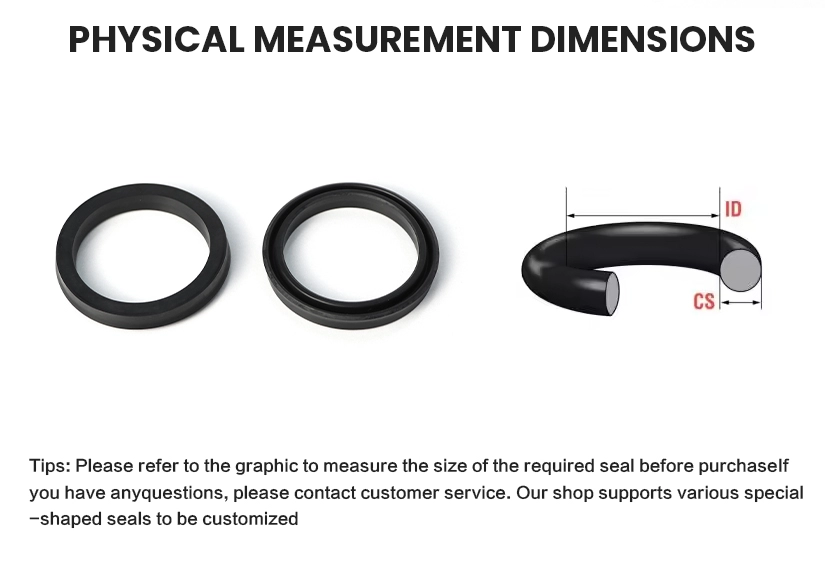
Seals are designed to prevent leakage of fluids or gases, maintain pressure, and protect internal components from contamination. In dynamic systems such as hydraulic cylinders, pumps, and valves, seals must perform under pressure, temperature variation, friction, and chemical exposure.
Standard seal profiles work well in many cases, but mismatched seal selection can lead to premature wear, leakage, energy loss, and downtime. This is why understanding the functional differences between O-Rings, X-Rings, and Y-Rings is essential for engineers and equipment designers.
O-Rings have a simple circular cross-section and are widely used for both static and dynamic sealing. Their straightforward design makes them easy to install, cost-effective, and compatible with a wide range of materials and standards.
Simple groove design
Broad material availability
Effective for static sealing
Suitable for low to moderate dynamic applications
Static flange sealing
Hydraulic fittings
Valves and connectors
Pumps and compressors
O-Rings are often the first choice when design space is limited and operating conditions are stable. However, in dynamic or high-pressure environments, their round profile can lead to twisting, rolling, or uneven wear.
To explore standard options and specifications, you can view detailed O-Ring solutions designed for industrial applications.
X-Rings, also known as Quad-Rings, feature an X-shaped cross-section with four sealing lips. This design creates multiple sealing points and improves stability within the groove.
Reduced friction and wear
Better resistance to rolling or twisting
Improved sealing under dynamic motion
Enhanced lubrication retention
Reciprocating hydraulic cylinders
Rotary shafts
High-speed pneumatic systems
Equipment with frequent start-stop cycles
Because X-Rings distribute pressure more evenly, they often deliver longer service life than O-Rings in dynamic applications. They are especially useful where maintenance intervals need to be extended and consistent performance is critical.
Y-Rings, sometimes referred to as lip seals, have a Y-shaped cross-section designed specifically for dynamic sealing under pressure. Unlike O-Rings and X-Rings, Y-Rings rely on pressure-activated lips to enhance sealing performance.
Excellent sealing under high pressure
Strong resistance to extrusion
Suitable for one-direction or bi-directional sealing (depending on design)
Stable performance in demanding hydraulic systems
Hydraulic cylinders
Heavy machinery
Construction equipment
Industrial presses
Y-Rings are particularly effective where pressure fluctuations are frequent and sealing reliability is critical. Their design allows them to adapt to pressure changes, improving sealing efficiency without excessive friction.
From a practical standpoint:
O-Rings are best for simple, cost-sensitive, and static applications.
X-Rings offer improved performance in dynamic systems with moderate pressure and speed.
Y-Rings are optimized for high-pressure hydraulic environments where sealing failure is not an option.
No single seal profile is universally superior—the optimal choice depends on motion type, pressure, temperature, media, and expected service life.
Seal performance is not determined by shape alone. Material selection plays an equally important role. Common rubber compounds include:
NBR for oil resistance
FKM for high temperature and chemical resistance
EPDM for water and steam applications
In extreme conditions, standard compounds may not be sufficient. This is where customized material formulations become essential.
Many industrial projects operate outside standard conditions. Extreme temperatures, aggressive chemicals, unusual groove designs, or electrical conductivity requirements can quickly exceed the limits of off-the-shelf seals.
At Hao Seal Technology, custom sealing design starts with a deep understanding of the application environment. Each project is carefully evaluated based on:
Operating temperature range
Pressure levels and fluctuations
Media compatibility (liquids, oils, gases)
Motion type and speed
Electrical conductivity or insulation needs
Rather than adapting the application to the seal, the seal is engineered to fit the application.
Custom sealing performance depends heavily on material formulation. Through customized mold development and in-house rubber compounding, seals can be optimized for very specific requirements.
Examples include:
Seals for extremely low or high temperatures
Electrically conductive or insulating seals
Resistance to oil, gas, or aggressive chemicals
Enhanced wear resistance for long service life
By controlling both mold design and rubber formulation, custom seals achieve a level of precision and reliability that standard products cannot match.
Custom O-Rings, X-Rings, and Y-Rings are commonly used in:
Heavy hydraulic equipment
Energy and power systems
Industrial automation
Specialized machinery
In these applications, reliability directly impacts safety, efficiency, and operational cost. Custom sealing solutions help reduce downtime, prevent leakage, and improve overall system performance.
O-Rings, X-Rings, and Y-Rings each serve a distinct purpose in sealing technology. Understanding their structural differences and application strengths allows engineers to make informed decisions that improve performance and extend equipment life.
For standard applications, off-the-shelf seals may be sufficient. However, when operating conditions become demanding or unique, custom sealing design—supported by customized molds and tailored rubber compounds—becomes the most reliable path forward.
With the right combination of seal profile, material, and engineering support, sealing systems can be transformed from a weak point into a competitive advantage.