
2026/01/19
Design Considerations When Using Rubber X-Rings for Dynamic Sealing


Selecting the right sealing solution directly affects equipment reliability, maintenance frequency, and operating costs. Whether you are sourcing from an acid resistant seals manufacturer or evaluating standard sealing products for a new project, understanding the differences between these two sealing solutions is essential. Modern <a href="https://www.haosealtech.com/product/">metal bonded rubber seals</a> are designed to perform under demanding industrial conditions by combining the structural strength of metal with the elasticity and sealing performance of high-grade rubber. Choosing the correct seal material can significantly improve equipment lifespan while reducing leakage risks in challenging environments.
Industrial equipment today operates in increasingly complex conditions. Pumps, valves, pipelines, heat exchangers, chemical reactors, hydraulic systems, and processing equipment all require seals capable of maintaining reliable performance under pressure, vibration, aggressive chemicals, and fluctuating temperatures. While standard seals remain suitable for many general industrial applications, acid-resistant seals are specifically engineered for environments where chemical compatibility is the highest priority.
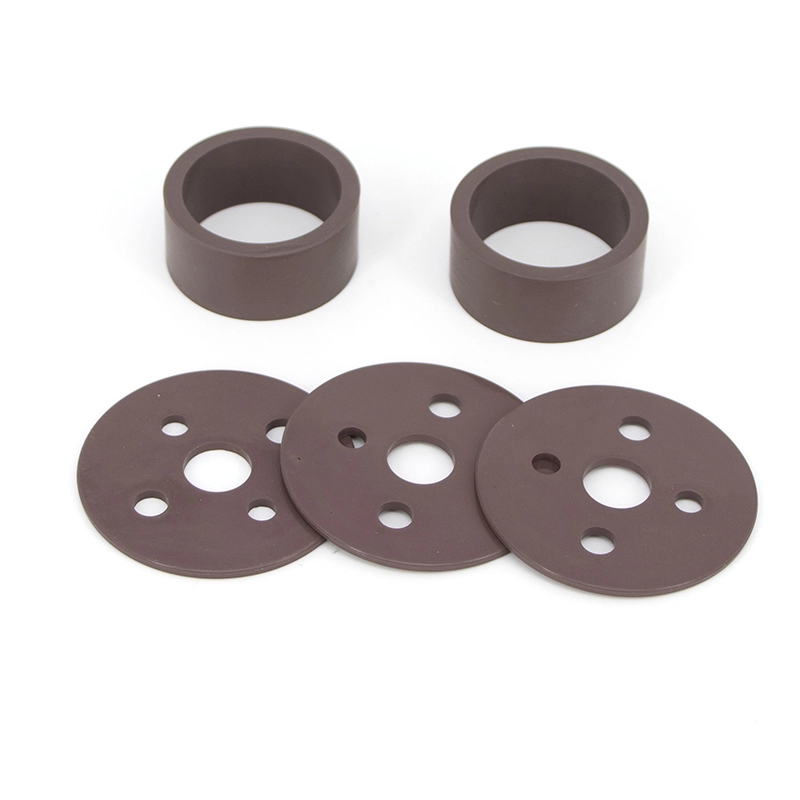
Standard seals are widely used across manufacturing, hydraulic equipment, automotive systems, compressors, and general industrial machinery. Their primary function is to prevent fluid leakage while protecting equipment from dust, moisture, and contaminants.
Depending on the operating environment, standard seals are commonly manufactured from materials such as:
· NBR (Nitrile Rubber)
· EPDM
· Silicone
· Standard FKM
These materials provide reliable sealing performance for water, lubricating oils, compressed air, hydraulic fluids, and moderate industrial chemicals.
For many production environments, standard seals provide an excellent balance between durability, flexibility, and manufacturing cost. However, their chemical resistance has limitations when exposed to concentrated acids, strong oxidizing agents, or highly corrosive media over extended periods.
Acid-resistant seals are developed specifically for industries where aggressive chemicals are present on a daily basis. Instead of simply preventing leakage, these seals are designed to maintain their physical properties while continuously exposed to corrosive substances.
Applications commonly include:
· Chemical processing plants
· Pharmaceutical production
· Battery manufacturing
· Electroplating equipment
· Semiconductor manufacturing
· Wastewater treatment
· Petrochemical facilities
In these environments, seal degradation can result in equipment failure, production downtime, contamination, and expensive maintenance.
This is where advanced <a href="https://www.haosealtech.com/product/">metal bonded rubber seals</a> provide significant advantages.
The performance of any seal begins with selecting the appropriate elastomer.
HaO Seal Technology Co., Ltd. offers multiple material options that allow customers to match seal performance with actual operating conditions.
Available rubber materials include:
· NBR
· EPDM
· Silicone
· FKM
· FFKM
Each material offers different resistance characteristics.
Suitable for hydraulic oil, petroleum-based lubricants, and general industrial applications.
Excellent resistance to hot water, steam, weathering, and many mild chemicals.
Provides outstanding flexibility across extremely low and high temperatures while maintaining stable sealing performance.
Widely selected for high-temperature environments involving fuels, oils, and many industrial chemicals.
The premium solution for highly corrosive chemical environments where maximum chemical resistance and long service life are required.
Selecting the right material often has a greater impact on seal life than increasing seal size or changing equipment design.
Unlike conventional rubber seals, metal bonded rubber seals combine an elastomer sealing element with a precision metal insert.
The rubber is permanently vulcanized or chemically bonded to stainless steel, carbon steel, or aluminum components.
This composite structure delivers several engineering advantages:
· Improved dimensional stability
· Higher mechanical strength
· Better resistance to deformation
· More accurate installation
· Increased sealing reliability
· Longer operating life
The metal insert provides structural support, while the rubber maintains continuous sealing contact under pressure and vibration.
This combination is particularly valuable in rotating equipment, hydraulic assemblies, pumps, and pressure systems where standard molded rubber seals may gradually deform over time.
One of the largest differences between standard and acid-resistant seals lies in their compatibility with various media.
Operating Environment | Standard Seal | Acid-Resistant Seal |
Water | Excellent | Excellent |
Hydraulic Oil | Excellent | Excellent |
Fuel | Good | Excellent |
Diluted Acids | Fair | Excellent |
Concentrated Acids | Poor | Excellent |
Strong Oxidizers | Poor | Excellent |
Chemical Solvents | Limited | Outstanding |
This comparison clearly demonstrates why material selection should always consider actual operating media rather than pressure alone.
Industrial sealing performance depends not only on chemical compatibility but also on thermal stability.
HaO Seal Technology provides sealing solutions covering temperatures from:
-60°C to +320°C
The exact operating range depends on the selected rubber compound.
This broad temperature capability allows one supplier to support industries including:
· Aerospace
· Food processing
· Chemical manufacturing
· Heavy equipment
· Power generation
· Marine engineering
Different applications require different sealing forces.
HaO Seal Technology manufactures seals with hardness ranging from:
40–95 Shore A
Lower hardness provides better flexibility for low-pressure sealing applications.
Higher hardness improves extrusion resistance and dimensional stability under elevated pressure.
Rather than relying on one universal formulation, engineers can specify hardness according to operating pressure, media, and assembly requirements.
Many industrial sealing challenges cannot be solved using standard catalog products.
HaO Seal Technology supports customized manufacturing, including:
· Custom seal geometries
· Special thicknesses
· Metal insert optimization
· Customized bonding structures
· Application-specific rubber formulations
This flexibility allows equipment manufacturers to simplify assembly while improving long-term sealing reliability.
Whether the project involves OEM equipment production or replacement components, customized engineering helps reduce installation issues and improve overall product consistency.
Industrial customers increasingly require sealing components that comply with global regulatory standards.
HaO Seal Technology manufactures products that can comply with:
· RoHS
· REACH
· FDA
· UL
These certifications support applications across industries where environmental protection, product safety, and regulatory compliance are essential.
Metal bonded rubber seals are used across a wide range of industrial equipment, including:
· Chemical pumps
· Industrial valves
· Pressure vessels
· Hydraulic cylinders
· Compressors
· Heat exchangers
· Pipeline systems
· Pharmaceutical processing equipment
· Food processing machinery
· Industrial automation equipment
Because these seals combine metal strength with rubber flexibility, they provide excellent sealing performance even under vibration, cyclic loading, and pressure fluctuations.
When selecting a sealing solution, engineers should evaluate several factors instead of focusing on material alone.
Questions worth considering include:
· What chemicals will the seal contact?
· What is the maximum operating temperature?
· How much pressure will the seal experience?
· Is continuous vibration expected?
· Will the seal require food-grade or regulatory compliance?
· Is long service life more important than initial replacement frequency?
Answering these questions early in the design process helps reduce future maintenance costs and improves equipment reliability.
Choosing a sealing supplier involves more than comparing material specifications. Manufacturing consistency, engineering support, and customization capabilities all influence long-term equipment performance.
HaO Seal Technology Co., Ltd. specializes in manufacturing high-precision metal bonded rubber seals for demanding industrial applications. By combining advanced vulcanization technology, precision metal processing, and strict quality control, the company delivers sealing solutions that maintain excellent adhesion, dimensional stability, and leak-proof performance throughout extended service life.
With material options including NBR, EPDM, Silicone, FKM, and FFKM bonded to stainless steel, carbon steel, or aluminum, HaO Seal Technology provides flexible solutions for a wide variety of industries. From custom designs to application-specific engineering support, the company works closely with customers to develop sealing components that meet real operating requirements rather than relying on one-size-fits-all products.
For manufacturers seeking dependable sealing performance in both standard industrial environments and highly corrosive applications, professionally engineered metal bonded rubber seals provide a practical, long-term solution that enhances equipment reliability while reducing maintenance demands.