
2026/06/17
How Do Acid-Resistant Seals Perform in Corrosive Chemical Environments?


For industrial equipment manufacturers, choosing a high-quality hydraulic V-ring seal is not simply a matter of selecting a rubber component that fits a groove. A reliable seal must maintain contact under operating conditions, resist the working medium, tolerate temperature changes, and provide stable performance through repeated use. For buyers sourcing from a China seal factory or hydraulic seal manufacturer, material quality, hardness, dimensional accuracy, standards, and application-specific design should all be evaluated before production.
A properly manufactured seal helps control leakage and protects equipment from premature wear and contamination. Whether used in hydraulic cylinders, pumps, valves, industrial machinery, or other equipment, the sealing material must be matched to the actual working environment.
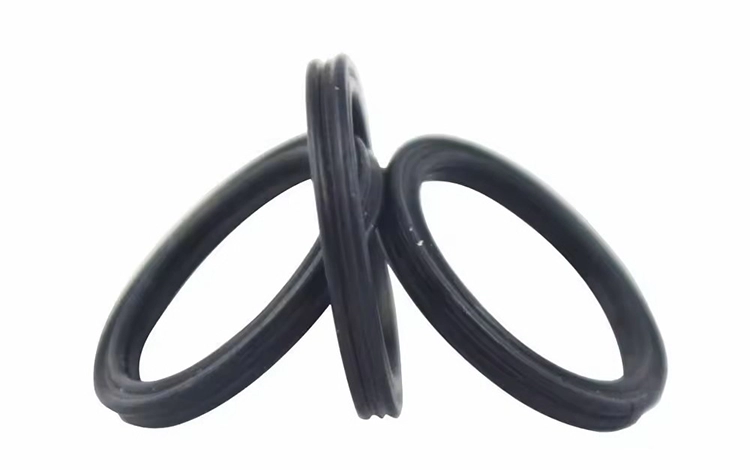
A high-quality V-ring seal should provide consistent sealing contact without excessive deformation, cracking, swelling, or loss of elasticity during service. Its performance depends on several factors working together: elastomer selection, hardness, dimensions, surface quality, temperature resistance, and the conditions in which the seal operates.
For industrial applications, hydraulic V-ring seals need to maintain their sealing function even when exposed to pressure, movement, oil, water, chemicals, and temperature fluctuations.
This is why the quality of the rubber compound is just as important as the dimensional accuracy of the finished part. A seal that has the correct dimensions but uses an unsuitable material may still fail prematurely.
Material selection is one of the first areas engineers should review. Different elastomers provide different resistance to fluids, temperature, chemicals, abrasion, and aging.
Common material options include NBR, EPDM, Silicone, FKM, and FFKM. Each has a different performance profile.
NBR (Nitrile/Buna-N) is widely used in industrial and hydraulic applications because of its good resistance to mineral oils, fuels, and many petroleum-based fluids. It is often considered when oil resistance and practical mechanical performance are required.
EPDM provides strong resistance to water, steam, weathering, and many chemicals. It is commonly selected for applications where petroleum-based oils are not the primary working medium.
Silicone (VMQ) offers good flexibility over a broad temperature range and is useful where temperature stability and elastic performance are important.
FKM/FPM, commonly associated with fluorocarbon rubber, provides good resistance to heat, oils, fuels, and many chemicals. It is often considered for demanding industrial environments where standard NBR may not provide sufficient temperature or chemical resistance.
For particularly aggressive chemical or high-temperature environments, FFKM can be considered. It is designed for demanding sealing conditions where a higher level of chemical and thermal resistance is required.
Other available material choices can include:
· Aflas or Kalrez (FFKM)
· Acrylate Rubber (ACM)
· Ethylene-propylene Rubber (EPR/EPDM)
· Fluorocarbon Rubber (FKM/FPM)
· Fluorosilicone Rubber (FVMQ)
· Hydrogenated Nitrile Rubber (HNBR)
· Neoprene Rubber (CR)
· Nitrile Rubber (Buna-N/NBR)
· Polyurethane (PU)
· Silicone Rubber (VMQ)
· Styrene-butadiene Rubber (SBR)
· Polytetrafluoroethylene (PTFE)
The right material should be selected according to the working medium and operating conditions rather than simply choosing the most expensive or highest-temperature material.
Temperature can significantly change the physical properties of elastomers. Excessive heat can accelerate aging, hardening, compression set, and loss of elasticity. Very low temperatures can make some rubber compounds less flexible and reduce their ability to maintain effective sealing contact.
Depending on the selected material, rubber sealing products can support operating temperatures from approximately -60°C to +320°C.
However, this range is material dependent. NBR, EPDM, Silicone, FKM, and FFKM do not have identical temperature capabilities.
For example, a hydraulic component exposed to heated oil may require a different material from equipment operating outdoors in cold and wet conditions. A professional hydraulic V-ring seal supplier should therefore provide material-specific temperature recommendations rather than treating one temperature range as suitable for every product.
Hardness affects how a seal responds to pressure, deformation, installation, and movement. Industrial rubber sealing products can be supplied in hardness levels ranging from approximately 20–90 Shore A, depending on material and application requirements.
A softer compound can conform more easily to certain surfaces and may provide good sealing contact under appropriate conditions. A harder compound can provide greater resistance to deformation and may be beneficial in applications where extrusion or mechanical stress is a concern.
However, hardness should never be considered independently. The correct value depends on pressure, clearance, temperature, seal geometry, installation method, and whether the application is static or dynamic.
For example, selecting an unnecessarily hard material may make installation more difficult, while an excessively soft material may not provide sufficient resistance in a high-pressure environment.
Even a high-grade elastomer cannot compensate for incorrect dimensions. The inside diameter, outside diameter, cross-section, and sealing geometry must correspond with the mating components and groove.
For this reason, industrial buyers should look for a manufacturer capable of maintaining consistent dimensions from batch to batch.
HaO Seal Technology supports standard and customized rubber sealing requirements. Depending on the application, available standards include AS568, ISO 3601, and JIS B 2401, while customized sizes can be produced for equipment-specific requirements.
For OEM applications, customers can provide drawings, samples, existing seal dimensions, or technical specifications. This gives the manufacturer the information needed to evaluate the required size and material.
When standard dimensions are not suitable, custom rubber O-rings and sealing components can be developed around the actual equipment requirements rather than forcing the application to use an unsuitable standard size.
Not necessarily. Static and dynamic sealing conditions place different demands on rubber components.
A static seal remains relatively stationary after installation. Typical considerations include compression, surface finish, material compatibility, and long-term resistance to the working medium.
A dynamic seal operates while one component moves relative to another. Friction, wear, lubrication, movement speed, pressure changes, and extrusion resistance become more important.
High-quality sealing components should therefore be specified according to the actual movement conditions. A seal that performs well in a stationary application may require a different compound, hardness, or geometry when exposed to repeated reciprocating or rotational movement.
For industrial equipment, understanding the operating cycle can help the manufacturer recommend a more appropriate sealing material and specification.
Before working with a China hydraulic seal factory, industrial buyers should look beyond product photographs and basic catalog information. Several practical questions can help evaluate the supplier.
Can the manufacturer provide multiple elastomer options? Does it support AS568, ISO 3601, and JIS B 2401? Can it produce customized sizes? Can it recommend hardness according to the application? Does it understand the difference between static and dynamic sealing?
These questions are particularly important for OEM customers who need consistent replacement parts over multiple production batches.
A capable seal manufacturer should also be able to communicate about material compatibility, operating temperature, dimensions, hardness, and application conditions before production begins.
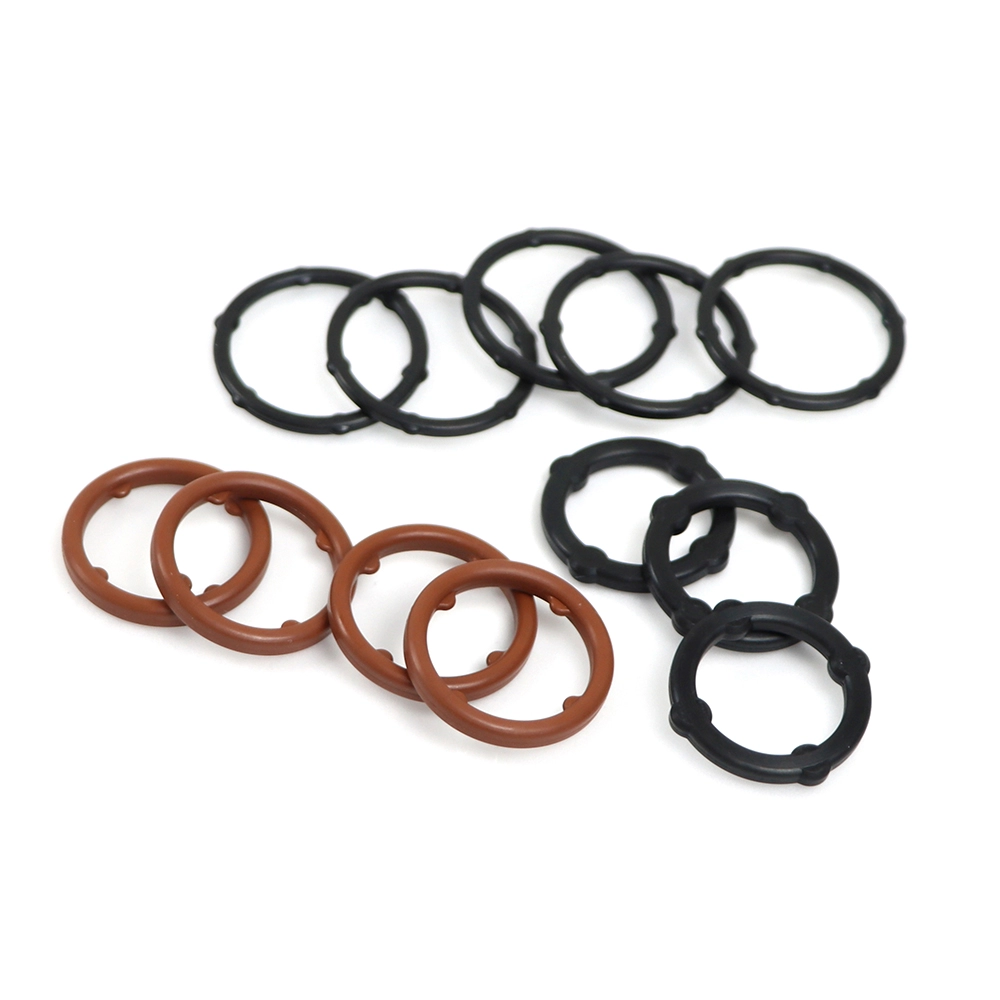
HaO Seal Technology Co.,Ltd provides precision-engineered rubber sealing components for industrial and commercial applications. Its material options cover common elastomers such as NBR, EPDM, Silicone, FKM, and FFKM, as well as ACM, HNBR, CR, PU, FVMQ, SBR, and PTFE for applications with different performance requirements.
The available hardness range of approximately 20–90 Shore A allows sealing components to be specified for different operating conditions. Temperature capability can reach approximately -60°C to +320°C, depending on the selected material.
The company also supports AS568, ISO 3601, JIS B 2401, and customized sizes, making the products suitable for both standard replacement requirements and OEM projects.
For buyers looking for a China O-ring manufacturer, factory, or wholesale supplier, this combination of material options, standard sizes, customized production, and application-oriented solutions can simplify sourcing and help meet different industrial sealing requirements.
To avoid unnecessary trial and error, provide the manufacturer with as much technical information as possible. Useful information includes:
· Seal dimensions or technical drawings
· Working pressure
· Operating temperature
· Hydraulic oil or other working medium
· Static or dynamic application
· Movement speed and frequency
· Required material
· Required hardness
· Applicable standard
· Equipment model or application
· Required quantity
The more complete the application information, the easier it is for the supplier to recommend a suitable material and specification.
A high-quality hydraulic V-ring seal is the result of the right material, hardness, dimensions, manufacturing consistency, and application-specific selection. Industrial buyers should not evaluate a sealing component only by appearance or basic size.
For reliable equipment performance, the seal should be compatible with the working medium, temperature, pressure, and movement conditions. Standard options such as AS568, ISO 3601, and JIS B 2401 can simplify sourcing, while customized sizes provide flexibility for OEM and specialized equipment.
With material options including NBR, EPDM, Silicone, FKM, and FFKM, HaO Seal Technology Co.,Ltd provides precision-engineered sealing components for static and dynamic applications, helping industrial customers develop practical sealing solutions based on their equipment requirements.