
2026/05/20
What Are Automotive Seals and Why Are They Critical for Vehicle Performance?


Choosing a reliable hydraulic V-ring seal manufacturer is important when sealing performance directly affects equipment uptime, leakage control, and maintenance costs. For buyers looking for a China hydraulic seal supplier or factory, material selection, dimensional accuracy, temperature resistance, manufacturing consistency, and customization capability should all be considered before placing an order.
Although sealing components may look simple, a seal used in hydraulic equipment can operate under pressure, movement, heat, oil exposure, and repeated compression. A suitable supplier should therefore provide more than standard sealing products. The manufacturer should be able to match the elastomer, hardness, dimensions, and sealing design to the actual working conditions.
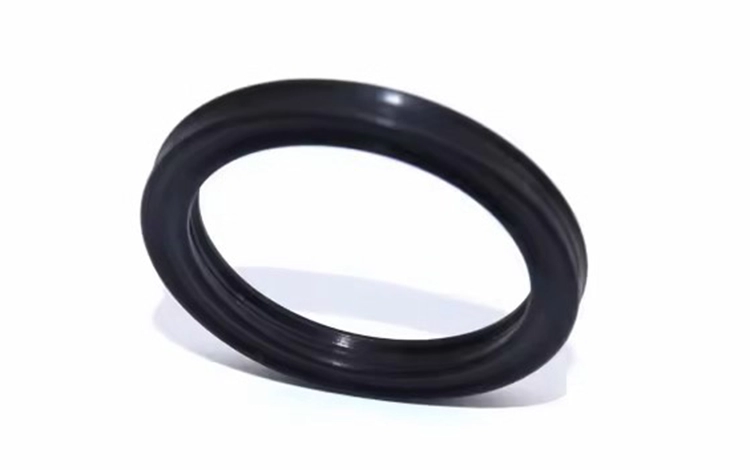
The first step is to determine whether the manufacturer understands the actual application rather than simply selling standard rubber sealing products. Hydraulic equipment can include cylinders, pumps, valves, motors, industrial machinery, mobile equipment, and other systems where leakage prevention is essential.
A qualified supplier should be able to review your drawings, sealing dimensions, operating temperature, working medium, movement type, and installation conditions. This is especially important for customized sealing components.
For applications that require precision sealing, hydraulic V-ring seals should be manufactured according to controlled dimensional requirements. A supplier with in-house production and inspection capabilities can provide better consistency between batches and reduce problems caused by dimensional variation.
Material selection is one of the most important factors when sourcing sealing components. Different elastomers have different resistance to oils, fuels, water, chemicals, temperature, abrasion, and aging.
For example, NBR (Buna-N) is widely used in hydraulic and industrial applications because of its good resistance to mineral oils, fuels, and many hydraulic fluids. EPDM is more suitable for water, steam, and certain chemical environments, but is generally not the first choice for petroleum-based oils.
FKM/FPM is often selected when higher temperature and chemical resistance are required. Silicone rubber provides a wide temperature range and good flexibility, while FFKM is used for demanding environments involving aggressive chemicals and extreme temperatures.
Depending on the application, available material options can include:
· Aflas or Kalrez (FFKM)
· Acrylate Rubber (ACM)
· Ethylene-propylene Rubber (EPR/EPDM)
· Fluorocarbon Rubber (FKM/FPM)
· Fluorosilicone Rubber (FVMQ)
· Hydrogenated Nitrile Rubber (HNBR)
· Neoprene Rubber (CR)
· Nitrile Rubber (Buna-N/NBR)
· Polyurethane (PU)
· Silicone Rubber (VMQ)
· Styrene-butadiene Rubber (SBR)
· Polytetrafluoroethylene (PTFE)
A professional O-ring and sealing solutions supplier should help customers select the material according to the actual operating medium instead of recommending one compound for every application.
Temperature is another critical factor that should be discussed with the manufacturer before production. Depending on the selected compound, rubber sealing products can be designed for applications ranging approximately from -60°C to +320°C.
However, this does not mean every material can operate throughout the entire range. NBR, EPDM, FKM, silicone, and FFKM have different temperature capabilities.
For example, a seal operating in a hydraulic cylinder exposed to hot oil may require a different compound from one used in an outdoor water system. A reliable hydraulic seal manufacturer should therefore provide material-specific temperature information instead of quoting one general temperature range.
This approach helps prevent premature hardening, cracking, swelling, compression set, or loss of elasticity during operation.
Hardness also influences sealing performance. HaO Seal Technology can provide rubber sealing products in approximately 20–90 Shore A, depending on material and application requirements.
A softer compound can provide good conformability and sealing contact, particularly where surface irregularities need to be accommodated. A harder compound can offer better resistance to extrusion and deformation in certain high-pressure applications.
The correct hardness should be selected together with the seal geometry, pressure, clearance, temperature, and movement conditions. Simply choosing the hardest available rubber is not necessarily the right solution.
When purchasing custom rubber O-rings, customers should provide as much application information as possible so the manufacturer can recommend an appropriate compound and hardness.
Standardization makes sourcing and replacement easier, particularly for OEMs and maintenance departments. Common standards available for rubber sealing components include AS568, ISO 3601, and JIS B 2401.
At the same time, many industrial applications require non-standard dimensions. A dependable manufacturer should therefore support customized sizes rather than limiting customers to a standard catalog.
For OEM projects, the supplier should be able to work from technical drawings, sample parts, dimensions, or application requirements. Dimensional consistency is particularly important when seals are installed in hydraulic cylinders or other precision-machined components.
A China O-ring factory with customized manufacturing capability can support both standard replacement requirements and project-specific sealing solutions.
Another important question is whether the supplier understands the difference between static and dynamic sealing.
Static seals remain relatively stationary after installation and are commonly used between fixed components. Dynamic seals operate where there is relative movement, such as reciprocating or rotating equipment. Dynamic applications place greater demands on friction, wear resistance, lubrication, extrusion resistance, and material selection.
A suitable sealing solution should therefore be selected according to how the component actually works. A seal that performs well in a static application may not deliver the same service life in a high-cycle dynamic application.
For this reason, customers should discuss movement speed, pressure, shaft or rod dimensions, lubrication, and operating temperature with the supplier before finalizing the specification.
For industrial buyers, selecting a supplier is not only about obtaining a rubber sealing component. Consistent production, material availability, dimensional control, customization capability, and technical communication can all influence the success of a project.
HaO Seal Technology Co.,Ltd provides precision-engineered rubber sealing components for a wide range of industrial and commercial applications. Available material options include NBR, EPDM, silicone, FKM, FFKM, and other elastomers for different operating environments.
The company can support both standard and customized sealing requirements, with hardness options from approximately 20–90 Shore A and standards including AS568, ISO 3601, and JIS B 2401. Temperature capability can range from approximately -60°C to +320°C depending on material selection.
For customers sourcing from a China seal manufacturer or wholesale supplier, customization can also be important when standard dimensions do not meet equipment requirements. A manufacturer capable of producing application-specific sizes can help reduce the need for modifications during assembly and improve sealing consistency.
Before requesting a quotation or production proposal, prepare the basic technical information whenever possible. This can include:
· Seal type and application
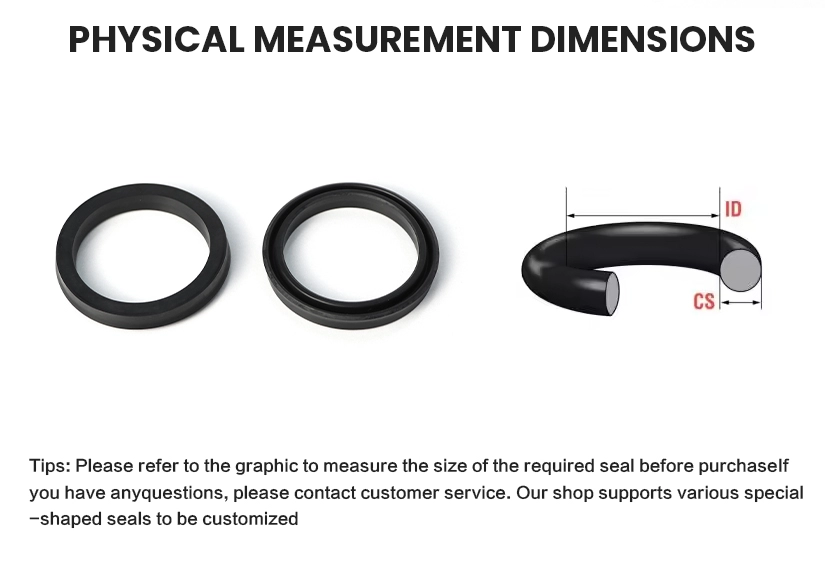
· Inside diameter, outside diameter, and cross-section
· Operating pressure
· Operating temperature
· Hydraulic oil or other working medium
· Static or dynamic application
· Required rubber material
· Hardness requirement
· Applicable standard
· Required quantity
· Technical drawing or sample
Providing these details allows the manufacturer to recommend a more suitable sealing material and specification instead of giving a generic product recommendation.
A reliable hydraulic V-ring seal manufacturer should combine material expertise, dimensional control, customization capability, and consistent manufacturing. Buyers should evaluate the supplier based on its ability to match the sealing material and hardness to the actual application, support recognized standards, and manufacture both standard and customized sizes.
For industrial applications requiring reliable static or dynamic sealing, HaO Seal Technology Co.,Ltd offers rubber sealing solutions using materials such as NBR, EPDM, Silicone, FKM, and FFKM. By providing application details and technical requirements in advance, customers can work with the manufacturer to develop a sealing solution suited to their equipment and operating conditions.