
2026/01/23
Rubber X-Rings for Dynamic Sealing: Applications in Industrial Machinery


Rotary shaft sealing is a critical aspect of many mechanical systems, from electric motors and gearboxes to pumps, conveyors, and heavy industrial equipment. A failure at the shaft seal often leads to lubricant loss, contamination ingress, premature bearing wear, and unplanned downtime. Among the many sealing options available, V-ring seals stand out as a simple yet highly effective solution specifically designed for rotary applications.
This article explains how V-ring seals work, why they are widely used for rotary shaft sealing, and how material selection, temperature capability, and customization options make them adaptable to a wide range of industrial environments.
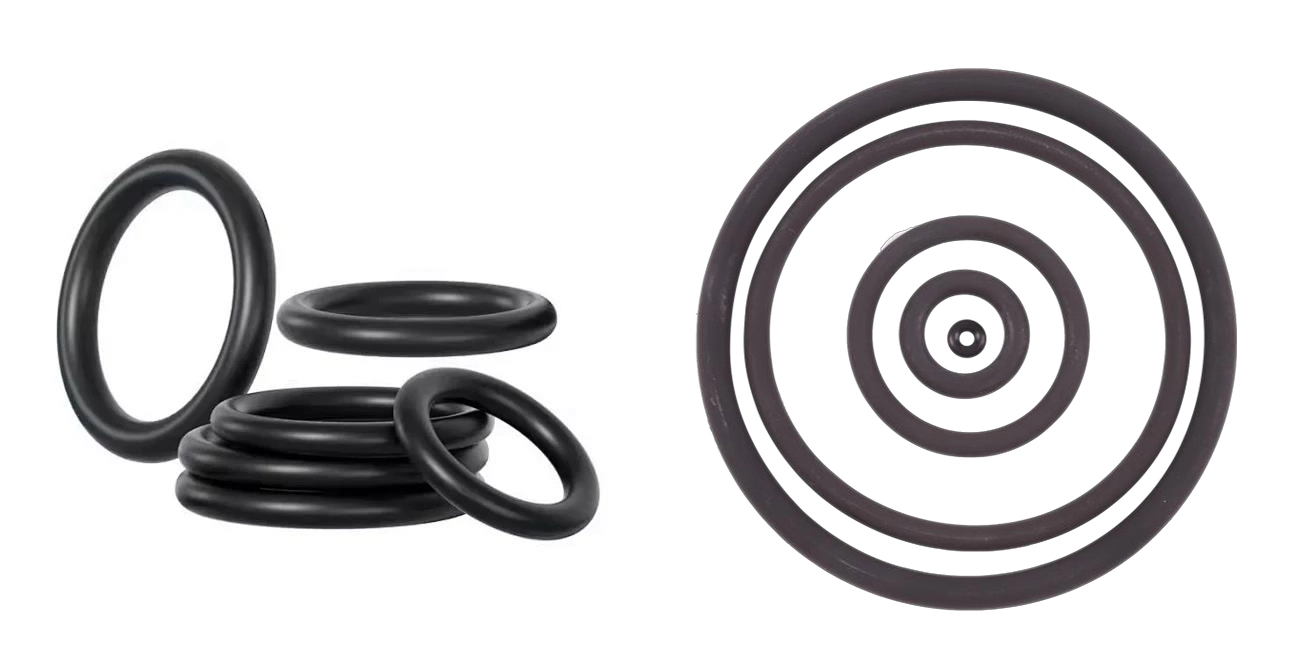
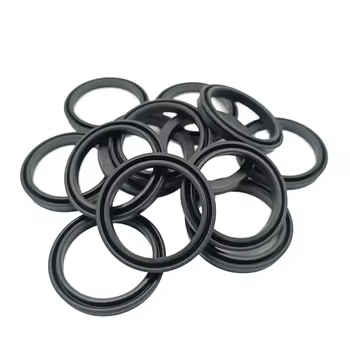
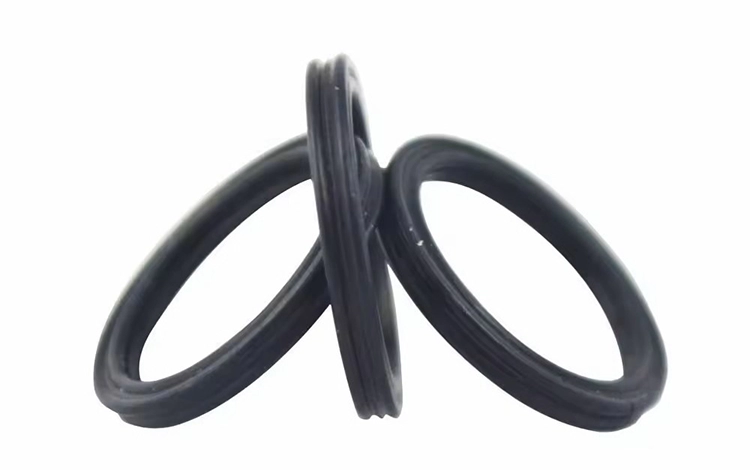
A V-ring seal is an all-rubber, one-piece axial sealing element with a distinctive V-shaped cross-section. Unlike radial lip seals that seal against the shaft, a V-ring seals axially against a counterface, such as a housing, cover plate, or bearing face, while rotating with the shaft itself.
A typical customized rubber V-ring used in industrial applications can be found here:
https://www.haosealtech.com/UVY-Ring/customized-rubber-v-ring.html
The flexible sealing lip of the V-ring maintains light, continuous contact with the counterface, forming an effective barrier against dust, dirt, water, oil splash, and other contaminants.
V-ring seals are mounted directly onto the shaft and rotate together with it. As the shaft turns, centrifugal force slightly energizes the flexible lip, improving sealing contact at higher speeds without excessive friction.
Because the seal is not fixed in the housing, it can accommodate:
Shaft misalignment
Eccentric motion
Axial movement
This makes V-rings particularly suitable for applications where alignment is not perfectly controlled or where shaft movement occurs during operation.
One of the primary functions of a V-ring seal is to keep contaminants out of sensitive components such as bearings and gearboxes. The axial sealing lip acts as a dynamic shield against dust, mud, water spray, and other environmental contaminants commonly encountered in industrial and outdoor applications.
In many cases, V-rings are used as secondary or auxiliary seals to extend the service life of primary oil seals.
Unlike conventional radial shaft seals that generate friction along the shaft surface, V-rings seal against a stationary counterface. This design significantly reduces friction and heat generation, especially at higher rotational speeds.
Lower friction translates into:
Reduced wear on mating components
Improved energy efficiency
Longer seal service life
V-ring seals are stretchable and can be easily installed over the shaft without special tools. Their elastic structure allows them to fit securely without additional retaining elements in many designs.
They are available in a wide range of sizes and profiles, and customized dimensions can be produced to suit non-standard shafts or special groove designs.
Because the V-ring rotates with the shaft and seals axially, it is far less sensitive to shaft runout and angular misalignment compared to radial lip seals. This makes it an ideal choice for equipment operating under vibration or variable loading conditions.
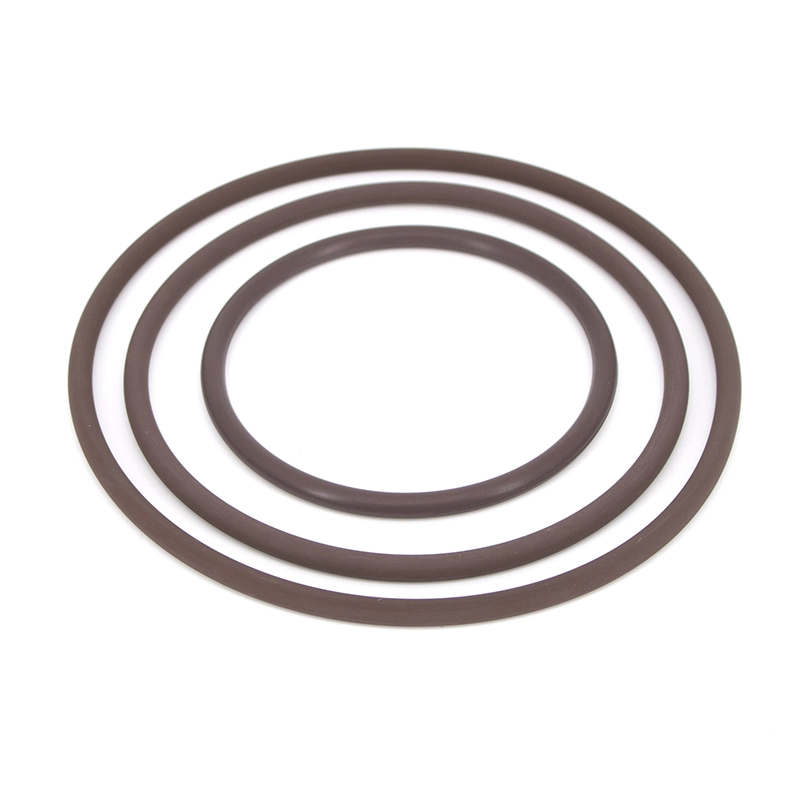
The performance of a V-ring seal largely depends on the elastomer material used. To suit different environments, V-rings can be manufactured from several high-quality rubber compounds:
NBR (Nitrile Rubber)
Commonly used for general industrial applications due to its good resistance to oils, greases, and hydraulic fluids. NBR offers a balanced combination of durability and cost efficiency.
EPDM
Well-suited for applications involving water, steam, ozone, and weather exposure. EPDM is often chosen for outdoor equipment and water-related systems.
Silicone Rubber
Known for its excellent flexibility at low temperatures and stability at high temperatures. Silicone V-rings are used in applications requiring a wide operating temperature range.
FKM (Viton®)
Provides superior resistance to heat, oils, fuels, and many chemicals. FKM is ideal for demanding industrial environments and elevated operating temperatures.
FFKM
Designed for extreme chemical and thermal conditions, offering exceptional resistance where standard elastomers may fail.
Depending on the selected material, V-ring seals can operate within a temperature range of -60°C to +320°C.
V-ring seals are available in hardness ranges from 20 to 90 Shore A. Softer compounds provide better flexibility and sealing contact at low pressures, while harder compounds offer improved resistance to wear, deformation, and centrifugal expansion at higher speeds.
Selecting the correct hardness is essential to achieving the optimal balance between sealing efficiency and durability.
While V-rings are often produced according to standard size ranges, customized solutions are frequently required for specialized equipment. Manufacturing options include compliance with common standards such as:
AS568
ISO 3601
JIS B 2401
In addition, customized sizes, cross-sections, and lip geometries can be developed to meet specific shaft diameters, counterface designs, and application requirements.
Customization ensures proper fit, stable operation, and consistent sealing performance even in non-standard installations.
Thanks to their versatile design, V-ring seals are widely used across many industries, including:
Electric motors
Pumps and compressors
Gearboxes and reducers
Agricultural machinery
Mining and construction equipment
Fans and blowers
In many of these applications, V-rings serve as the first line of defense against external contamination, significantly extending the life of bearings and internal seals.
While radial shaft seals are effective for retaining lubricants under pressure, they are more sensitive to shaft surface finish, alignment, and wear. V-ring seals, by contrast, focus on contamination exclusion and axial sealing, making them more forgiving and easier to integrate into existing designs.
In practice, V-rings are often used together with radial lip seals, combining oil retention with robust environmental protection.
High-quality V-ring seals rely on precise molding, consistent material formulation, and strict dimensional control. Advanced production processes ensure smooth sealing lips, uniform elasticity, and repeatable performance across batches.
As part of R&D-driven sealing solutions, customized rubber V-rings are engineered to deliver reliable performance under real-world operating conditions, rather than idealized laboratory settings.
V-ring seals offer a practical, efficient, and reliable solution for rotary shaft sealing, particularly where contamination protection, low friction, and misalignment tolerance are required. With a wide selection of materials, broad temperature capability, flexible hardness options, and customization possibilities, V-rings can be adapted to nearly any rotary application.
When properly selected and installed, V-ring seals help reduce maintenance costs, extend equipment service life, and improve overall system reliability in demanding industrial environments.