
2026/01/13
Advantages of Rubber X-Rings in Dynamic Sealing for Hydraulic and Pneumatic Equipment


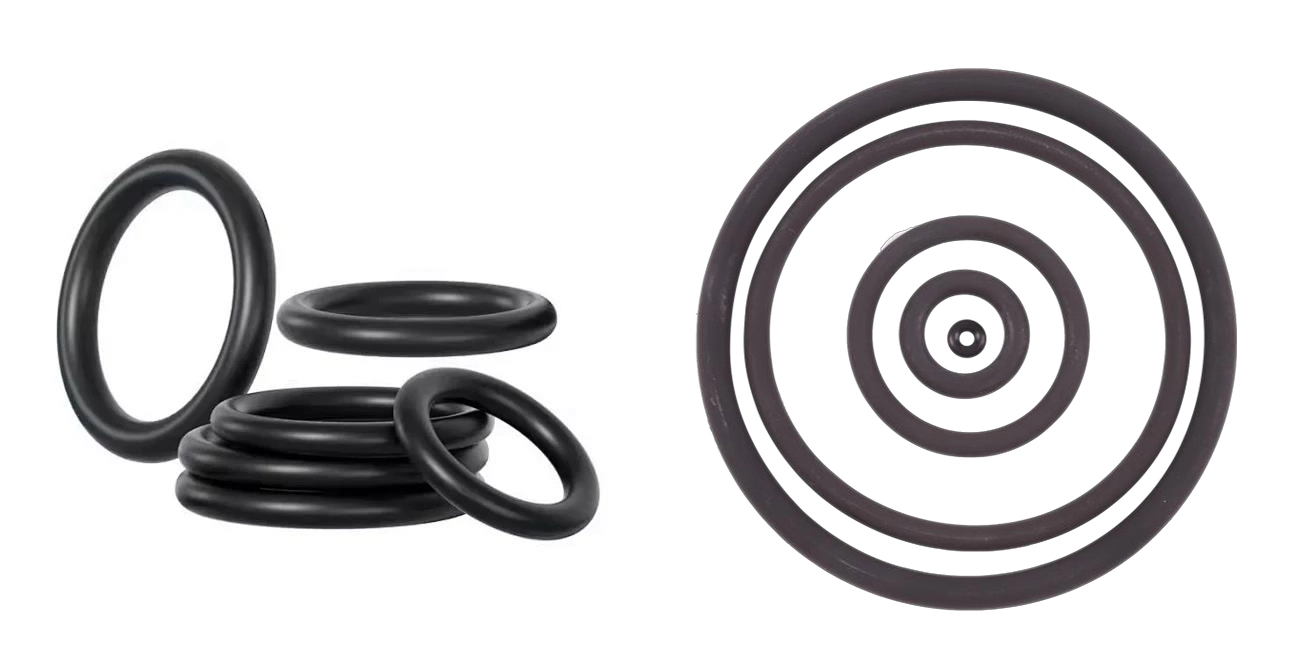
Rubber X-rings, also known as quad rings, are widely used in dynamic sealing applications where reliable performance under motion, pressure, and temperature variation is required. Compared with traditional O-rings, X-rings feature a four-lobed cross-section that provides improved sealing stability, reduced friction, and better lubrication retention. When combined with metal bonding technology, rubber X-rings can meet even more demanding requirements in industrial, automotive, and high-precision systems.
This article focuses on practical design considerations when using rubber X-rings for dynamic sealing, with particular attention to material selection, operating conditions, bonding structures, and application environments. The goal is to help engineers and designers make informed decisions that translate into long service life and consistent sealing performance.
Dynamic sealing differs fundamentally from static sealing. In dynamic applications, the seal is exposed to relative motion, such as reciprocating or rotary movement. This introduces additional challenges including wear, frictional heat, material fatigue, and lubrication management.
Rubber X-rings are well suited to these conditions because their geometry creates multiple sealing lines while maintaining elastic flexibility. The shape reduces rolling and twisting, common failure modes seen in standard O-rings under dynamic motion.
However, performance is not determined by geometry alone. A successful sealing design must consider the full system: materials, temperature range, pressure, motion speed, and compatibility with mating components.
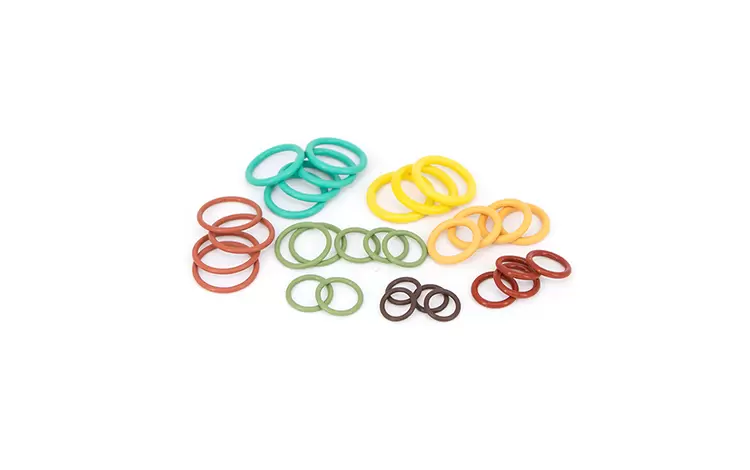
Choosing the right rubber compound is one of the most critical design steps. Rubber X-rings are available in a wide range of elastomers, each with specific strengths.
Common material options include:
l NBR (Nitrile Rubber): Suitable for oils, fuels, and hydraulic fluids. Often used in automotive and hydraulic systems.
l EPDM: Excellent resistance to water, steam, and weathering. Common in HVAC and cooling systems.
l Silicone: Performs well at low and high temperatures, with good flexibility, but limited mechanical strength.
l FKM (Fluorocarbon): Strong chemical resistance and high-temperature capability, ideal for aggressive media.
l FFKM: Designed for extreme environments, including high temperatures and highly corrosive chemicals, often used in semiconductor and chemical processing equipment.
Depending on the rubber type, operating temperatures can range from -60°C to +320°C. Designers should always consider both continuous and peak temperatures, as well as exposure duration.
Rubber hardness, typically measured in Shore A, directly affects sealing behavior. Rubber X-rings are commonly produced in hardness ranges from 40 to 95 Shore A.
l Softer compounds (40–60 Shore A):
Provide better conformity to surface irregularities and lower sealing force, but may wear faster under dynamic motion.
l Medium hardness (70–80 Shore A):
Often the best balance for dynamic sealing, offering good wear resistance and reliable sealing.
l Harder compounds (90–95 Shore A):
Used in high-pressure or extrusion-prone environments, but require precise groove design and surface finish.
Hardness selection should always align with pressure, motion type, and groove tolerances.
The groove design for X-rings differs slightly from that of O-rings. Because X-rings have a more complex cross-section, the groove must allow proper compression without causing excessive friction or deformation.
Key considerations include:
l Correct groove depth to ensure controlled squeeze
l Adequate clearance to prevent extrusion under pressure
l Smooth surface finish to reduce wear and heat generation
In high-precision systems, dimensional stability becomes even more important. This is where metal bonded rubber seals offer a significant advantage.
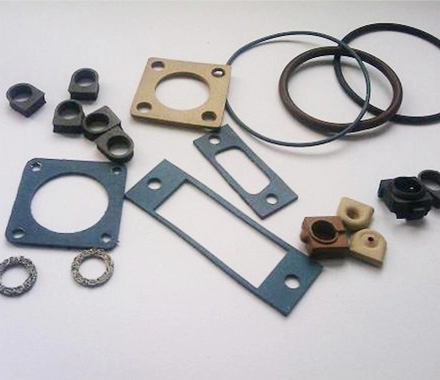
Metal bonded rubber seals combine the flexibility of rubber with the structural strength of metal. The rubber element is vulcanized or chemically bonded to a metal insert, commonly stainless steel, carbon steel, or aluminum.
This design provides several advantages:
l Excellent adhesion between rubber and metal
l High resistance to vibration and mechanical stress
l Improved dimensional control during installation
l Reduced risk of seal displacement under dynamic loads
Metal bonded rubber X-rings are particularly valuable in applications where the seal must maintain precise positioning while absorbing movement or vibration.
The choice of metal insert material influences both performance and compatibility.
l Stainless steel: Corrosion-resistant, suitable for harsh or hygienic environments.
l Carbon steel: Cost-effective and strong, often used in industrial machinery.
l Aluminum: Lightweight and corrosion-resistant, ideal for aerospace or weight-sensitive designs.
Custom shapes, thicknesses, and bonding designs allow engineers to tailor the seal to specific housings or interfaces, ensuring consistent performance over long operating cycles.
In many industries, regulatory compliance is not optional. Rubber X-rings and metal bonded rubber seals may need to meet specific certification requirements depending on their application.
Common certifications include:
l RoHS and REACH: For environmental and chemical compliance
l FDA: For food, beverage, and pharmaceutical contact
l UL: For electrical and safety-related applications
Designers should confirm certification requirements early in the development process to avoid costly redesigns later.
Rubber X-rings and metal bonded rubber seals are widely used across industries:
l Automotive: Braking systems, engine mounts, shock absorbers
l Fluid Handling: Pumps, valves, compressors, and hydraulic equipment
l Energy and Infrastructure: Oil and gas pipelines, industrial machinery
l HVAC Systems: Sealing and vibration damping between rigid components
l Electronics and Semiconductors: High-purity, contamination-free sealing
Each application presents unique challenges in terms of pressure, motion, temperature, and media compatibility, reinforcing the importance of application-specific design.
Before finalizing a design, prototyping and functional testing are essential. Dynamic sealing tests should simulate real operating conditions, including motion cycles, temperature changes, and pressure fluctuations.
Testing helps validate:
l Wear resistance and friction behavior
l Bond integrity between rubber and metal
l Long-term sealing stability
This data-driven approach reduces failure risks and improves product reliability.
Successful sealing design often depends on close collaboration with experienced manufacturers. Companies that specialize in rubber X-rings and metal bonded rubber seals can provide material guidance, design optimization, and custom solutions.
For a range of engineered rubber sealing products and customization options, you can explore:
https://www.haosealtech.com/product/
Working with knowledgeable partners helps ensure that design intent translates into reliable field performance.
Designing rubber X-rings for dynamic sealing requires careful consideration of materials, hardness, groove geometry, operating conditions, and compliance requirements. When combined with metal bonding technology, these seals offer enhanced durability, stability, and performance in demanding environments.
By focusing on practical design details and real-world operating conditions, engineers can achieve leak-proof, long-lasting sealing solutions that support system reliability across a wide range of industries.