
2026/01/13
Advantages of Rubber X-Rings in Dynamic Sealing for Hydraulic and Pneumatic Equipment


In hydraulic and pneumatic systems, seal failure is rarely caused by design alone. In many cases, it is the result of improper material selection. Rubber X-rings are widely used in dynamic sealing applications because of their stable geometry, multiple sealing lips, and reduced friction characteristics. However, their performance depends heavily on choosing the right rubber compound and, when required, the right metal bonding structure.
This guide explains how to select suitable materials for rubber X-rings used in dynamic sealing, helping engineers and equipment manufacturers achieve reliable, long-term sealing performance under real operating conditions.
Dynamic sealing differs fundamentally from static sealing. Rubber X-rings used in dynamic applications must withstand:
Continuous reciprocating or rotary motion
Internal pressure fluctuations
Mechanical vibration and shock
Wide temperature ranges
Exposure to oils, air, moisture, or chemicals
Inadequate material selection can lead to premature wear, extrusion, hardening, or loss of elasticity. A systematic approach to material selection is essential.
The X-shaped cross-section provides four sealing lips, improving contact stability and lubrication retention. However, these benefits only translate into long service life when the elastomer material matches the operating environment.
Material selection directly affects:
Wear resistance
Compression set
Chemical compatibility
Temperature tolerance
Friction behavior
In high-load applications, X-rings are often designed as metal bonded rubber seals, combining rubber elasticity with metal strength for enhanced durability.
NBR is one of the most widely used materials for rubber X-rings in hydraulic systems.
Key characteristics:
Good resistance to mineral oils and hydraulic fluids
Balanced mechanical strength and elasticity
Cost-effective for general industrial use
Typical applications:
Hydraulic cylinders, pumps, valves, and automotive systems operating at moderate temperatures.
EPDM is preferred in environments involving water, steam, or outdoor exposure.
Key characteristics:
Excellent resistance to water, steam, and weathering
Good performance in low-temperature environments
Not suitable for petroleum-based oils
Typical applications:
Pneumatic equipment, HVAC systems, and water-based sealing systems.
Silicone is selected when flexibility and cleanliness are priorities.
Key characteristics:
Excellent low-temperature flexibility
Stable performance in clean environments
Lower mechanical strength compared to NBR or FKM
Typical applications:
Medical devices, electronic enclosures, and low-pressure pneumatic systems.
FKM is designed for high-temperature and chemically aggressive environments.
Key characteristics:
Excellent resistance to heat, oils, fuels, and chemicals
Low compression set
Stable performance under continuous dynamic motion
Typical applications:
Hydraulic systems operating at elevated temperatures, compressors, and chemical processing equipment.
FFKM represents the highest level of elastomer performance.
Key characteristics:
Exceptional resistance to extreme temperatures and aggressive chemicals
Suitable for highly corrosive and high-purity environments
Long service life in severe conditions
Typical applications:
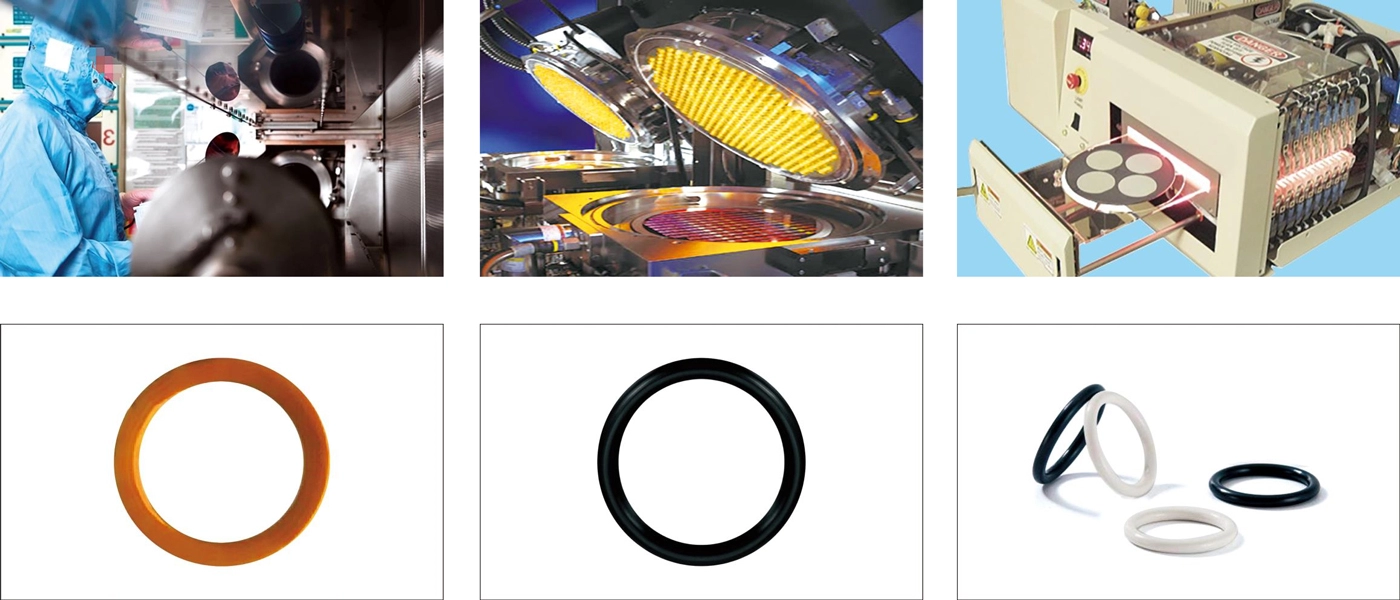
Semiconductor manufacturing, precision instruments, and advanced chemical processing systems.
Rubber X-rings can be engineered to operate across a wide temperature spectrum, typically from -60°C to +320°C, depending on the rubber compound.
Selecting a material with sufficient thermal margin is critical. Operating continuously near the upper temperature limit of a material significantly reduces seal life. Engineers should always consider both peak temperature and long-term operating temperature.
Rubber X-rings are available in hardness ranges from 40 to 95 Shore A.
Lower hardness (40–60 Shore A): Better flexibility and sealing at low pressure, but higher wear risk
Medium hardness (70–80 Shore A): Balanced performance for most dynamic sealing applications
Higher hardness (90–95 Shore A): Improved extrusion resistance for high-pressure systems
Hardness selection should consider pressure, surface finish, and motion type.
In demanding dynamic applications, rubber X-rings are often bonded to metal inserts, forming metal bonded rubber seals.
The metal insert—commonly stainless steel, carbon steel, or aluminum—prevents deformation under high pressure and vibration.
The rubber is vulcanized or chemically bonded to the metal, ensuring strong adhesion and minimizing the risk of delamination during operation.
Metal bonded rubber X-rings are widely used in:
Automotive braking systems
Engine mounts and shock absorbers
Compressors, pumps, and valves
Hydraulic and pneumatic equipment
They also provide sealing and vibration damping between rigid metal interfaces.
For regulated industries, material compliance is non-negotiable. High-quality rubber X-rings can be manufactured to meet:
RoHS
REACH
FDA
UL
These certifications support use in food processing, medical equipment, electronics, and environmentally sensitive applications.
Standard sizes do not always meet real operating needs. Rubber X-rings can be customized in terms of:
Shape and cross-section geometry
Thickness and dimensional tolerance
Rubber compound formulation
Metal insert material and bonding design
Customization ensures that the seal performs reliably within the actual constraints of the system.
A wide range of customized rubber X-ring and metal bonded rubber sealing solutions can be explored at
rubber sealing products.
Rubber X-rings are used across multiple industries, including:
Hydraulic and pneumatic equipment
Automotive systems
Oil and gas pipelines
HVAC installations
Industrial machinery
Semiconductor and precision instruments
In high-purity environments, they ensure contamination-free sealing, while in heavy industrial systems they provide both sealing and vibration isolation.
Selecting the right material for rubber X-rings used in dynamic sealing is a critical engineering decision. By carefully evaluating operating temperature, pressure, media compatibility, hardness, and structural requirements, engineers can significantly improve seal performance and service life.
Whether used as standalone elastomer seals or as metal bonded rubber components, rubber X-rings remain a reliable and adaptable solution for modern dynamic sealing challenges.