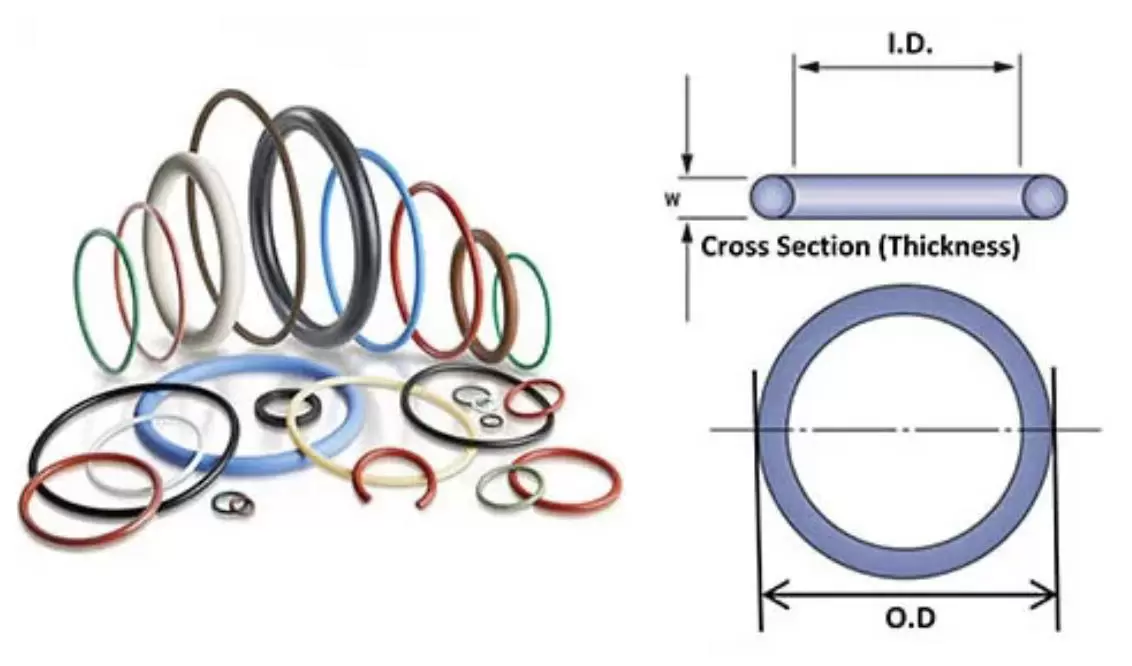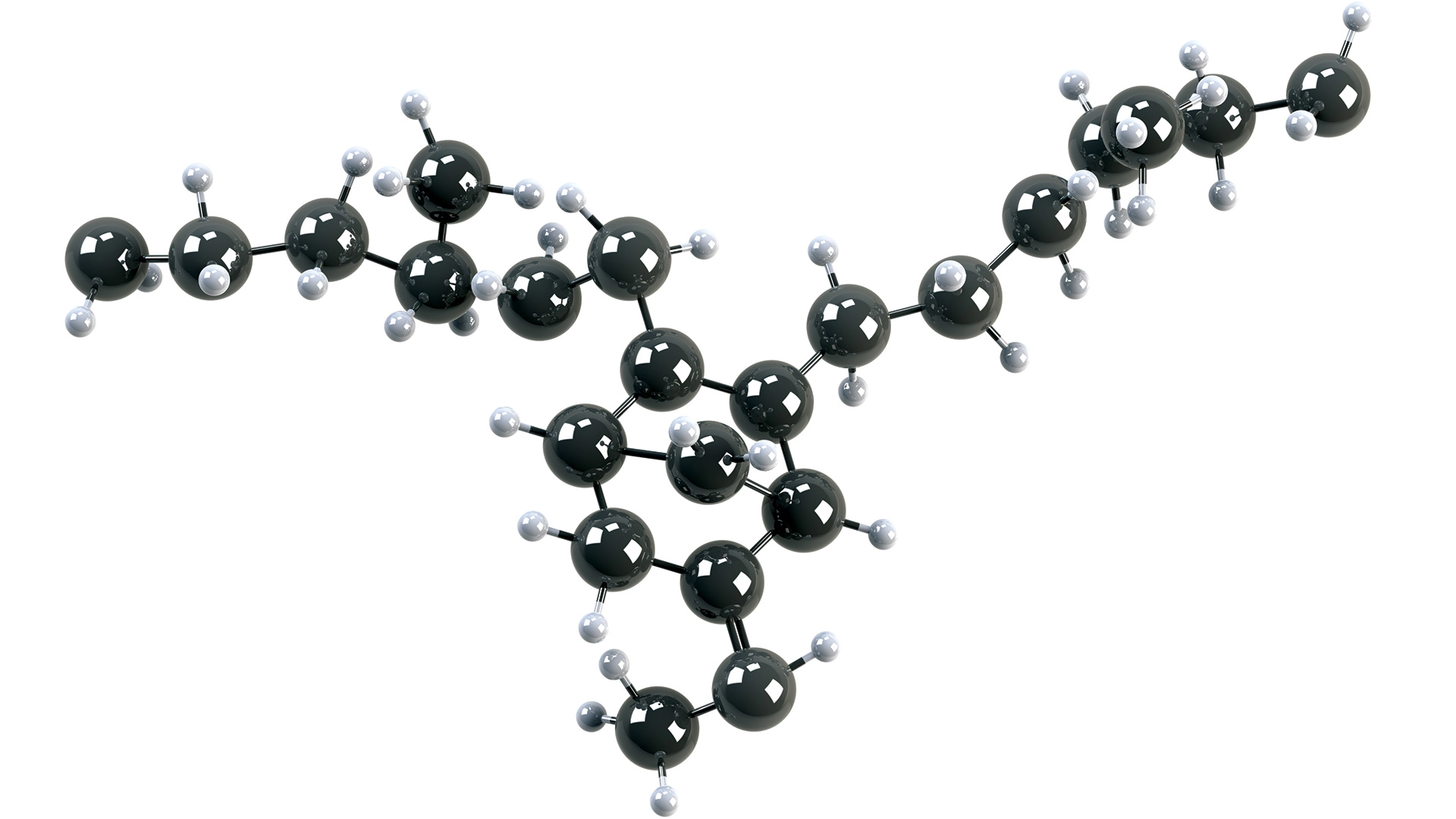

VMQ (silicone) is a group of elastomeric materials made from silicone, oxygen, hydrogen, and carbon. Extreme temperature range and low temperature flexibility are characteristics of silicone compounds.
As a group, silicone has poor tensile strength, tear resistance, and abrasion resistance. Special compounds have been developed with exceptional resistance to heat and pressure changes. High-strength compounds have also been made, but their strength is not comparable to conventional rubber.
Silicone has excellent resistance to extreme temperatures ranging from -50°C to +232°C (-58°F to +450°F). Some special compounds can even withstand higher temperatures. The retention of properties of silicone at high temperatures is superior to most other elastic materials.
VMQ Applications
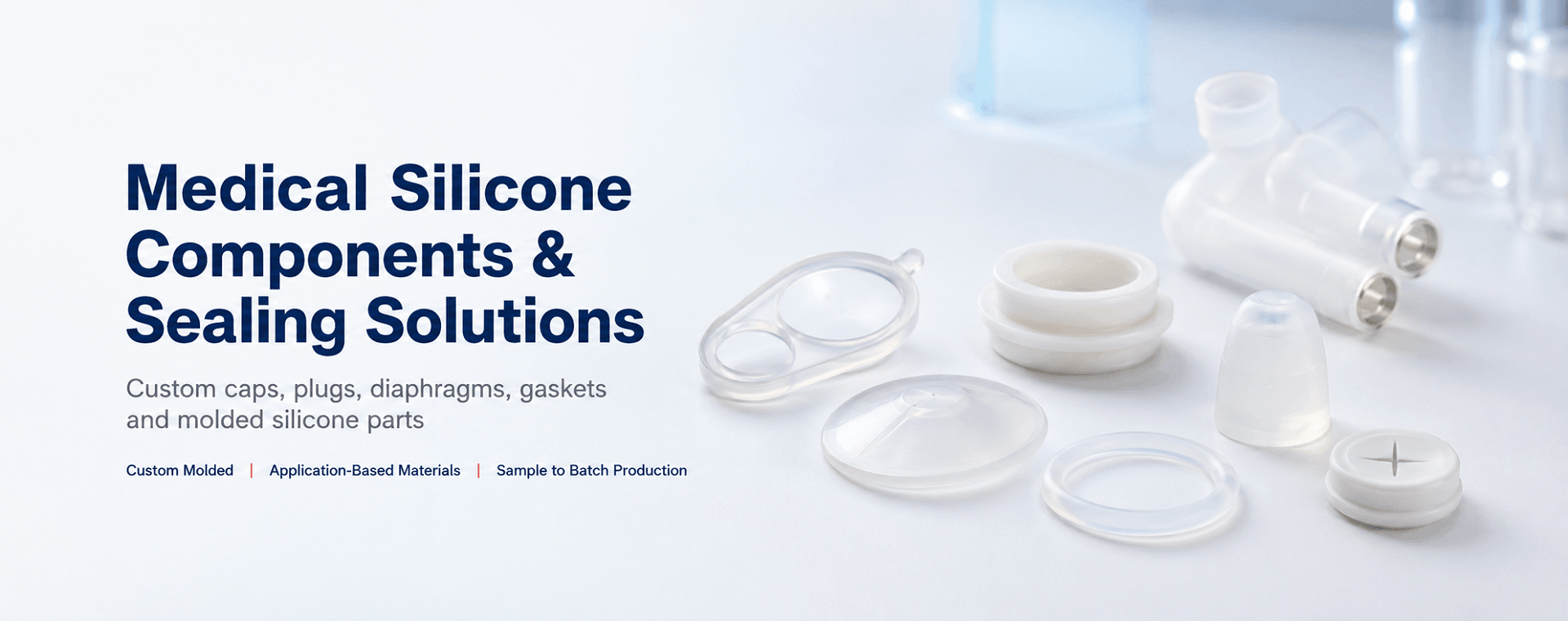
Silicone compounds are very clean and are used in many food and medical applications because they do not give off any odor or taste. Silicone compounds are not recommended for dynamic sealing applications due to the relatively low tear strength and high coefficient of friction.
Silicone is resistant to hot air, ozone, UV radiation, engine and transmission oils, animal and vegetable fats and oils and brake fluids. VMQ also has a low resistance to mineral oils. Silicone can be formulated to be electrically resistant, conductive or flame retardant. Many silicone compounds have a higher shrinkage than normal. Therefore, production molds for silicone products are often different from molds for nitrile.
Colors:
Packaging: