
2026/07/04
How Can Acid-Resistant Seals Reduce Maintenance Costs in Harsh Environments?


When purchasing hydraulic V-ring seals, buyers often focus first on dimensions, material, and application compatibility. However, the quality of the manufacturer behind the sealing component is equally important. A reliable Hydraulic V-Ring Seal manufacturer should have consistent material control, precise production processes, strict inspection procedures, and the ability to provide stable quality across repeated orders.
For industrial customers, sealing performance is directly connected to equipment reliability. A small dimensional deviation, unsuitable elastomer, or inconsistent production batch can result in leakage, accelerated wear, or unexpected maintenance. This is why choosing a qualified manufacturer requires more than comparing product specifications.
HaO Seal Technology Co.,Ltd focuses on precision-engineered rubber sealing components, offering standard and customized solutions made from NBR, EPDM, Silicone, FKM (Viton®), and FFKM for industrial and commercial applications.
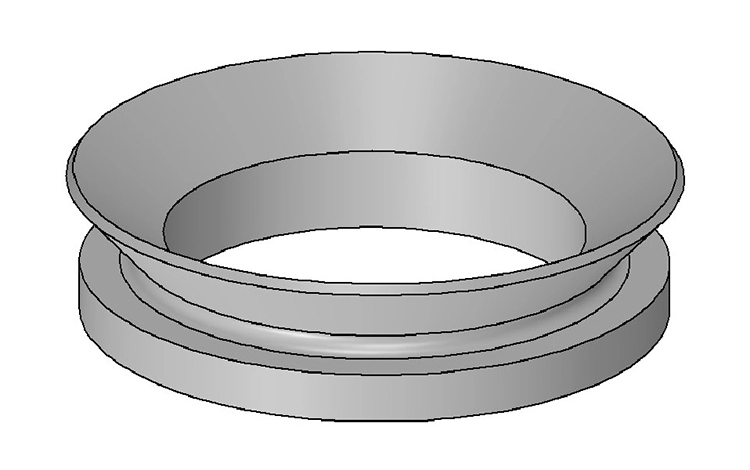
The quality of a sealing component starts with its elastomer.
A professional manufacturer should have clear requirements for incoming rubber materials and should be able to identify the material used in production. Different elastomers provide different resistance characteristics, so material selection needs to correspond with the customer's actual working environment.
Common materials include:
· NBR (Nitrile): Suitable for many oil, fuel, and hydraulic-fluid applications.
· EPDM: Provides good resistance to water, weathering, and compatible chemicals.
· Silicone: Known for flexibility and broad temperature performance.
· FKM (Viton®): Provides strong resistance to oils, fuels, heat, and many chemicals.
· FFKM: Designed for particularly demanding chemical and high-temperature environments.
A quality-focused manufacturer should not treat these materials as interchangeable. The material needs to be selected according to the fluid, temperature, pressure, movement, and service conditions.
For customers requiring Hydraulic V-Ring Seals, confirming the elastomer before production is one of the first steps toward reliable sealing performance.
A rubber seal may look simple, but its dimensions have a direct influence on installation and sealing.
Important dimensions can include:
· Inside diameter
· Outside diameter
· Cross-sectional diameter
· Overall height
· Groove-related dimensions
· Profile geometry
· Dimensional tolerances
A qualified manufacturer should have appropriate inspection equipment and procedures to control these dimensions during production.
This becomes particularly important for custom sealing components.
A seal that is slightly oversized or undersized may not sit correctly in the installation groove. Excessive interference can increase friction and wear, while insufficient contact may lead to leakage.
Therefore, a reliable supplier should be capable of controlling dimensions according to the agreed technical drawings and specifications rather than relying solely on visual inspection.
Hardness is another important characteristic of elastomer seals.
Different applications may require different hardness levels depending on pressure, movement, extrusion risk, and installation conditions.
If the rubber is too soft, it may deform excessively under pressure. If it is too hard, it may not provide the required flexibility or sealing contact.
A professional manufacturer should therefore maintain consistent hardness within the specified range and use appropriate testing methods during quality control.
Hardness should also be considered together with the material type. A specified hardness value alone does not determine whether a rubber seal is suitable for a particular application.
Quality cannot depend entirely on final inspection.
A strong sealing manufacturer should control the production process from material preparation through molding, curing, trimming, inspection, and packaging.
For rubber sealing components, manufacturing consistency can affect:
· Dimensional accuracy
· Surface condition
· Elasticity
· Compression behavior
· Profile integrity
· Long-term performance
Production parameters should therefore be controlled according to the selected elastomer and product design.
For repeat orders, process consistency becomes even more important. Customers need the replacement seals they receive months later to remain compatible with the original components.
A finished rubber seal should be inspected for visible defects before shipment.
Depending on the product and application, inspectors may check for:
· Cracks
· Cuts
· Surface damage
· Excessive flash
· Air bubbles
· Irregular edges
· Deformation
· Contamination
· Incomplete molding
These defects may appear minor, but they can affect sealing performance after installation.
Visual inspection should therefore be part of a broader quality-control process rather than the only inspection method.
For precision sealing components, the combination of dimensional inspection and visual inspection provides a more practical way to identify manufacturing problems before products reach the customer.
A manufacturer should also be able to discuss whether the selected material is appropriate for the customer's working environment.
For example, NBR is widely used for oil and fuel-related applications, but EPDM may be more suitable for certain water-based environments. FKM can be considered when higher resistance to heat, oils, fuels, or chemicals is required.
For especially demanding environments, FFKM may provide characteristics that conventional elastomers cannot match.
This is why a capable rubber seal manufacturer should understand the relationship between material properties and actual application conditions.
Customers should provide information such as:
· Working medium
· Operating temperature
· System pressure
· Static or dynamic sealing
· Frequency of movement
· Installation dimensions
· Expected service conditions
The manufacturer can then recommend a suitable elastomer and sealing configuration.
For industrial buyers, quality is not only about receiving one good batch.
A supplier should be capable of maintaining consistent performance across repeated production orders.
This is especially important for OEM manufacturers and equipment companies that use the same sealing components in multiple units.
Inconsistent dimensions or rubber properties between batches can create problems during assembly and maintenance.
A quality-oriented production system should therefore maintain defined specifications for each product and use appropriate inspection procedures to verify production results.
For customized seals, keeping clear technical records is also helpful when customers reorder the same specification.
Not every sealing component requires the same testing program.
The appropriate inspection items depend on the material, design, and operating conditions.
Potential quality checks may include:
Quality Item | Why It Matters |
Dimensional inspection | Confirms installation compatibility |
Hardness testing | Verifies material consistency |
Visual inspection | Identifies molding and surface defects |
Material verification | Confirms the specified elastomer |
Compression-related testing | Helps evaluate sealing behavior |
Aging or resistance testing | Useful for demanding environments |
Batch inspection | Supports consistent production quality |
The key point is that testing should have a clear relationship with the intended application.
A manufacturer that understands the customer's requirements can build a more appropriate inspection plan rather than applying the same checklist to every rubber product.
Standard seals are suitable for many common applications, but industrial machinery often includes non-standard dimensions or special operating requirements.
A capable manufacturer should be able to support customization when necessary.
Custom requirements may involve:
· Non-standard dimensions
· Special cross-sections
· Different rubber materials
· Specific hardness requirements
· Special temperature resistance
· Chemical resistance
· Unique installation conditions
· Customized production quantities
The manufacturer should be able to review drawings or technical specifications before production.
This helps prevent a common problem in seal purchasing: selecting a product based only on approximate dimensions while overlooking the actual groove design or operating conditions.
For industrial procurement, documentation can be as important as the physical product.
A professional supplier should be able to provide appropriate technical information for the ordered sealing components.
Depending on the project, customers may require information concerning:
· Material specification
· Product dimensions
· Production batch
· Inspection results
· Technical drawings
· Packaging identification
· Product application
Good documentation makes it easier for engineering and purchasing teams to verify that the delivered product matches the approved specification.
It also helps simplify repeat orders because the original technical requirements can be referenced again.
Even a properly manufactured rubber seal can be affected by unsuitable storage or transportation conditions.
Elastomer products should be packaged appropriately to reduce the risk of contamination, deformation, moisture exposure, or unnecessary environmental aging.
Packaging should also make product identification straightforward, particularly when customers purchase multiple specifications at the same time.
For industrial customers, clear labeling of size, material, quantity, and batch information can make receiving and warehouse management more efficient.
Before selecting a supplier, buyers can ask several practical questions:
What elastomer materials are available?
A manufacturer should be able to explain the differences between NBR, EPDM, Silicone, FKM, FFKM, and other available materials.
Can you manufacture according to drawings?
For custom applications, the ability to work from technical drawings is important.
How are dimensions inspected?
Ask what equipment and procedures are used to verify critical dimensions.
How is material consistency controlled?
This is especially important when the seals will be used in large production runs.
Can you support repeat orders?
A suitable supplier should be capable of maintaining the same approved specifications across future batches.
What inspection documentation is available?
The appropriate documentation depends on the project, but buyers should know what quality records can be provided.
These questions help evaluate the manufacturer's actual production capability rather than relying only on marketing claims.
Choosing a hydraulic V-ring seal manufacturer is ultimately a risk-management decision.
The sealing component may be small compared with the overall hydraulic system, but its failure can affect the operation of much larger equipment.
A reliable manufacturer should therefore combine:
· Controlled elastomer selection
· Accurate molding
· Dimensional inspection
· Hardness control
· Surface-quality inspection
· Application-based material recommendations
· Stable batch production
· Custom manufacturing
· Appropriate technical documentation
These capabilities work together to create a more dependable sealing supply chain.
HaO Seal Technology Co.,Ltd provides precision-engineered rubber O-rings and sealing components for industrial and commercial applications.
The company offers multiple elastomer options, including NBR, EPDM, Silicone, FKM (Viton®), and FFKM, allowing sealing materials to be selected according to different requirements involving oils, fuels, water, chemicals, temperature, and other operating conditions.
Both standard and customized rubber sealing solutions are available.
For customers with non-standard dimensions or specific application requirements, customization can help ensure that the sealing component matches the equipment rather than forcing the equipment design to accommodate a standard seal.
A quality hydraulic V-ring seal manufacturer should meet more than basic dimensional requirements. Consistent raw materials, controlled production, accurate dimensions, hardness control, surface inspection, application compatibility, batch consistency, and appropriate documentation all contribute to dependable sealing performance.
For industrial buyers, the best supplier is not necessarily the one with the largest product catalog. It is the manufacturer capable of understanding the actual application, controlling production consistently, and delivering the required sealing components to the agreed specification.
Whether the requirement is a standard rubber seal or a customized component, working with an experienced sealing solutions manufacturer can help reduce selection errors and establish a more reliable long-term supply relationship.