
2026/03/25
Your Next FFKM Sealing Solution at Hao Seal Tech


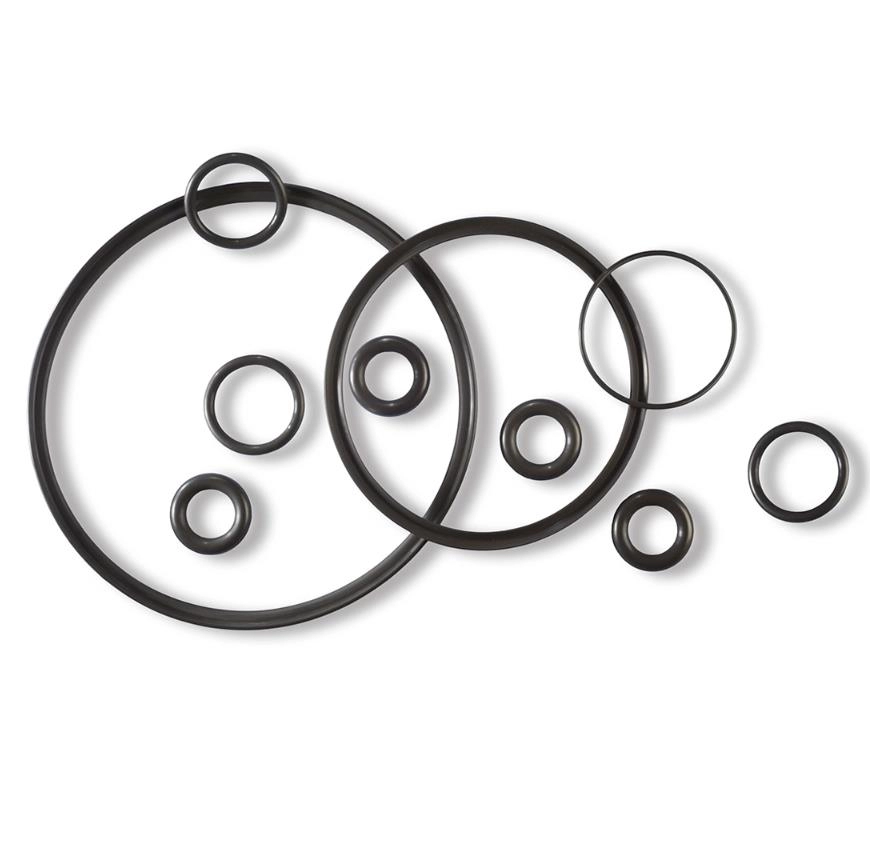
Choosing the correct O-ring size is essential for preventing leakage and maintaining reliable equipment performance. For buyers sourcing from an O-ring manufacturer in China, knowing how to measure the inside diameter (ID), outside diameter (OD), and cross-section (CS) can make product selection much easier. A correct size also needs to match the groove, compression, pressure, and application conditions.
Whether you are replacing an existing seal or developing a new component, this O-ring size guide explains how to measure an O-ring, understand standard sizing systems, and communicate specifications clearly with an O-ring factory or supplier.
An O-ring is generally specified by three primary dimensions:
· Inside Diameter (ID): The diameter of the opening inside the O-ring.
· Outside Diameter (OD): The total diameter measured across the outside of the ring.
· Cross-Section (CS): The thickness of the rubber material forming the ring.
These dimensions are closely related. If you know two of them, the third can generally be calculated:
OD = ID + (2 × CS)
For example, if an O-ring has an inside diameter of 50 mm and a cross-section of 3 mm, its approximate outside diameter is 56 mm.
However, calculations should not replace actual measurement when precision is important. Manufacturing tolerances and deformation can affect the measured dimensions of an existing O-ring.
If you have an existing O-ring but do not know its size, start by cleaning it and allowing it to return to its normal shape. Do not stretch it excessively during measurement.
A digital caliper is useful for measuring the ID and OD. A suitable O-ring measuring tool can also be used when many sizes need to be checked.
To measure the ID, place the caliper across the inside opening without stretching the rubber.
To measure the OD, measure across the widest outside points of the ring.
To determine the CS, measure the thickness of the rubber section. For better accuracy, measure the cross-section at several points around the O-ring and compare the results.
If the O-ring has been installed for a long time, it may have become swollen, compressed, flattened, or permanently deformed. In this situation, measuring the groove dimensions may provide a more reliable reference than measuring the used seal alone.
Many buyers focus primarily on the inside diameter, but cross-section is equally important.
The cross-section determines how the O-ring sits inside the groove and how much compression can be achieved during installation. If the cross-section is too small, the seal may not make sufficient contact with the mating surfaces. If it is too large, installation may become difficult and excessive compression can affect performance.
For this reason, a replacement O-ring should match the intended groove design rather than simply having an ID that appears correct.
When ordering precision rubber O-rings, buyers should provide all available dimensions instead of sending only the required inside diameter.
Standardized sizing can make O-ring selection much easier, especially for industrial buyers and OEM manufacturers.
Common standards include:
AS568 — widely used for standardized O-ring sizes, particularly in North American applications.
ISO 3601 — an international standard covering O-rings and their dimensions, tolerances, and related requirements.
JIS B 2401 — commonly used for Japanese and Asian industrial equipment.
If the existing seal has a standard designation, providing the standard number to the manufacturer can eliminate unnecessary measurement work.
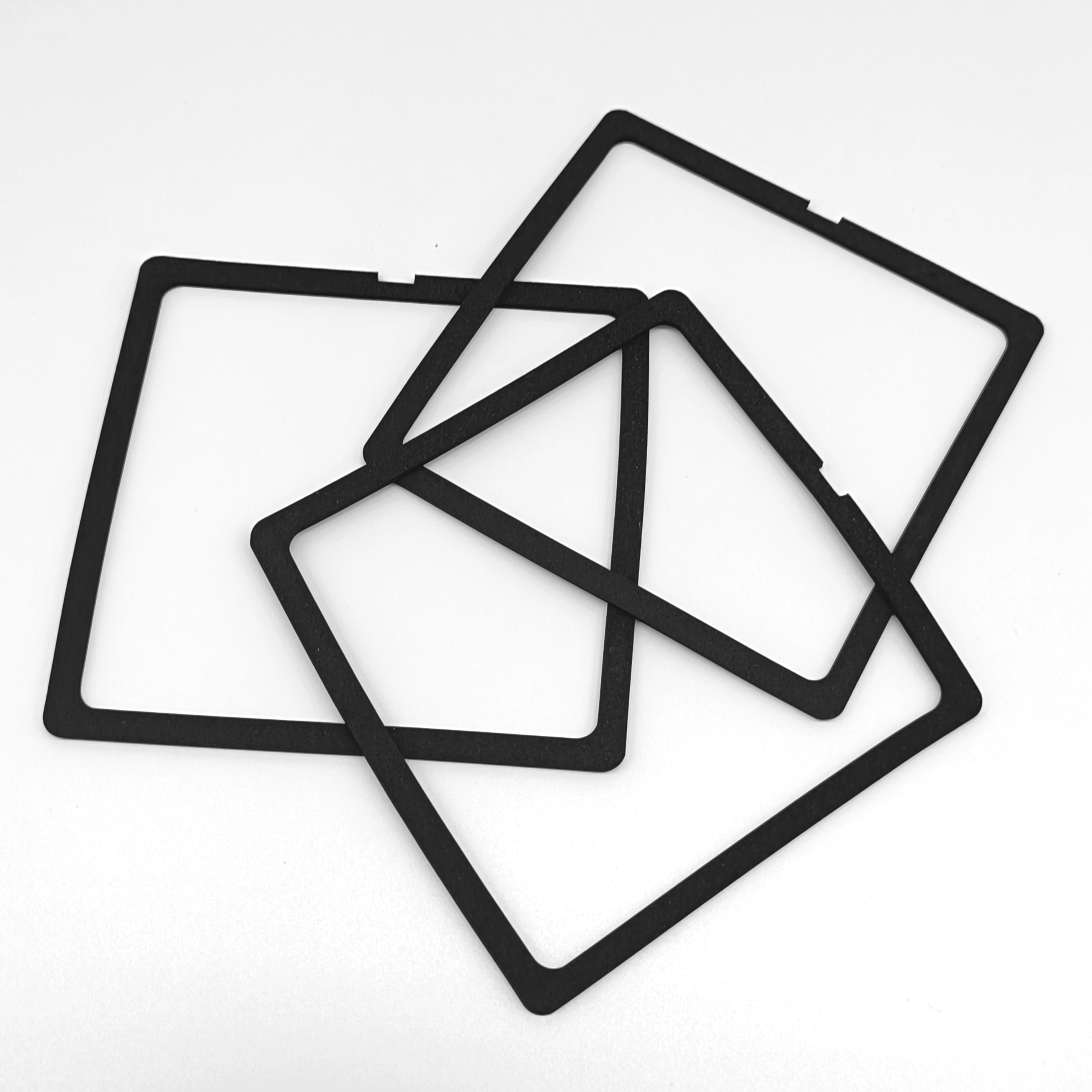
However, not every O-ring used in industrial equipment follows a standard size. Custom sizes may be required for specialized machinery, older equipment, or OEM components.
Custom O-rings are common in industrial applications. Machinery manufacturers may use proprietary groove dimensions or sealing designs that do not correspond to AS568, ISO 3601, or JIS B 2401.
In this situation, the buyer can provide:
· Inside diameter
· Outside diameter
· Cross-section
· Groove dimensions
· Technical drawing
· Existing sample
· Material requirement
· Hardness requirement
· Operating conditions
A professional China O-ring factory can use this information to determine the required dimensions and production specification.
For OEM projects, supplying a technical drawing is particularly useful because it allows the manufacturer to review the complete sealing geometry instead of relying on measurements from an old or deformed seal.
O-ring dimensions cannot be considered separately from the application.
A static flange seal, reciprocating hydraulic cylinder, and rotating shaft may require different sealing considerations even if the nominal O-ring diameter appears similar.
For static applications, compression and groove dimensions are particularly important. For dynamic applications, friction, movement, lubrication, wear, and extrusion resistance also need to be considered.
Pressure is another factor. In higher-pressure applications, the O-ring may require appropriate hardness, groove design, and anti-extrusion measures.
This is why a reliable O-ring supplier should ask about the equipment and operating conditions instead of processing every order solely from ID and OD.
Yes. Material selection can affect how the O-ring behaves after installation.
Common materials include NBR, EPDM, Silicone, FKM, and FFKM, each offering different resistance to oils, fuels, water, chemicals, temperature, and environmental exposure.
Other material options can include:
· Aflas or Kalrez (FFKM)
· Acrylate Rubber (ACM)
· Ethylene-propylene Rubber (EPR/EPDM)
· Fluorocarbon Rubber (FKM/FPM)
· Fluorosilicone Rubber (FVMQ)
· Hydrogenated Nitrile Rubber (HNBR)
· Neoprene Rubber (CR)
· Nitrile Rubber (Buna-N/NBR)
· Polyurethane (PU)
· Silicone Rubber (VMQ)
· Styrene-butadiene Rubber (SBR)
· Polytetrafluoroethylene (PTFE)
For example, NBR is widely used for many oil and fuel applications, while EPDM is often selected for water, steam, weathering, and certain chemical environments. FKM is frequently considered where higher temperature and chemical resistance are required.
The correct material should therefore be selected together with the O-ring size and working conditions.
One of the most common sourcing problems occurs when an imperial-size O-ring is replaced with a metric-size ring, or vice versa.
The two may appear similar, but even a small dimensional difference can affect compression and sealing performance.
If the equipment was originally designed around an AS568 size, it is generally better to identify the correct AS568 designation rather than selecting the nearest metric dimension.
Likewise, equipment designed around ISO or JIS dimensions should be matched to the appropriate standard.
If you are uncertain, provide the manufacturer with the measured ID, OD, and cross-section along with the equipment information. A qualified supplier can then help determine whether the component corresponds to a standard size or requires customization.
Hardness is another specification that should not be overlooked.
Depending on the material and application, rubber O-rings can be produced in different Shore A hardness levels. Softer materials can provide good conformity in certain sealing conditions, while harder materials may offer greater resistance to deformation and extrusion.
However, there is no universally “best” hardness. The correct selection depends on pressure, groove clearance, temperature, movement, and material.
When requesting a customized O-ring, buyers should provide the required hardness if it is already defined in their technical specification. If not, the manufacturer should review the application before recommending a value.
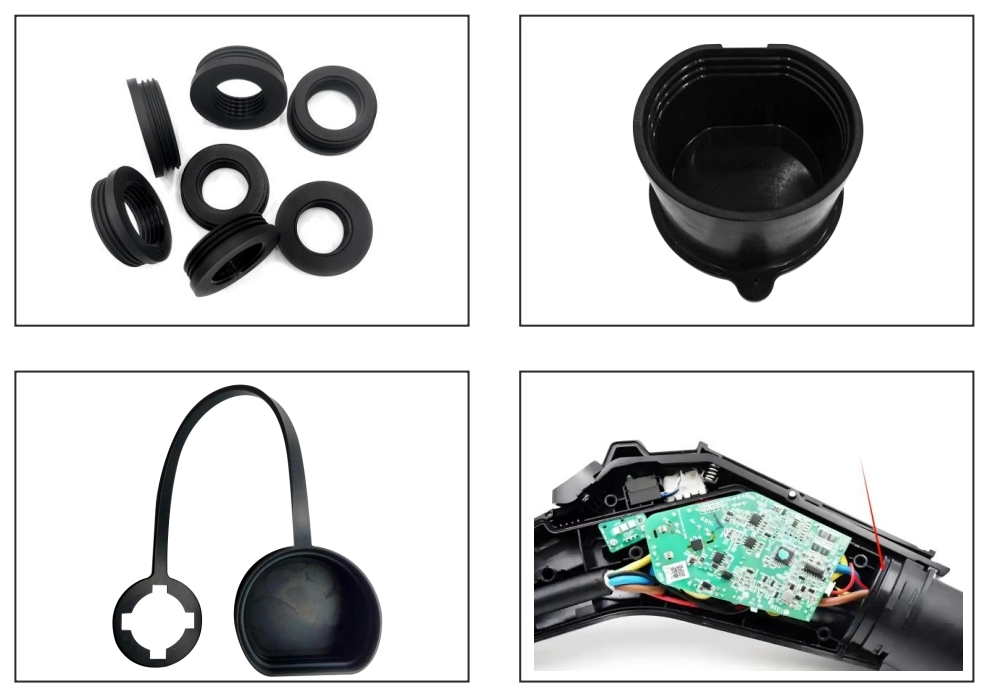
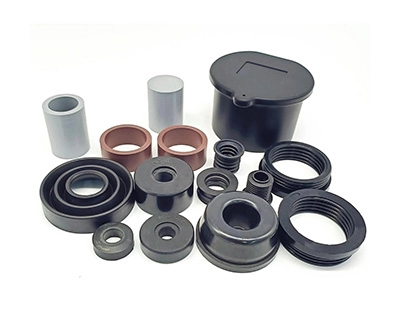
HaO Seal Technology Co.,Ltd provides precision-engineered rubber O-rings for industrial and commercial sealing applications. The products are designed for both static and dynamic sealing and can be supplied in standard or customized dimensions.
Material options include NBR, EPDM, Silicone, FKM, FFKM, ACM, EPR, FVMQ, HNBR, CR, PU, SBR, and PTFE. This range allows customers to select materials according to their working fluids, temperature conditions, chemical exposure, and mechanical requirements.
The company supports common standards including AS568, ISO 3601, and JIS B 2401, while customized sizes are also available for OEM and specialized equipment.
For buyers looking for a China O-ring manufacturer, factory, or wholesale supplier, this combination of standard sizing and custom manufacturing can simplify sourcing for replacement parts and new equipment projects.
A complete inquiry helps avoid unnecessary back-and-forth with the supplier. Ideally, provide the following:
Size: ID × CS or ID × OD × CS
Standard: AS568, ISO 3601, JIS B 2401, or custom
Material: NBR, EPDM, FKM, Silicone, FFKM, etc.
Hardness: Shore A requirement, if known
Application: static or dynamic
Working medium: oil, fuel, water, chemical, air, etc.
Temperature: minimum and maximum operating temperature
Pressure: normal and peak pressure
Quantity: required production volume
Drawing/sample: recommended for custom sizes
If you only have an old O-ring, send the measured dimensions and, if possible, a photograph or physical sample. The manufacturer can then help determine the closest standard or customized specification.
Choosing the right O-ring size starts with accurate measurement of ID, OD, and cross-section, but the process should not stop there. Groove dimensions, compression, pressure, movement, material, hardness, and operating conditions all influence final sealing performance.
For standard applications, AS568, ISO 3601, and JIS B 2401 can simplify identification. For OEM and specialized machinery, customized dimensions may be necessary.
By providing complete technical information to the manufacturer, buyers can reduce sizing errors and improve the reliability of replacement or newly designed sealing components. For standard and custom O-ring sealing solutions, HaO Seal Technology Co.,Ltd offers multiple materials, standardized sizes, and customized production to support industrial and commercial sealing requirements.