
2026/06/30
How Do Acid-Resistant Seals Prevent Leakage in Chemical Pipelines?


When selecting an O-Ring manufacturer in China, one of the most important decisions is not simply choosing the right size, but choosing the right elastomer. NBR, FKM, and EPDM O-rings are widely used in industrial sealing applications, but they are designed for different working environments. Choosing the wrong material can result in swelling, hardening, cracking, compression set, or leakage. For engineers, maintenance teams, and industrial buyers, understanding the differences between NBR vs FKM vs EPDM O-rings is therefore essential before placing an order with an O-ring factory or supplier.
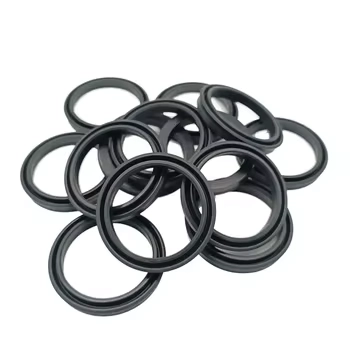
An O-ring may look like a simple sealing component, but its material directly determines how it performs against fluids, temperature, pressure, weather exposure, and mechanical movement. A seal that performs well in hydraulic oil may perform poorly in hot water or steam, while an elastomer that works well outdoors may not be suitable for petroleum-based fuel.
For this reason, material selection should start with the actual application rather than the lowest-cost or most commonly used material. The sealing medium, operating temperature, pressure, movement, environmental exposure, and expected service life all need to be considered together.
HaO Seal Technology Co.,Ltd provides precision-engineered rubber O-rings for static and dynamic sealing applications, with material options including NBR, EPDM, FKM, Silicone, FFKM and other elastomers. This allows customers to select a sealing material based on actual operating conditions instead of being restricted to one standard compound.
NBR, also known as Nitrile Rubber or Buna-N, is one of the most widely used materials for industrial O-rings. Its main advantage is its good resistance to mineral oils, lubricants, hydraulic fluids, fuels, and petroleum-based fluids. For many hydraulic and pneumatic systems, NBR provides a practical combination of sealing performance, mechanical strength, and wear resistance.
NBR is often suitable for applications where the primary sealing medium is oil or fuel and the operating temperature is within the material's working range. It is commonly found in hydraulic equipment, pumps, valves, cylinders, automotive systems, machinery, and general industrial equipment.
However, NBR should not be selected simply because it is a common industrial material. Its resistance to ozone, weathering, and certain chemicals is more limited than FKM or EPDM. If the O-ring is continuously exposed to outdoor weather, ozone, hot water, steam, or particular aggressive chemicals, another elastomer may be more appropriate.
For buyers working with a China O-ring supplier, it is useful to provide the actual fluid name and operating temperature rather than simply requesting "oil-resistant O-rings." This gives the manufacturer enough information to recommend an appropriate compound.
FKM, also known as Fluorocarbon Rubber or FPM, is often selected when an application requires stronger resistance to high temperatures, oils, fuels, and many chemicals. Compared with standard NBR, FKM offers a broader performance range in demanding industrial environments.
FKM O-rings are frequently used in automotive systems, fuel systems, chemical processing equipment, pumps, valves, compressors, and other applications where exposure to heat and aggressive fluids is a concern. They are particularly useful when a standard NBR compound cannot provide the required combination of temperature and chemical resistance.
The important point is that FKM should not automatically replace NBR in every application. Material selection depends on the exact fluid, temperature profile, pressure, sealing design, and movement. Some chemicals can still attack FKM, and low-temperature flexibility also needs to be considered for applications exposed to cold environments.
When purchasing from an O-ring manufacturer, customers should therefore provide the actual operating conditions. A professional supplier can then determine whether standard FKM is sufficient or whether another fluorinated elastomer is more suitable.
EPDM is particularly valuable when the sealing environment involves water, hot water, steam, weathering, ozone, or outdoor exposure. Unlike NBR, EPDM generally has good resistance to water-based environments and weather-related degradation.
This makes EPDM a common choice for water systems, HVAC equipment, cooling systems, plumbing applications, outdoor equipment, and applications where ozone and environmental exposure are important considerations.
However, one of the most important selection rules is that EPDM is generally not suitable for many petroleum-based oils and fuels. Using EPDM in an application involving incompatible oils can cause deterioration and premature leakage. This is one reason why simply asking for an "EPDM O-ring" without specifying the sealing medium can lead to the wrong product.
Compared with FKM, EPDM may also be preferred when water, steam, and environmental resistance are more important than resistance to petroleum-based fluids. The correct choice depends on what the seal actually encounters during service.
The simplest way to compare the three materials is to look at the dominant operating condition.
Requirement | NBR | FKM | EPDM |
Mineral oils | Excellent suitability | Excellent suitability | Generally unsuitable |
Fuels | Good suitability | Excellent suitability | Generally unsuitable |
Water | Limited compared with EPDM | Application dependent | Excellent suitability |
Hot water/steam | Limited | Application dependent | Good suitability |
Heat resistance | Good | Excellent | Good |
Weather/ozone resistance | Limited | Good | Excellent |
Chemical resistance | Moderate | Very good for many chemicals | Good for many water-based chemicals |
General industrial use | Excellent | Very good | Very good |
This table should be used as a starting point rather than a final material approval. Actual performance depends on the specific compound formulation, temperature, concentration of the medium, pressure, compression, and exposure time.
For demanding applications, a qualified O-ring supplier should review the complete operating environment before recommending the final material.
NBR, FKM, and EPDM cover many common applications, but they are not the only available options. Depending on the operating environment, other elastomers and sealing materials may provide better performance.
HaO Seal Technology Co.,Ltd supports a broader material selection, including HNBR, Silicone/VMQ, Fluorosilicone/FVMQ, ACM, CR, PU, SBR, PTFE and FFKM, allowing customers to move beyond standard material choices when application requirements become more demanding.
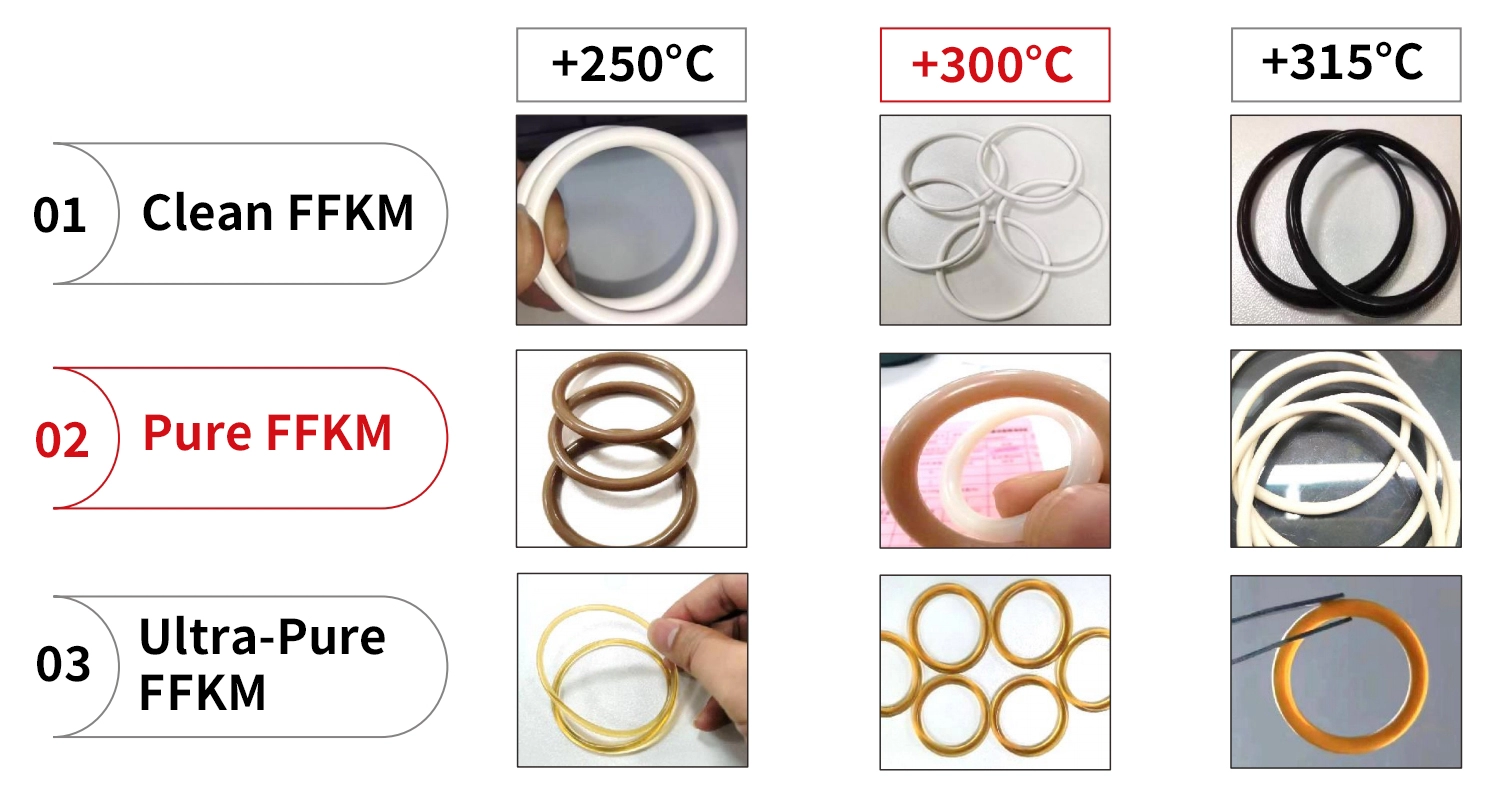
For example, HNBR can be considered for applications requiring improved resistance and mechanical performance compared with standard NBR. Silicone can provide good flexibility across a broad temperature range, while FVMQ can be useful when silicone properties need to be combined with improved resistance to certain fuels and oils. FFKM is designed for highly demanding chemical and high-temperature environments where conventional elastomers may not provide sufficient service life.
The exact material should always be confirmed against the application rather than selected only from a material name.
Temperature is one of the most important factors in O-ring selection, but it should not be considered independently. A material may resist a fluid well at room temperature but behave differently when the temperature rises significantly.
Movement is also important. Static sealing and dynamic sealing place different demands on an O-ring. A stationary flange seal may require different hardness and compression characteristics from an O-ring installed in a reciprocating hydraulic cylinder or rotating assembly.
HaO Seal Technology offers O-rings in different material and hardness options, with hardness selections ranging from approximately 20–90 Shore A, depending on the product and compound. Standard and customized sizes are available, including specifications based on AS568, ISO 3601, and JIS B 2401.
For customers purchasing custom O-rings, providing the groove dimensions, sealing medium, working temperature, pressure, movement type, and required standard can significantly improve the accuracy of material and size recommendations.
A reliable O-ring supplier should do more than quote a material name and size. For industrial applications, the supplier should be able to understand the operating environment, recommend appropriate elastomers, support standard and custom dimensions, and maintain consistent production quality.
HaO Seal Technology Co.,Ltd focuses on high-precision rubber sealing components for industrial and commercial applications. Its O-ring material range covers common elastomers such as NBR, EPDM, FKM, Silicone, and FFKM, as well as additional materials for specialized requirements.
The company provides both standard and customized O-Ring sealing solutions for static and dynamic applications. The focus is on dimensional consistency, material selection, leakage prevention, and long-term equipment reliability. For manufacturers and distributors, this flexibility can simplify sourcing when one project requires several different elastomers or customized specifications.
Buyers can also review related hydraulic sealing solutions when an application involves hydraulic equipment and dynamic sealing requirements.
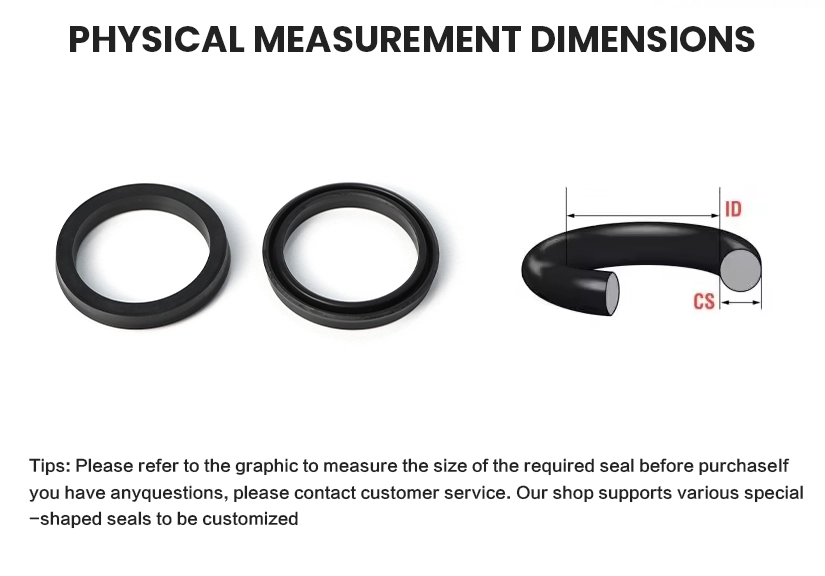
Before requesting a quotation or technical recommendation, prepare as much application information as possible. The most useful details include the O-ring ID and cross-section, groove dimensions, sealing medium, minimum and maximum operating temperature, pressure, static or dynamic application, movement speed, and relevant industry or dimensional standard.
If you are replacing an existing O-ring, providing the old part number, drawings, photographs, or sample can also help the manufacturer identify the required specification. If the original seal failed, explain how it failed—such as swelling, cracking, extrusion, hardening, or leakage. Failure symptoms can provide important clues for selecting a more suitable material.
NBR is often a practical choice for oil, fuel, hydraulic, and general industrial applications. FKM is better suited to many high-temperature, fuel, oil, and chemically demanding environments. EPDM is particularly useful for water, hot water, steam, weathering, and ozone exposure.
There is no single "best" O-ring material. The correct choice depends on the actual sealing medium and working conditions. By evaluating fluid compatibility, temperature, pressure, movement, hardness, dimensions, and service environment together, buyers can reduce premature seal failure and improve equipment reliability.
For standard or customized O-rings, HaO Seal Technology Co.,Ltd can provide multiple elastomer options and application-oriented sealing solutions for different industrial requirements.