
2026/05/09
NBR Seals vs Viton FKM Seals: A Comprehensive Comparison


O-ring compression set is one of the most important factors affecting the long-term reliability of industrial sealing systems. For equipment manufacturers, maintenance engineers, and buyers sourcing from an experienced O-ring manufacturer, understanding compression set helps prevent leakage, reduce unexpected downtime, and improve component service life.
An O-ring is designed to deform when installed in a sealing groove. This deformation allows the rubber material to maintain contact with the mating surfaces and prevent fluids or gases from escaping. However, after prolonged exposure to compression, temperature, and operating conditions, the elastomer may gradually lose its ability to return to its original shape. This phenomenon is known as compression set.
For applications involving hydraulic systems, automotive components, industrial machinery, and fluid handling equipment, excessive compression set can eventually compromise sealing performance.
Compression set refers to the permanent deformation that remains in an elastomer after it has been compressed for a specified period and then released.
Under normal operating conditions, an O-ring is compressed between two mating surfaces. Its elastic recovery creates the contact pressure required to maintain an effective seal.
A new, properly selected O-ring can generally recover much of its original cross-sectional shape after the compression force is removed. However, repeated mechanical stress, prolonged compression, and elevated temperatures can change the internal structure of the rubber compound.
As a result, the O-ring may remain flattened even after the external pressure is removed.
Compression set is commonly expressed as a percentage. A higher value indicates that the material has experienced more permanent deformation and has less remaining elastic recovery.
It is important to understand that compression set is not the same as ordinary wear. An O-ring can show little visible surface damage while still experiencing significant changes in its ability to recover and maintain sealing contact.
The main function of an O-ring is to maintain sufficient contact pressure against the sealing surfaces. When compression set becomes excessive, this contact pressure may decrease.
Several problems can develop over time.
As an O-ring loses its ability to recover, it may no longer exert sufficient force against the groove walls or mating surfaces.
In static sealing applications, this can create small leakage paths, particularly when the equipment experiences pressure fluctuations or temperature changes.
An O-ring that has permanently flattened may struggle to compensate for dimensional changes in the sealing assembly.
For example, hydraulic equipment can experience pressure variations during startup, operation, and shutdown. If the seal has insufficient elastic recovery, it may fail to maintain consistent contact under these changing conditions.
The result can be oil leakage, pressure loss, or reduced system efficiency.
In dynamic applications, such as reciprocating hydraulic cylinders, seals must maintain contact while components move relative to each other.
Excessive compression set can reduce the seal's ability to adapt to changes in operating conditions. Combined with friction, surface wear, and inadequate lubrication, this may accelerate sealing failure.
A seal that loses its recovery properties may require replacement earlier than expected.
For equipment operating continuously or in difficult-to-access locations, premature O-ring failure can result in additional maintenance work, production interruptions, and increased operating costs.
Compression set is influenced by several interacting factors. It is rarely caused by a single operating condition.
Operating temperature
Temperature is one of the most significant influences on elastomer aging. Prolonged exposure to elevated temperatures can accelerate chemical and physical changes within rubber compounds.
Depending on the formulation, the material may gradually harden, soften, or lose its elasticity. This can increase permanent deformation and reduce recovery after compression.
Continuous compression
An O-ring installed under compression experiences a constant mechanical load, even when the equipment is not operating.
If the compression level is excessive or the seal remains compressed for extended periods, the material may gradually lose its ability to return to its original dimensions.
Incorrect groove design
Groove dimensions directly affect how much an O-ring is compressed during installation.
Insufficient compression may lead to inadequate initial sealing, while excessive compression can increase material stress and accelerate permanent deformation.
Proper groove depth, width, and dimensional tolerances are therefore essential for reliable sealing performance.
Chemical exposure
Certain oils, fuels, cleaning agents, and industrial chemicals can interact with elastomers.
Depending on the material and chemical environment, exposure may cause swelling, shrinkage, hardening, or deterioration of the polymer structure. These changes can negatively affect compression recovery.
Improper installation
Twisting, stretching, sharp edges, contamination, and damaged sealing grooves can create additional stress during installation.
Although these issues are not compression set itself, they can contribute to early sealing problems and make an already weakened O-ring more likely to fail.
Material selection has a direct influence on long-term sealing reliability. Different elastomers have different resistance to heat, chemicals, aging, and permanent deformation.
The following materials are commonly considered for industrial O-ring applications.
Material | Typical Applications | Key Considerations |
NBR (Nitrile) | Hydraulic oil, lubricants, fuel systems | Good oil resistance; performance depends on temperature and compound formulation |
EPDM | Water systems, outdoor equipment, weather-exposed seals | Good resistance to water, ozone, and weathering |
Silicone (VMQ) | Temperature-sensitive equipment, electrical applications | Good temperature flexibility; relatively limited resistance to abrasion and certain mechanical stresses |
FKM (Viton®) | Automotive, fuel, oil, and chemical applications | Good heat and chemical resistance in suitable environments |
FFKM | Semiconductor, chemical processing, demanding industrial environments | Designed for highly demanding chemical and thermal conditions |
However, the material name alone does not determine compression set performance.
Two O-rings made from the same general elastomer family may perform differently because of variations in compound formulation, hardness, curing conditions, and manufacturing consistency.
For this reason, buyers should evaluate the actual compound and its test data rather than selecting a seal based only on its material designation.
Reducing compression set starts with proper engineering decisions before the equipment enters service.
Choose the correct elastomer compound.
Consider the actual operating temperature, sealing medium, pressure, and expected service conditions. A material suitable for hydraulic oil may not be appropriate for hot water or aggressive chemicals.
Maintain the correct compression ratio.
The O-ring should be compressed enough to establish reliable sealing contact without creating excessive mechanical stress.
Groove dimensions should follow applicable design guidelines and account for the O-ring's cross-sectional diameter, material hardness, and application requirements.
Avoid unnecessary temperature exposure.
Where possible, prevent the seal from operating continuously above the recommended temperature range of its compound. Thermal management can help slow elastomer aging and preserve elastic recovery.
Control installation quality.
Use appropriate installation tools, remove sharp edges, keep sealing surfaces clean, and avoid twisting or overstretching the O-ring.
These basic practices help prevent installation-related damage that could shorten service life.
Establish a practical inspection schedule.
For critical sealing applications, maintenance teams should inspect seals during scheduled equipment servicing.
Signs such as permanent flattening, cracks, surface hardening, swelling, or leakage indicate that the O-ring may need replacement.
Even when the material and design are correctly selected, manufacturing consistency remains essential.
Variations in compound mixing, molding conditions, curing, dimensional accuracy, and post-production handling can affect the finished O-ring's mechanical properties.
For industrial buyers, working with an experienced O-ring manufacturer in China can help ensure that product specifications are properly matched to actual application requirements.
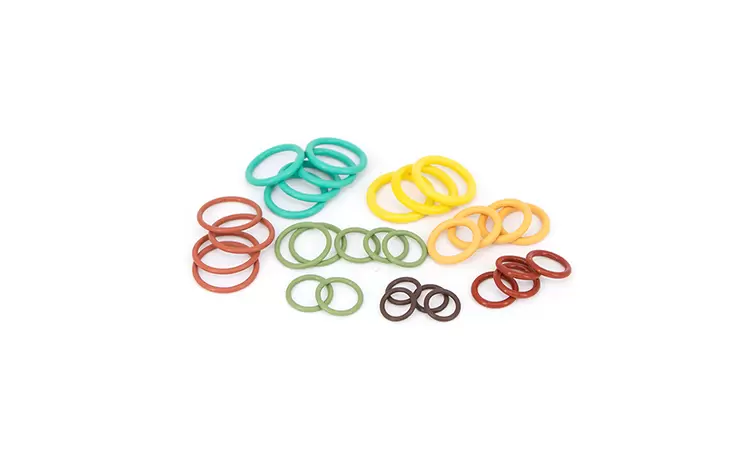
Hao Seal Technology Co., Ltd. provides precision-engineered rubber O-rings for industrial and commercial sealing applications. Its material options include NBR, EPDM, Silicone, FKM, and FFKM, supporting applications involving oils, fuels, water, chemicals, and different temperature conditions.
The company offers both standard and customized O-ring solutions. Customers can specify dimensions, material requirements, hardness, and application conditions to support different equipment designs and sealing requirements.
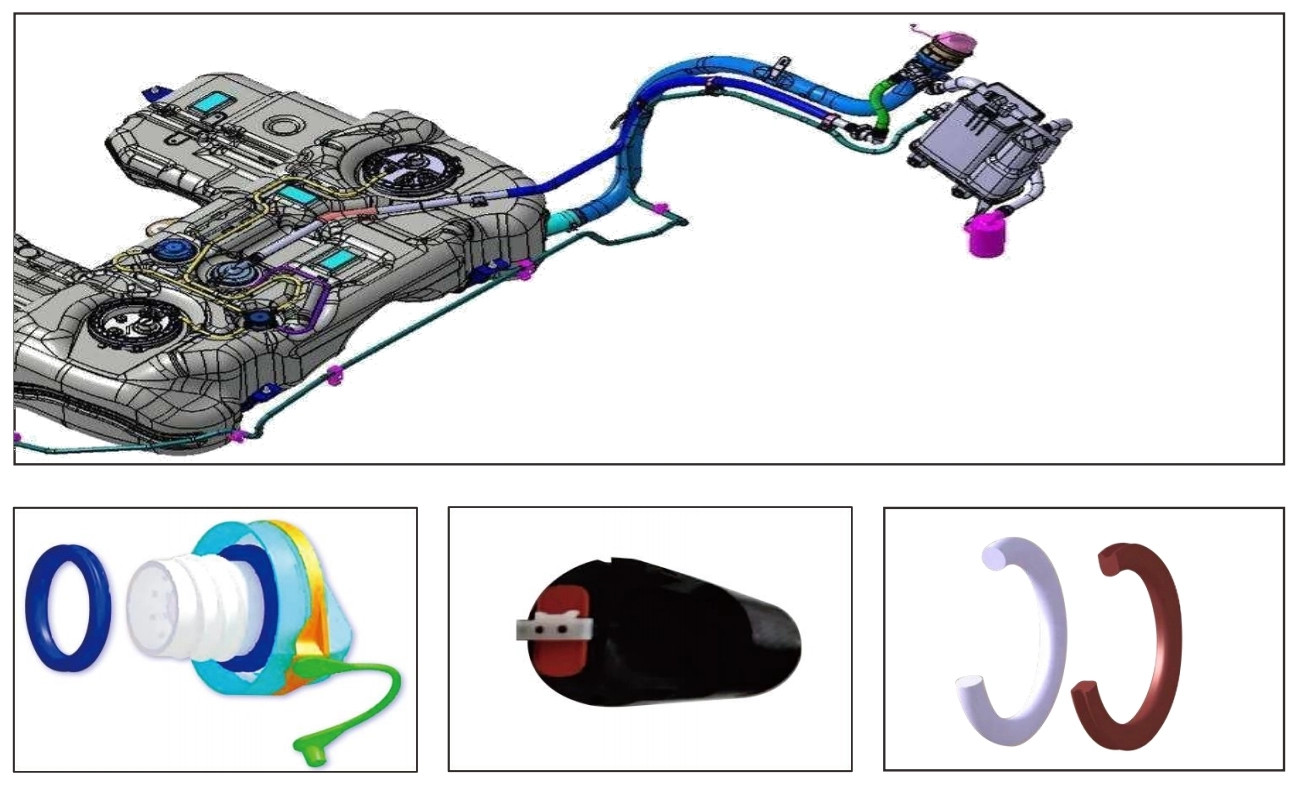
Its product range is suitable for applications in hydraulic and pneumatic equipment, automotive and new energy vehicles, photovoltaic equipment, semiconductor machinery, and other industrial systems.
For customers looking for a dependable rubber O-ring manufacturer and supplier, access to multiple elastomer options and customized manufacturing can make it easier to select sealing components that meet specific operating requirements.
Not every degree of permanent deformation means immediate seal failure. The replacement decision should consider the application, operating conditions, and acceptable leakage limits.
An O-ring should receive particular attention when:
The seal remains visibly flattened after removal.
Leakage occurs despite correct installation.
The rubber has become unusually hard or brittle.
Cracks or surface deterioration are visible.
The equipment experiences repeated pressure loss.
The seal has operated beyond its recommended service conditions.
For critical systems, replacement decisions should be based on maintenance procedures, equipment specifications, and relevant inspection or testing requirements rather than appearance alone.
When investigating a recurring problem, it is also useful to check groove dimensions, installation methods, fluid compatibility, and actual operating temperatures. Replacing the O-ring without correcting the underlying cause may simply lead to another premature failure.
O-ring compression set directly affects the ability of an elastomer to maintain sealing contact over time. Excessive permanent deformation can reduce contact pressure, increase leakage risk, and shorten the service life of industrial equipment.
The most effective way to control this problem is to combine suitable material selection, correct groove design, controlled installation, and consistent manufacturing quality.
Hao Seal Technology Co., Ltd. supplies standard and customized rubber O-rings made from NBR, EPDM, Silicone, FKM, and FFKM. With a range of material options and application-oriented manufacturing capabilities, the company supports industrial customers seeking reliable sealing components for different operating environments.
Choosing the right O-ring is not simply about matching dimensions. It is about ensuring that the material and sealing design can maintain performance throughout the equipment's intended service life.