
2026/07/22
UN Hydraulic Seals vs Standard Piston and Rod Seals: What's the Difference?


Flat washer vs O-ring seal is a common comparison in industrial sealing design, especially when engineers need to decide between mechanical fastening support and elastomeric sealing performance. The choice is not simply about preference—it directly affects leakage control, pressure resistance, durability, and system reliability.
As a professional sealing solution supplier, HaO Seal Technology Co., Ltd, established in 2010, has been providing engineered rubber sealing products for industries such as automotive, NEV, hydraulic systems, semiconductor equipment, photovoltaic systems, and medical applications. With strong R&D capabilities and advanced manufacturing systems, the company focuses on delivering reliable sealing performance for demanding industrial environments.
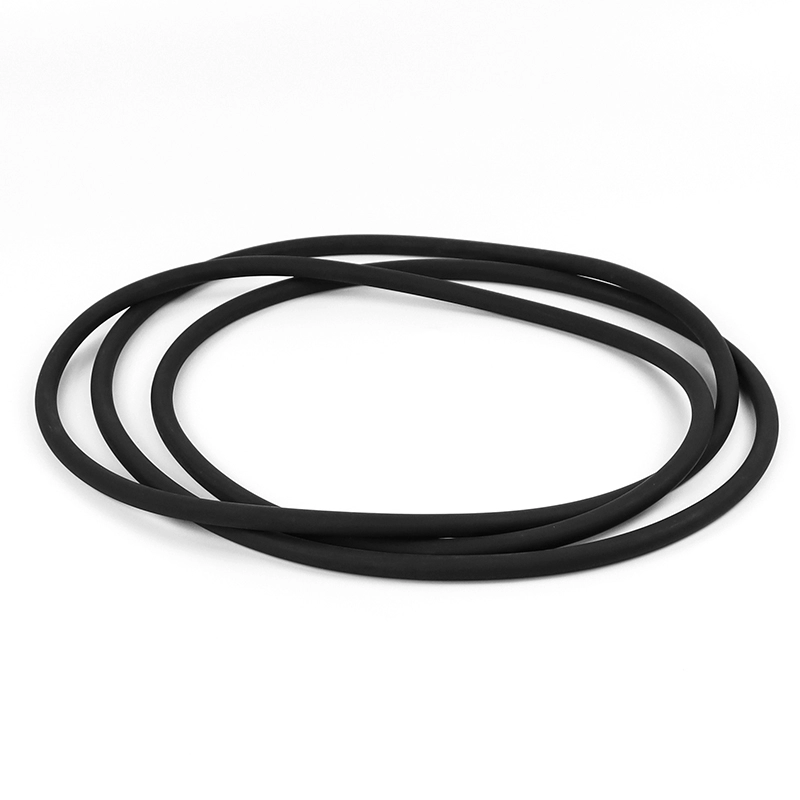
Before choosing between a flat washer and an O-ring, it is important to understand their functional roles.
A flat washer is primarily designed to:
· Distribute load under bolt or screw heads
· Prevent surface damage during tightening
· Provide spacing between components
· Reduce wear on mating surfaces
Flat washers are typically made of metal, plastic, or composite materials and are not designed as primary sealing elements.
An O-ring is a precision elastomeric sealing component designed to:
· Prevent fluid or gas leakage
· Maintain sealing under pressure
· Adapt to surface irregularities
· Work in static and dynamic applications
To explore material options and product types, you can visit
<a href="https://www.haosealtech.com/O-Ring/">industrial rubber O-ring sealing solutions</a>.
Material selection plays a key role in performance differences between washers and O-rings.
· Stainless steel
· Carbon steel
· Nylon
· PTFE-coated metals
These materials are strong but lack elasticity, meaning they cannot create a tight fluid seal under pressure.
HaO Seal Technology Co., Ltd offers a wide range of elastomers, including:
· NBR (Nitrile Rubber) – oil resistance
· EPDM – water and weather resistance
· Silicone – extreme temperature flexibility
· FKM (Viton®) – chemical and heat resistance
· FFKM (Kalrez® type) – extreme chemical environments
· HNBR, CR, ACM, FVMQ, SBR, PU, PTFE-based elastomers
These materials allow O-rings to perform across a wide temperature range of -60°C to +320°C, depending on formulation.
One of the most important distinctions is functional purpose.
Flat washers are used in:
· Mechanical assemblies
· Structural fastening systems
· Load-bearing joints
However, they do not provide reliable sealing under pressure or fluid exposure.
O-rings are designed for:
· Hydraulic systems
· Pneumatic cylinders
· Fuel and oil systems
· Chemical processing equipment
· Vacuum and pressure sealing environments
They create a compression seal by deforming elastically under pressure.
· Cannot maintain fluid sealing under pressure
· Require additional sealing components (gaskets or sealants)
· Suitable only for mechanical protection
· Designed for high-pressure sealing
· Self-energizing under system pressure
· Maintain sealing even under vibration and thermal expansion
In hydraulic and pneumatic systems, O-rings are almost always preferred due to their reliability.
Flat washers are stable in mechanical environments but are limited in sealing applications involving temperature variation or chemical exposure.
O-rings, however, are engineered for environmental adaptability:
· EPDM for outdoor weather resistance
· FKM for high-temperature oil systems
· FFKM for aggressive chemical environments
· Silicone for extreme cold and heat cycles
This makes O-rings far more suitable for industrial sealing applications.
· Easy to install
· Require minimal technical expertise
· Rarely need replacement unless mechanically damaged
· Require proper groove design
· Sensitive to compression ratio and material selection
· Need correct installation to avoid twisting or extrusion
However, once properly designed, O-rings offer long service life and minimal maintenance.
· Structural steel assemblies
· Mechanical fastening systems
· Automotive body panels
· General equipment assembly
· Hydraulic cylinders and valves
· Semiconductor vacuum systems
· NEV battery sealing systems
· Chemical processing equipment
· Inkjet and precision marking systems
· Photovoltaic sealing assemblies
In modern engineering systems, O-rings are the dominant sealing solution where fluid or gas containment is required.
From a design engineering standpoint, O-rings provide several advantages:
· Compact sealing design
· High reliability under pressure
· Cost-effective lifecycle performance
· Compatibility with dynamic motion
· Wide material customization options
Flat washers simply cannot provide the same sealing integrity in fluid systems.
HaO Seal Technology Co., Ltd focuses on delivering precision-engineered sealing solutions supported by:
· Advanced R&D for material innovation
· High-precision molding and production systems
· Strict quality control and inspection processes
· Customized sealing design support
The company serves industries including automotive, NEV, semiconductor, hydraulic systems, and medical equipment, ensuring that each sealing solution matches real-world operating conditions.
Use a flat washer if:
· The goal is mechanical load distribution
· No fluid or gas sealing is required
· The application is purely structural
Use an O-ring if:
· Fluid or gas sealing is required
· The system operates under pressure
· Temperature or chemical resistance is needed
· Leakage prevention is critical
The choice between a flat washer and an O-ring depends entirely on application requirements. Flat washers are effective for mechanical support and surface protection, while O-rings are engineered for sealing performance in demanding industrial environments.
With advanced material options such as NBR, EPDM, FKM, and FFKM, and precise engineering capabilities, HaO Seal Technology Co., Ltd provides reliable sealing solutions for industries where performance and durability are essential.
Understanding the difference between these two components ensures better system design, improved reliability, and longer equipment life.