
2026/01/23
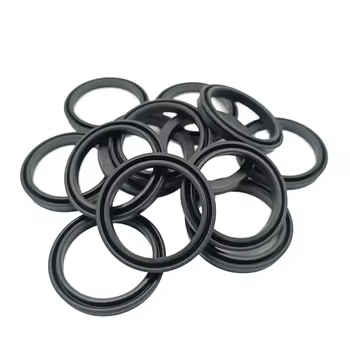
Rubber X-Rings for Dynamic Sealing: Applications in Industrial Machinery


Acid resistant seals are designed to operate in some of the most challenging industrial environments, where exposure to corrosive chemicals, extreme temperatures, and continuous operating cycles can quickly degrade ordinary sealing materials. One of the most common questions engineers and maintenance managers ask is: How long should a high-quality acid-resistant seal last?
The answer depends on several factors, including material selection, chemical compatibility, operating conditions, installation quality, and maintenance practices. However, when properly selected and installed, premium acid-resistant seals can provide years of reliable service while helping industrial equipment maintain safety, efficiency, and compliance.
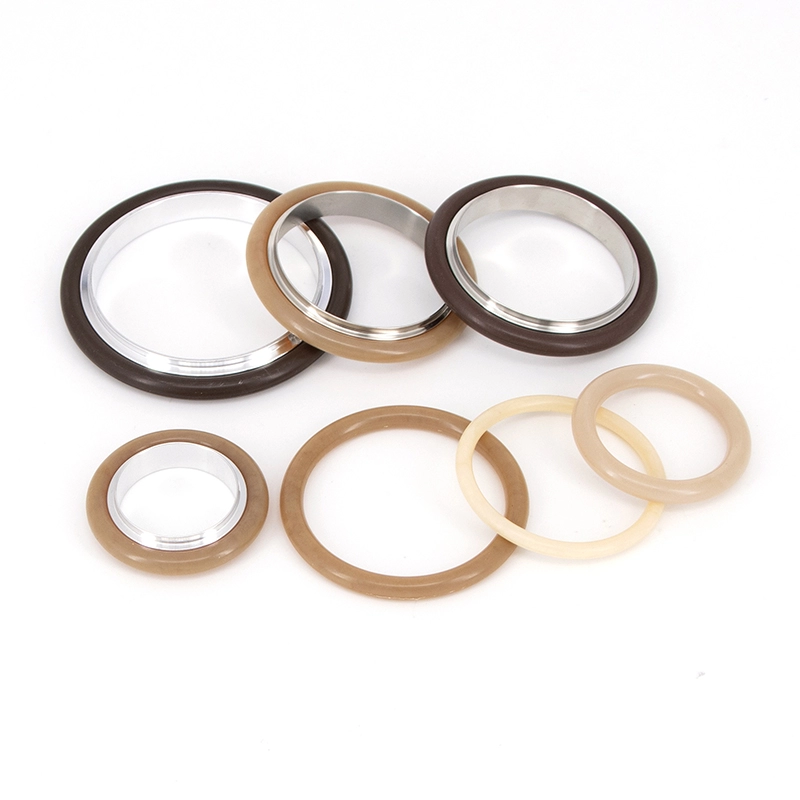
As a professional acid resistant seals manufacturer, HaO Seal Technology Co., Ltd develops advanced sealing solutions using high-performance elastomers such as NBR, EPDM, Silicone, FKM (Viton®), and FFKM. Our precision-engineered O-rings and customized seals are designed to maximize durability across demanding industries including semiconductor manufacturing, photovoltaic equipment, automotive systems, hydraulic equipment, and chemical processing facilities.
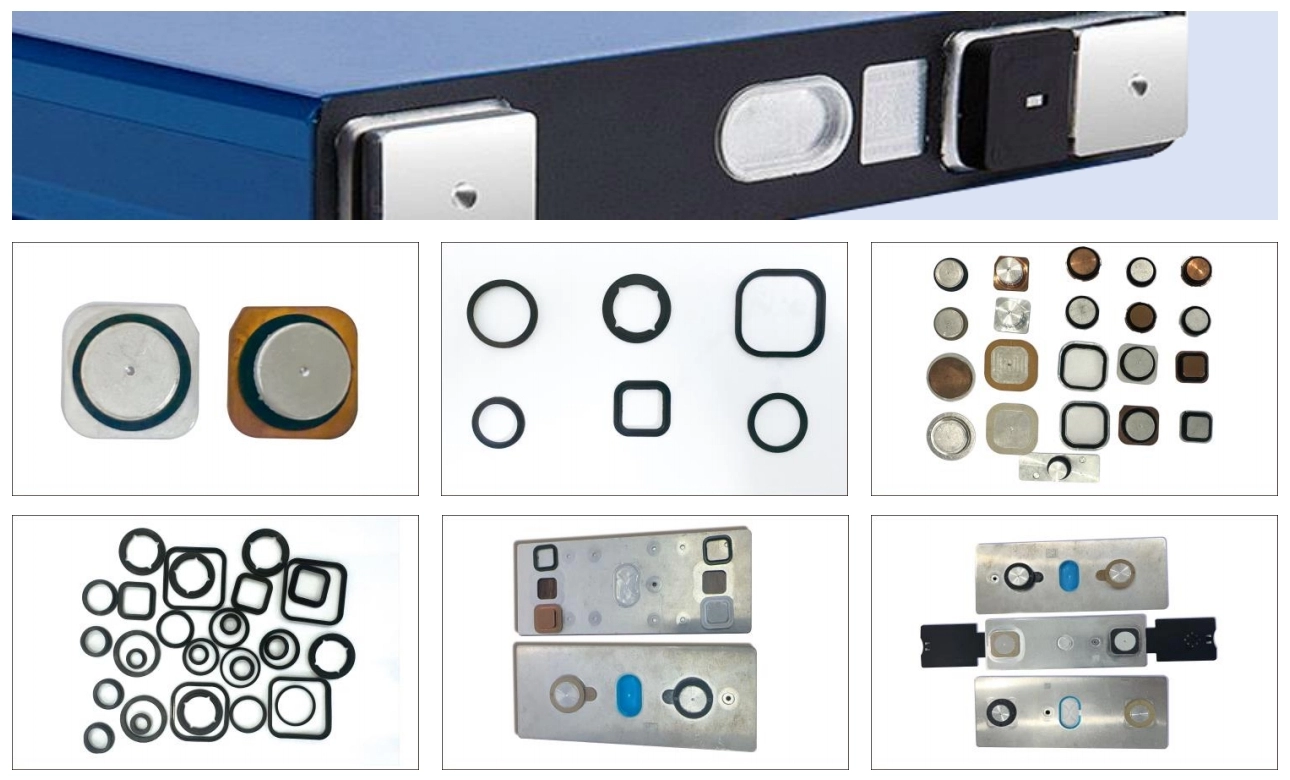
The lifespan of a seal directly affects equipment reliability and maintenance costs.
A seal that fails prematurely can cause:
· Chemical leakage
· Equipment shutdowns
· Product contamination
· Safety hazards
· Increased maintenance workload
· Unexpected repair expenses
Conversely, a durable seal provides:
· Longer maintenance intervals
· More stable operations
· Reduced downtime
· Improved process reliability
· Better equipment protection
For facilities operating around the clock, even small improvements in seal longevity can deliver significant operational benefits.
One of the biggest misconceptions is that all acid-resistant seals have a fixed service life.
In reality, seal lifespan can vary significantly depending on:
· Material type
· Chemical exposure
· Temperature
· Pressure
· Mechanical movement
· Installation quality
· Environmental conditions
In some applications, seals may perform reliably for several years. In more aggressive environments, replacement intervals may be considerably shorter.
The key is selecting the correct material for the specific operating conditions.
The durability of acid-resistant seals starts with the elastomer compound.
FKM is widely used in industrial chemical applications because it combines:
· Excellent acid resistance
· Strong fuel resistance
· High-temperature stability
· Outstanding aging resistance
Under suitable operating conditions, FKM seals often provide long service life in pumps, valves, reactors, and fluid handling systems.
FFKM is considered one of the most durable elastomer materials available.
Benefits include:
· Exceptional chemical compatibility
· Superior thermal resistance
· Minimal degradation in harsh environments
· Extended operational lifespan
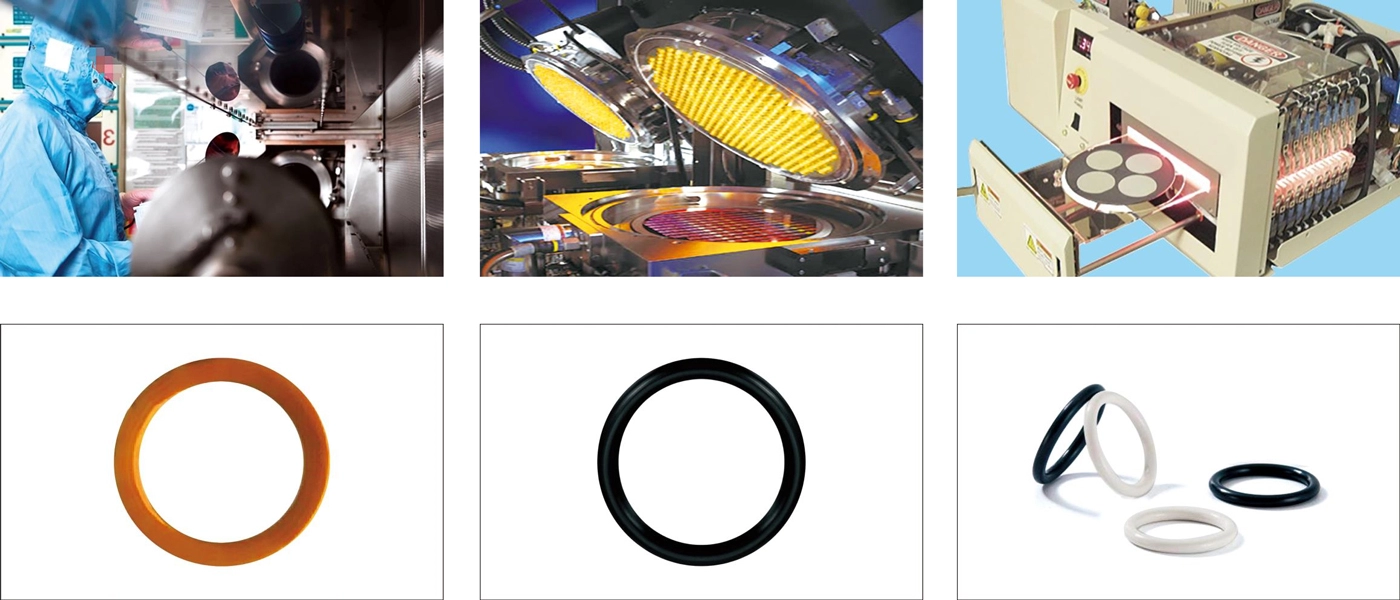
FFKM is frequently selected for semiconductor equipment and highly corrosive chemical processes where reliability is critical.
EPDM performs particularly well in:
· Water treatment systems
· Steam applications
· Certain acidic environments
Its resistance to weathering and aging contributes to excellent long-term durability.
Silicone provides excellent stability across a broad temperature range and maintains flexibility over extended periods.
NBR offers reliable performance in applications involving oils, fuels, and selected chemical environments.
When properly matched to operating conditions, NBR seals can provide long and dependable service.
Even the highest-quality seal can fail prematurely if it is exposed to incompatible chemicals.
For example:
· Some acids may cause swelling.
· Certain solvents can soften elastomers.
· Oxidizing chemicals may accelerate material degradation.
Proper chemical compatibility analysis is therefore essential.
At HaO Seal Technology Co., Ltd, our engineering team helps customers evaluate process conditions and select the most suitable materials before production begins.
For specialized applications, we also provide customized seals engineered specifically for unique chemical environments.
Heat is one of the most significant contributors to seal aging.
As operating temperatures increase:
· Chemical reactions accelerate
· Elastomer flexibility decreases
· Material degradation occurs more rapidly
Industrial systems commonly expose seals to temperatures that fluctuate throughout production cycles.
Examples include:
· Chemical reactors
· Semiconductor equipment
· Photovoltaic manufacturing systems
· Automotive fluid systems
High-performance materials such as FKM and FFKM are often selected because they maintain stability under elevated temperatures.
Proper material selection can dramatically extend service life in heat-intensive environments.
Pressure affects seal lifespan in several ways.
High-pressure conditions may lead to:
· Seal deformation
· Extrusion
· Increased wear
· Material fatigue
Dynamic applications involving movement place even greater demands on seals.
Examples include:
· Hydraulic cylinders
· Pumps
· Rotating shafts
· Pneumatic systems
In these environments, durability depends not only on material quality but also on seal design and installation accuracy.
A high-quality seal can still fail early if installed incorrectly.
Common installation issues include:
· Twisting during assembly
· Surface damage
· Improper lubrication
· Incorrect groove dimensions
· Excessive compression
Proper installation practices help ensure:
· Uniform sealing pressure
· Reduced wear
· Improved longevity
· Consistent performance
This is one reason many equipment manufacturers choose precision-engineered sealing products with tight dimensional tolerances.
Regular inspection and preventive maintenance play a significant role in seal longevity.
Recommended practices include:
Look for:
· Cracks
· Swelling
· Surface damage
· Leakage
Unexpected temperature or pressure changes can accelerate seal wear.
Replacing seals during planned maintenance can help avoid emergency shutdowns.
Using chemicals within specified operating limits reduces unnecessary stress on sealing materials.
These proactive measures often extend equipment reliability and improve overall operating efficiency.
When properly selected, acid-resistant seals can provide extended service life despite continuous chemical exposure.
Applications include:
· Reactors
· Pumps
· Storage systems
· Transfer lines
High-purity environments demand exceptional seal performance.
FFKM sealing solutions are often selected because of their ability to maintain long-term reliability under aggressive process conditions.
Solar production equipment relies on durable seals to withstand chemical cleaning and treatment processes.
Battery systems and fluid handling components require seals capable of maintaining performance over long operational cycles.
Reliability and cleanliness requirements make long-lasting sealing solutions particularly valuable in these industries.
Many industrial applications involve unique operating conditions that standard products may not fully address.
Custom-engineered sealing solutions can improve lifespan by optimizing:
· Material selection
· Geometry
· Compression characteristics
· Chemical compatibility
At HaO Seal Technology Co., Ltd, our customized seals are developed according to customer specifications and application requirements.
This tailored approach often results in improved durability and more predictable performance.
Established in 2010, HaO Seal Technology Co., Ltd has become a trusted global supplier of rubber seals and sealing solutions.
Our strengths include:
We manufacture seals using premium-grade:
· NBR
· EPDM
· Silicone
· FKM
· FFKM
Our dedicated research and development center continuously improves materials and manufacturing processes.
Advanced production systems ensure:
· Consistent quality
· Accurate dimensions
· Reliable sealing performance
We provide sealing solutions for:
· Photovoltaic equipment
· Semiconductor equipment
· Inkjet marking equipment
· Automotive and NEV industries
· Hydraulic and pneumatic systems
· Medical and sanitary equipment
The lifespan of high-quality acid-resistant seals depends on many variables, including material selection, chemical compatibility, operating temperature, pressure, installation quality, and maintenance practices. While no universal lifespan applies to every application, properly selected and engineered seals can deliver years of dependable performance even in highly corrosive environments.
By partnering with an experienced manufacturer such as HaO Seal Technology Co., Ltd, businesses gain access to advanced materials, precision manufacturing, and customized sealing solutions that help maximize seal longevity and equipment reliability. In today's demanding industrial environments, investing in high-quality acid-resistant seals remains one of the most effective ways to improve operational efficiency and reduce long-term maintenance challenges.