
2026/10/08
Why Do O-Rings Fail? 10 Common Causes of O-Ring Failure and How to Prevent Them


Automotive seal material selection is essential for preventing fluid leakage, protecting components, and maintaining vehicle reliability. For automotive manufacturers, parts suppliers, and engineers, choosing the right rubber sealing material means balancing oil resistance, fuel compatibility, temperature tolerance, and long-term durability. NBR, EPDM, and FKM are three widely used elastomers, but each performs differently under actual operating conditions. Understanding these differences helps engineers select the right automotive rubber seals and O-rings for engines, cooling systems, fuel assemblies, and other vehicle applications.
At HaO Seal Technology Co.,Ltd, we provide precision-engineered rubber O-rings and sealing products in multiple elastomer materials, including NBR, EPDM, Silicone, FKM, and FFKM. Our standard and customized sealing components are designed to meet different application requirements, helping customers develop practical sealing solutions for industrial and automotive projects.
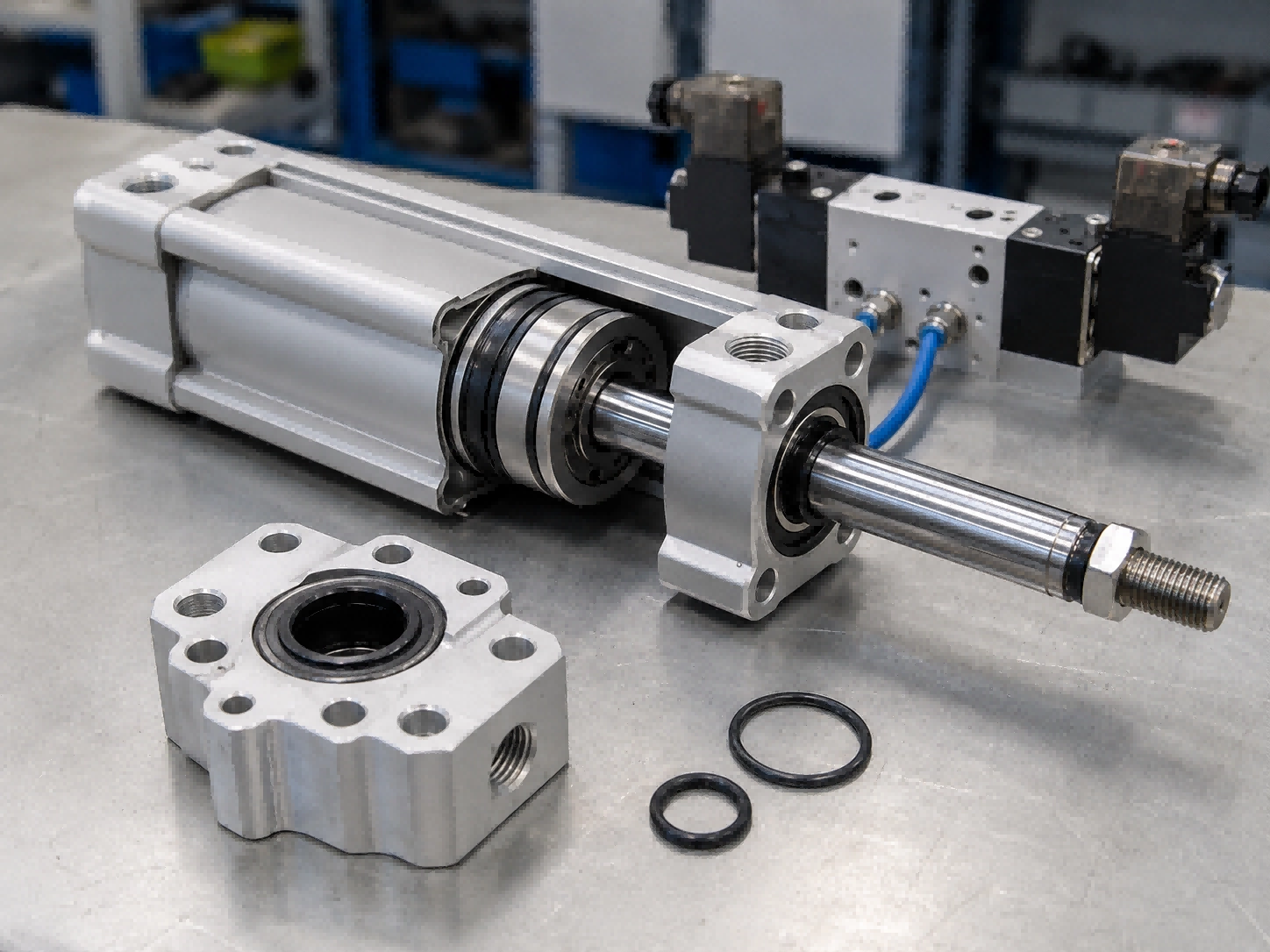
Automotive seals operate in environments where temperature changes, vibration, pressure, and fluid exposure can gradually affect rubber performance. A seal that works well in an engine oil circuit may not be suitable for a coolant line or an electrical connector exposed to water and road salt.
Selecting an unsuitable material can lead to swelling, hardening, cracking, loss of elasticity, or compression set. These problems may cause leaks, increase maintenance requirements, and shorten component service life.
Before selecting a sealing material, engineers should evaluate several factors:
· Media compatibility: Determine whether the seal contacts engine oil, transmission fluid, gasoline, diesel, coolant, water, or other chemicals.
· Operating temperature: Consider normal operating temperatures as well as temporary temperature peaks and cold starts.
· Mechanical conditions: Check system pressure, movement, vibration, friction, and installation requirements.
· Service life: Assess the expected replacement interval and the effects of prolonged exposure to heat and fluids.
· Manufacturing requirements: Confirm dimensions, hardness, tolerances, and compatibility with the sealing groove.
These factors provide a more reliable basis for material selection than choosing a rubber compound by name alone.
Nitrile rubber, commonly known as NBR or Buna-N, is widely used in sealing applications involving petroleum-based oils and greases. Its balance of oil resistance, mechanical properties, and manufacturing practicality makes it a common option for automotive components.
NBR is frequently considered for:
· Engine oil seals and O-rings
· Oil filters and lubrication assemblies
· Hydraulic systems using compatible mineral oils
· Fuel-system components where the specific NBR compound is suitable
· General automotive fluid connections
For example, an O-ring installed in an oil filter housing must maintain contact with the mating surfaces while resisting prolonged exposure to lubricating oil. A correctly specified NBR compound can be suitable for this duty, provided its temperature and fluid compatibility meet the application requirements.
NBR offers good resistance to many petroleum-based oils, useful mechanical strength, and satisfactory wear performance in appropriately designed applications. It is available in different hardness grades, allowing manufacturers to select compounds that balance sealing force, deformation resistance, and assembly requirements.
However, NBR is not a universal solution for every automotive fluid. Its resistance to fuels varies with fuel composition and the compound formulation. Conventional NBR can also become less suitable at elevated temperatures or under prolonged outdoor exposure because of aging and ozone-related degradation.
Best suited for: Oil-contact applications and compatible hydraulic or fuel-related systems operating within the selected compound's limits.
Ethylene propylene diene monomer rubber, or EPDM, is known for its resistance to water, weathering, ozone, and many water-based fluids. These characteristics make it especially useful where seals encounter coolant, moisture, and outdoor environmental conditions.
Common applications include:
· Coolant hoses and cooling-system seals
· Radiator and water-pump sealing components
· HVAC systems and water-based fluid circuits
· Door, window, and body weather seals
· Selected electrical enclosures and exterior sealing assemblies
In a vehicle cooling circuit, an EPDM seal may be exposed to a water-glycol coolant mixture, temperature cycling, and continuous contact with moisture. A properly formulated EPDM compound can provide reliable sealing under these conditions.
EPDM generally offers excellent resistance to ozone, sunlight, and weathering. It also performs well in many hot-water and glycol-based coolant applications. Its flexibility across a suitable temperature range helps it maintain sealing contact as components expand and contract.
The main limitation is its poor compatibility with many petroleum-based oils and fuels. If an EPDM seal is installed in an oil-wetted housing, the compound may swell or deteriorate, depending on exposure conditions.
Best suited for: Cooling systems, water-based circuits, and exterior automotive components exposed to weather and moisture.
Fluoroelastomer, commonly designated FKM, is often selected for demanding automotive applications involving elevated temperatures, oils, fuels, and aggressive operating environments. It is particularly useful when conventional elastomers cannot provide the required combination of thermal stability and fluid resistance.
FKM may be considered for:
· Engine oil system seals exposed to high temperatures
· Fuel-system O-rings compatible with the selected compound
· Transmission and drivetrain sealing applications
· Turbocharger-related assemblies where material limits are satisfied
· Selected automotive sensors, pumps, and fluid-control components
For instance, a seal near a hot engine assembly may experience both elevated temperatures and prolonged oil contact. An appropriately selected FKM compound can provide better resistance to heat and many automotive fluids than conventional NBR.
FKM generally provides strong resistance to heat, oils, fuels, and many chemicals. It can retain useful sealing properties in demanding environments, reducing the risk of premature degradation when the compound is correctly matched to the application.
Nevertheless, not every FKM formulation behaves identically. Low-temperature flexibility, resistance to particular fuels, and compatibility with specialized fluids vary by grade. FKM should therefore be selected using the actual operating conditions rather than temperature resistance alone.
Best suited for: High-temperature oil and fuel applications that require enhanced chemical resistance and thermal stability.
The following comparison provides a starting point for automotive engineers and purchasing teams.
Selection factor | NBR | EPDM | FKM |
Petroleum-based oils | Generally good | Generally poor | Generally excellent |
Automotive fuels | Compound-dependent | Generally unsuitable | Often good; verify fuel type |
Water and coolant | Depends on formulation | Generally excellent for compatible coolants | Depends on formulation |
Ozone and weathering | Generally limited | Excellent | Generally good |
High-temperature service | Moderate; grade-dependent | Good within grade limits | Excellent within grade limits |
Common applications | Oil circuits and compatible hydraulic systems | Cooling, water-based systems, exterior seals | Hot oil, fuel, and demanding fluid systems |
These are general material characteristics, not universal performance guarantees. Actual results depend on compound formulation, temperature, exposure duration, pressure, and installation conditions.
For manufacturers comparing different rubber sealing products, the most effective approach is to define the operating environment first and then confirm the compound's suitability.
A practical selection process starts with the fluid and environment surrounding each seal.
NBR may be suitable for conventional oil-contact applications where temperatures remain within its operating limits. FKM is worth considering for hotter locations or more demanding fluid exposure.
EPDM is commonly used with compatible water-glycol coolants. Engineers should verify resistance to the specific coolant formulation, additives, and expected service temperature.
Fuel composition matters. Gasoline blends, ethanol-containing fuels, diesel, and other fuel formulations can affect elastomers differently. FKM may be appropriate for many demanding fuel applications, but the exact compound must be validated. NBR should also be selected only when its fuel compatibility has been confirmed.
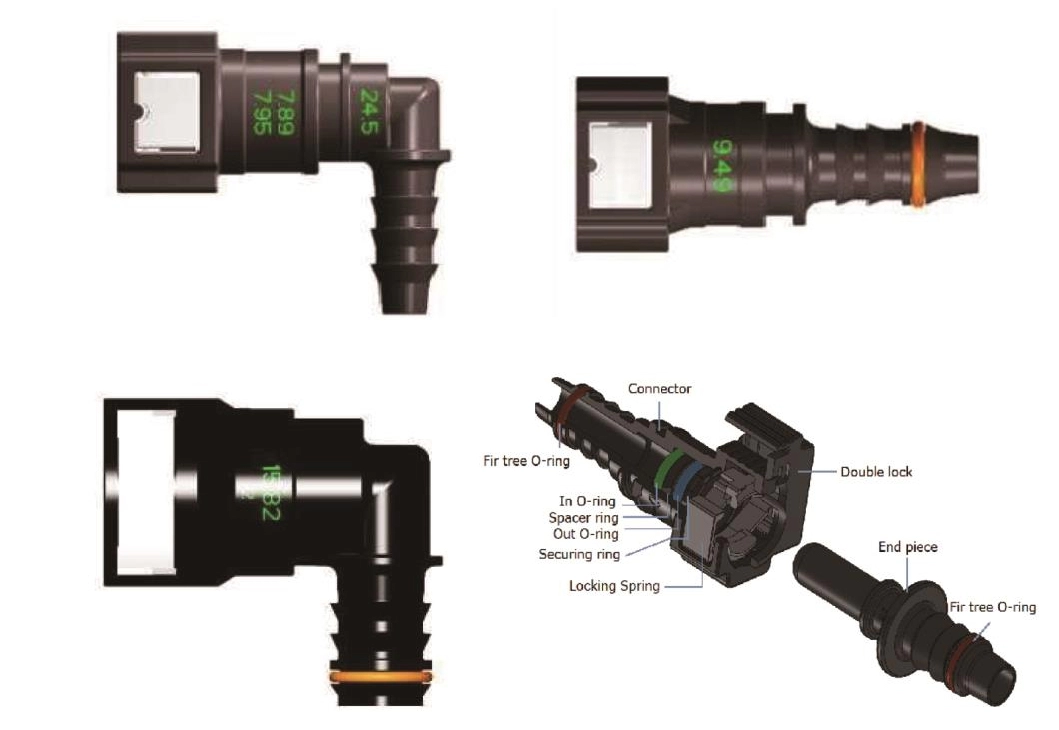
Seals in connector housings and exterior components need to resist water ingress, vibration, and environmental aging. EPDM may be suitable for weather-exposed applications, while other materials may be required for specific chemical or temperature conditions. For related applications, see our automotive connector sealing products.
Material selection is only one part of a successful sealing design. Even a chemically compatible elastomer can leak if its dimensions, hardness, or installation conditions are unsuitable.
Before placing an order, confirm the following details:
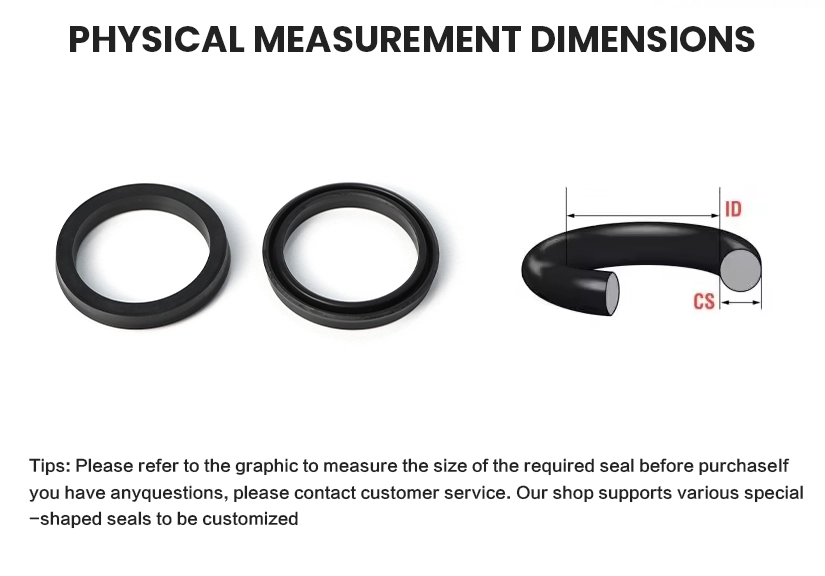
· Dimensions: Specify the required inside diameter, cross-section, and dimensional tolerances.
· Hardness: Select a Shore A hardness appropriate for the groove design, sealing force, and pressure.
· Operating conditions: Provide minimum and maximum temperatures, working pressure, and expected movement.
· Fluid exposure: Identify the exact oil, fuel, coolant, or chemical, including relevant concentrations.
· Performance requirements: Define compression set, aging resistance, and any applicable automotive or customer-specific standards.
· Validation: Where required, conduct material compatibility tests and application-specific performance testing.
For OEM projects, drawings, existing samples, and technical specifications can help a manufacturer assess whether a standard O-ring is suitable or whether a customized component is needed.
HaO Seal Technology Co.,Ltd supplies precision-engineered rubber O-rings and sealing components for industrial and commercial applications, including automotive-related projects. Available elastomer options include NBR, EPDM, Silicone, FKM, and FFKM, supporting different requirements for oil resistance, fuel compatibility, water resistance, chemical exposure, and heat.
Our product offering supports both standard and customized sealing requirements. Depending on the application, customers can discuss material selection, dimensions, hardness, and component design to identify a suitable solution for their equipment or vehicle assembly.
Key advantages include:
· Multiple material options: Choose from different elastomers according to the operating environment.
· Precision-focused manufacturing: Specify component dimensions and tolerances to match the intended sealing design.
· Customized solutions: Discuss non-standard sizes and application-specific requirements.
· Broad product selection: Explore O-rings and other sealing components for different equipment and system designs.
· Project-oriented support: Provide drawings, samples, or operating information to help evaluate the appropriate material and product specification.
If your project requires application-specific components, explore our customized rubber sealing products or review the available FKM O-ring options.
Choosing between NBR, EPDM, and FKM depends on the fluid, operating temperature, environmental exposure, and mechanical demands of each automotive system. NBR is a practical option for many oil-resistant applications, EPDM is well suited to compatible coolant and weather-exposed environments, and FKM is often preferred for demanding high-temperature oil and fuel applications.
There is no single rubber material that works best in every vehicle system. A reliable selection combines material compatibility, accurate dimensions, suitable hardness, and application-specific validation.
For automotive manufacturers, component suppliers, and engineering teams, HaO Seal Technology Co.,Ltd offers standard and customized rubber O-rings and sealing solutions to support different project requirements. Contact our team with your application details to identify a suitable sealing option for your next project.