
2026/01/21
Why Rubber X-Rings Are Preferred for Dynamic Rotary and Reciprocating Seals


Automotive seals for high-temperature applications play a critical role in maintaining system reliability, preventing fluid leakage, and protecting key vehicle components under demanding operating conditions. Whether used in internal combustion engines, turbocharging systems, battery packs, or thermal management systems in new energy vehicles, selecting the correct seal material and structure directly affects service life and overall performance.
Among the most commonly adopted sealing products, rubber O-rings continue to provide an efficient and versatile solution due to their compact structure, excellent sealing capability, and adaptability to extreme environments. However, not every sealing material performs equally under elevated temperatures. Understanding how to choose the right automotive seals can reduce maintenance risks and improve long-term operational stability.
At HaO Seal Technology Co.,Ltd, precision-engineered rubber sealing solutions are developed to support industrial and automotive customers facing increasingly complex thermal and environmental challenges.
Modern vehicles operate under increasingly demanding thermal conditions.
Typical high-temperature sealing environments include:
· Engine compartments
· Turbocharger systems
· Cooling circuits
· Fuel systems
· Exhaust gas treatment systems
· Electric vehicle battery assemblies
· Hydraulic and pneumatic systems
Temperature fluctuations combined with pressure, vibration, oil exposure, and chemical contact create a challenging environment for sealing materials.
When seals degrade prematurely, common consequences include:
· Fluid leakage
· Loss of pressure
· Increased wear
· System contamination
· Reduced equipment lifespan
Selecting the correct seal at the beginning of a project often prevents significant operational issues later.
One of the most common mistakes when choosing automotive seals is selecting materials based only on peak temperature.
Engineers should evaluate:
The average working temperature during normal operation.
Temporary high-temperature events during acceleration or load spikes.
Repeated heating and cooling cycles accelerate material aging.
Radiant heat from adjacent components may exceed ambient conditions.
Once operating conditions are clearly defined, material selection becomes much more accurate.
Different elastomers perform differently under elevated temperatures.
HaO Seal Technology Co.,Ltd manufactures precision sealing components using multiple high-performance elastomers designed for industrial and commercial environments.
NBR offers:
· Excellent oil resistance
· Good fuel compatibility
· Stable mechanical performance
Typical applications:
· Fuel systems
· Hydraulic circuits
· Lubrication systems
NBR performs well under moderate thermal conditions but may not be ideal for sustained extreme temperatures.
EPDM is widely selected for:
· Water resistance
· Steam environments
· Weather resistance
· Aging resistance
Common applications include:
· Cooling systems
· Outdoor sealing environments
· Thermal management assemblies
EPDM should generally be avoided in direct petroleum oil exposure.
Silicone materials are valued for:
· Wide operating temperature range
· Excellent flexibility
· Low compression set
Typical automotive applications:
· Electrical sealing
· Sensor protection
· Thermal interfaces
Silicone performs especially well in environments requiring flexibility at both low and high temperatures.
For demanding automotive environments, FKM is frequently selected because of its excellent balance of thermal and chemical resistance.
Advantages include:
· Superior heat resistance
· Excellent oil compatibility
· Strong chemical resistance
· Long-term dimensional stability
Typical applications:
· Engine sealing
· Turbocharger systems
· Transmission assemblies
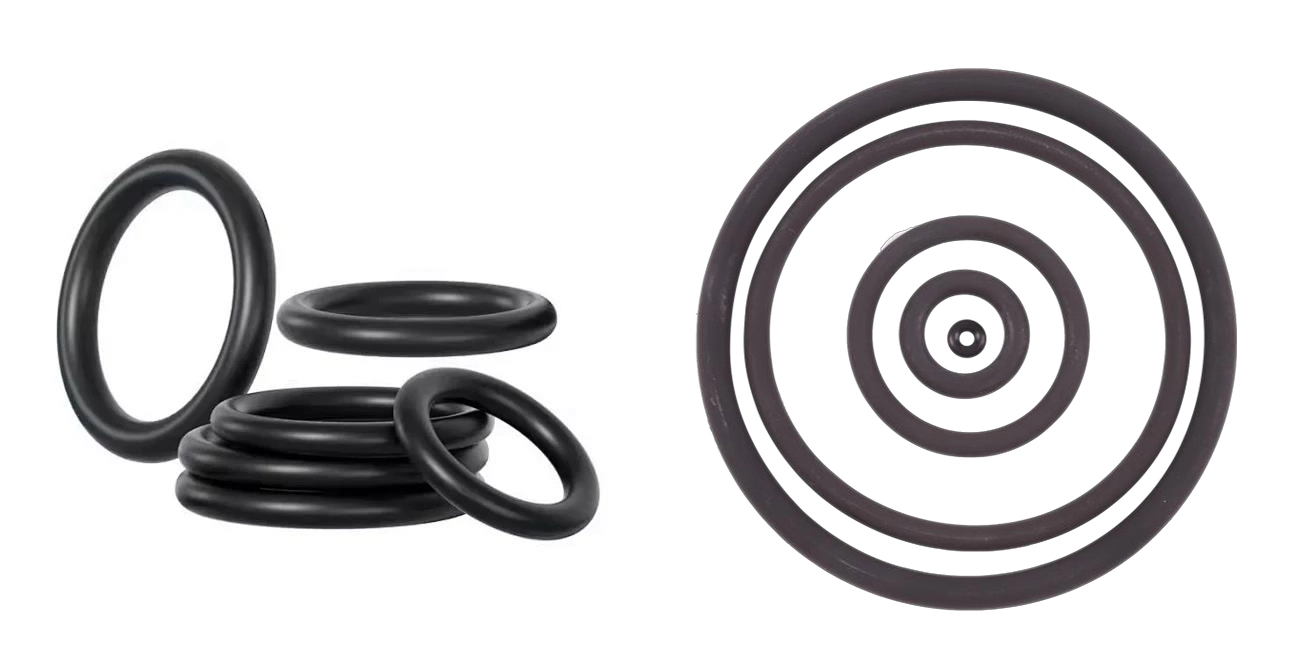
High-performance <a href="https://www.haosealtech.com/O-Ring/">rubber O-rings</a> manufactured using FKM materials provide reliable sealing in elevated temperature environments.
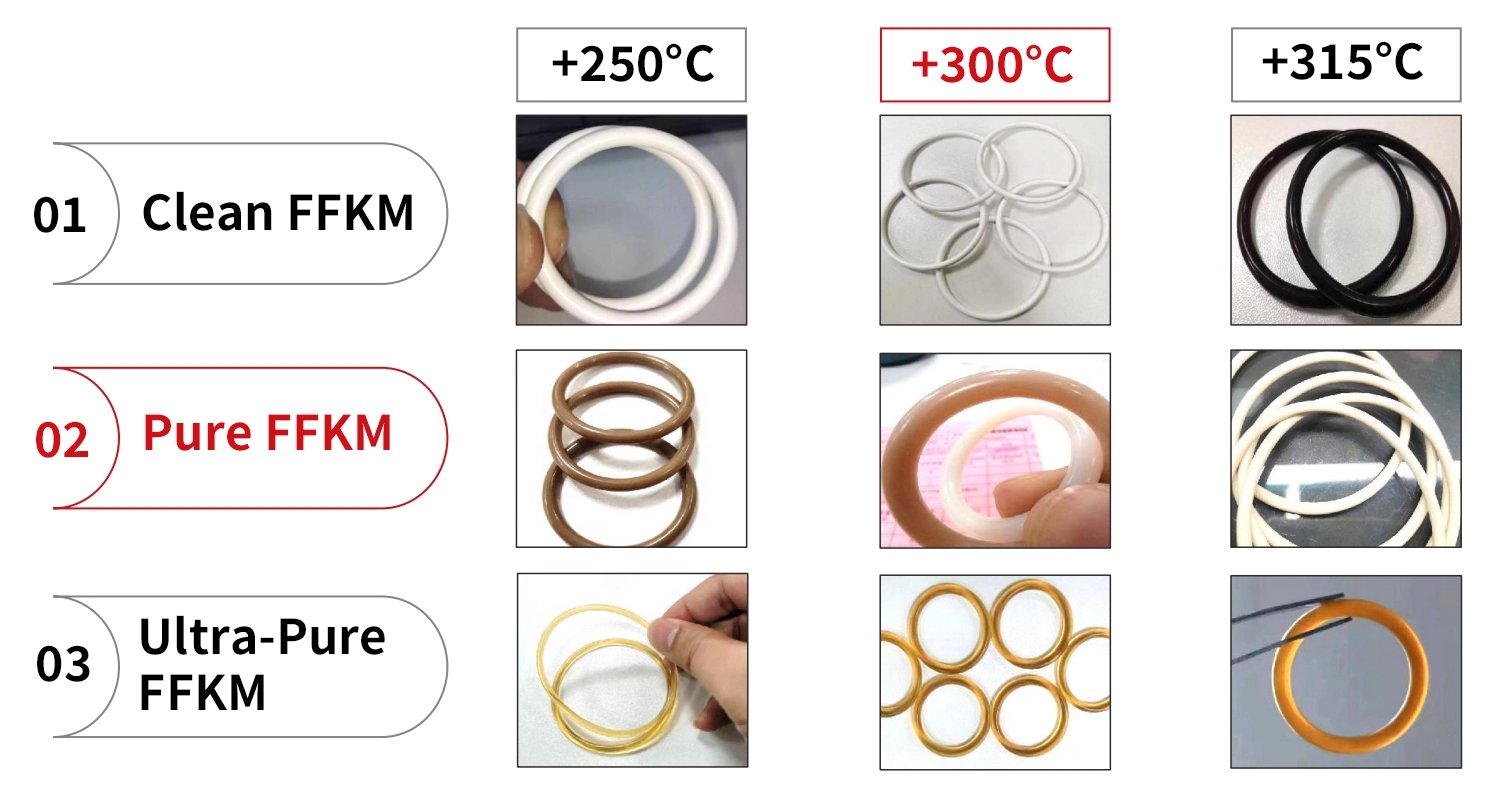
FFKM represents one of the highest-performing elastomer categories.
Key benefits:
· Outstanding thermal resistance
· Broad chemical compatibility
· Exceptional long-term stability
Applications include:
· Semiconductor equipment
· High-end automotive systems
· Extreme industrial environments
When operating conditions become highly aggressive, FFKM provides advanced sealing capability.
High temperatures accelerate compression set.
Compression set occurs when a seal loses elasticity and cannot recover after compression.
Poor compression recovery may lead to:
· Permanent deformation
· Seal gaps
· Pressure loss
· Leakage failures
Selecting compounds with excellent compression set resistance significantly improves long-term sealing reliability.
HaO Seal Technology Co.,Ltd continuously improves material formulation through its R&D center to support long-life sealing performance.
Material alone cannot guarantee successful sealing.
Seal geometry and manufacturing precision strongly influence performance.
Important considerations include:
Improper groove dimensions reduce sealing efficiency.
Over-compression shortens service life.
Rough surfaces accelerate wear.
Consistent tolerances improve repeatability.
Precision-manufactured <a href="https://www.haosealtech.com/O-Ring/">custom rubber O-ring solutions</a> allow engineers to optimize sealing performance according to project requirements.
Whether standard or customized designs are required, dimensional control remains essential.
As electric vehicles continue expanding, sealing requirements are changing.
Battery systems introduce challenges such as:
· Thermal runaway protection
· Cooling media compatibility
· Electrical insulation requirements
· Long-term weather resistance
HaO Seal Technology Co.,Ltd supports Automotive & NEV applications through dedicated sealing technologies and advanced production capability.
Beyond automotive systems, the company also serves:
· Photovoltaic equipment
· Semiconductor equipment
· Inkjet marking equipment
· Hydraulic & pneumatic industries
· Medical & sanitary applications
Cross-industry expertise enables more robust sealing solutions.
Choosing automotive seals is not only about selecting material.
A reliable sealing partner should provide:
· Material expertise
· Engineering support
· Prototype development
· Stable manufacturing quality
· Consistent delivery capability
Established in 2010, HaO Seal Technology Co.,Ltd was founded by professionals experienced in rubber seal research, development, and manufacturing.
Supported by advanced equipment and continuous production upgrades, the company focuses on delivering practical sealing performance for industrial customers worldwide.
Choosing automotive seals for high-temperature applications requires balancing material capability, sealing design, operating environment, and manufacturing precision.
From NBR and EPDM to Silicone, FKM, and FFKM, every material offers unique performance advantages depending on actual working conditions.
Precision-engineered rubber O-rings remain one of the most reliable sealing choices across modern automotive systems. By combining suitable material selection with dependable manufacturing support, long-term performance and operational stability can be significantly improved.
For applications requiring customized sealing performance, engineered rubber sealing solutions provide the flexibility and durability needed for today’s demanding environments.